
Diamond Certification · GIA vs EGL · South Africa
GIA vs EGL diamond certificates, read the lab before you read the letters.
Two diamonds can carry the same colour and clarity letters on paper and still be different stones, because the laboratory that graded them matters as much as the grades themselves. GIA, the Gemological Institute of America, is the international benchmark: strictest, and consistent the world over. EGL grades more leniently, and its grades can vary by laboratory and location.
This is an honest comparison from a working dealer and cutting house: how the two differ, how to verify a report yourself, and why the certificate moves both price and resale. Prodiam leads with GIA, accepts EGL on selected stones, and quotes like grade for like grade, priced on application, delivered insured anywhere in South Africa.
Get a fully-landed ZAR price to your spec GIA certified diamonds → How to read a GIA report →
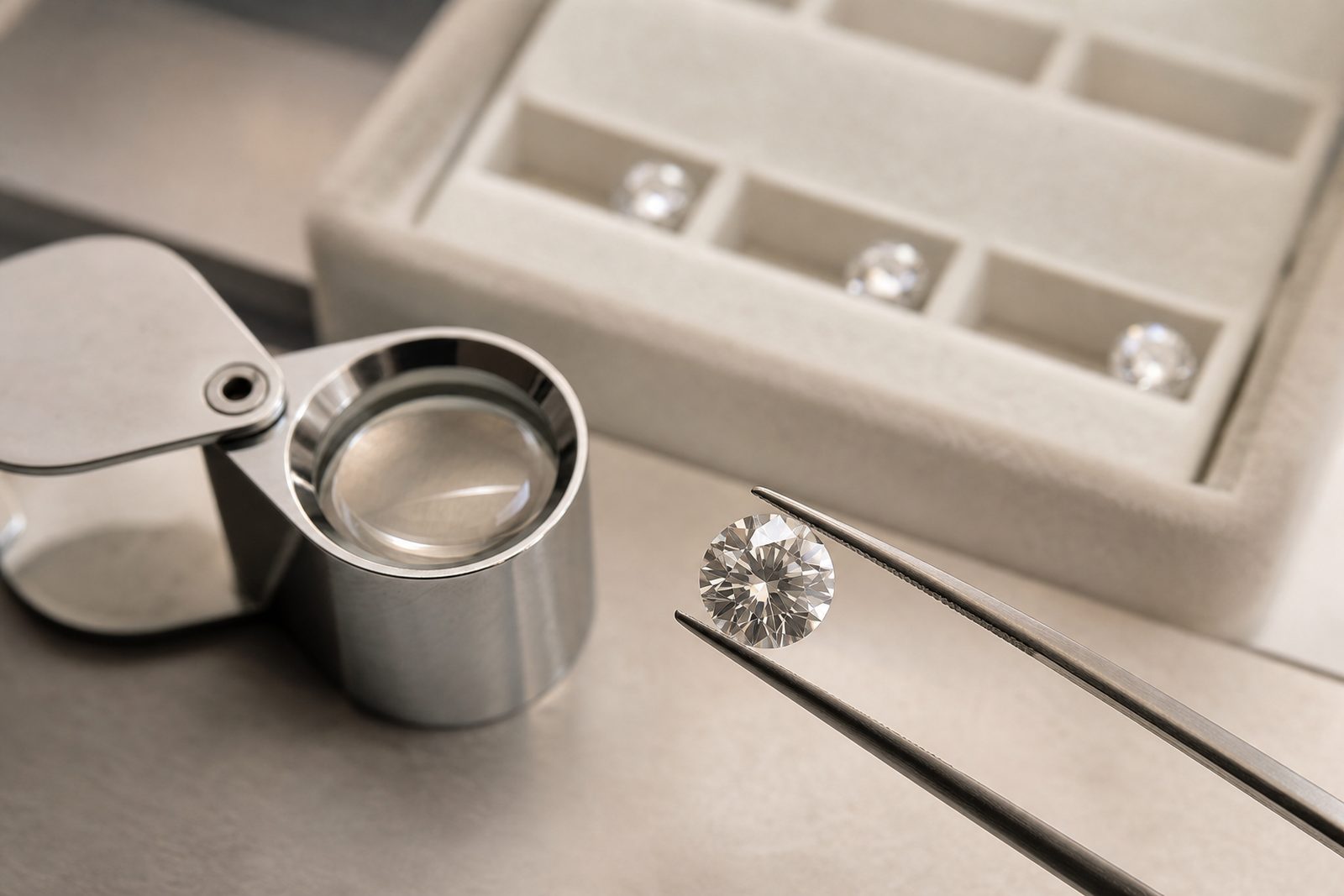
What a diamond certificate is, and why the lab on it matters
A diamond certificate, or grading report, is an independent laboratory’s description of a single stone: its carat weight, colour, clarity and, for round brilliants, cut, with precise measurements and a unique report number. The report is what lets you compare two stones on the same terms instead of on a salesperson’s word.
But a report is only as meaningful as the standard behind it, and the two laboratories South African buyers meet most often, GIA and EGL, do not grade to the same standard. Reading the laboratory name is the first thing a working cutting house does, before it reads a single grade.
The full grounding on the 4Cs of diamond grading explains how the four grades interact once you trust the report they sit on.
GIA, the international benchmark
The Gemological Institute of America defined the modern 4Cs and the D-to-Z colour scale, and it grades to the strictest, most uniform standard in the trade. GIA is a single non-profit institution that neither buys nor sells diamonds, so its reports are neutral, and its grades are consistent across stones and across continents: a GIA G-colour, VS1 means effectively the same thing in Johannesburg, London or New York.
That consistency is exactly why GIA is the most-cited document in the global diamond trade, why most serious buyers ask for it, and why we lead with it. Of the four grades, cut is the one a cutting house controls, and we polish our round brilliants to GIA Excellent cut grade, the top of GIA’s cut scale, on our own bench at Procut DCW.
EGL, more lenient, and variable by laboratory
The European Gemological Laboratory grades real diamonds and issues real reports, and many perfectly good stones carry EGL certificates. The honest caveat is twofold. First, EGL grades more leniently than GIA: the same stone will often return a softer colour or clarity grade on an EGL report than on a GIA one.
Second, EGL has historically operated as several independent laboratories in different countries rather than one body, so grading can vary by laboratory and location. None of this makes an EGL report dishonest, it is a looser yardstick, applied consistently to itself.
It does mean you cannot compare an EGL grade letter-for-letter against a GIA grade, and you should read what is actually in the stone rather than trusting the louder letters on the page.
GIA vs EGL, side by side
| GIA | EGL | |
|---|---|---|
| Reputation | International benchmark; most-cited report in the global trade | Recognised, widely issued; weaker standing among serious buyers |
| Strictness | Strictest grading standard | More lenient; grades typically read softer than GIA for the same stone |
| Consistency | Highly consistent stone-to-stone and worldwide | Can vary by laboratory and location |
| Structure | Single non-profit institution that neither buys nor sells diamonds | Historically separate independent laboratories by country |
| Verify | GIA Report Check on gia.edu + laser inscription on the girdle (stones above 0.30 ct) | Online report lookup on the issuing laboratory’s site |
| What Prodiam supplies | Primary laboratory; round brilliants polished to the GIA Excellent cut standard, on our own bench where we cut the stone | Accepted on selected stones; quoted like grade for like grade |
How to verify a GIA report number yourself
You never have to take a grade on trust. Every GIA report has a unique number; enter it into GIA’s free Report Check service at gia.edu/report-check and the original grading appears, carat, colour, clarity, cut and measurements, which you match against the printed report and the stone in your hand.
Every figure should agree exactly; if the printed numbers and the online numbers do not match, stop, because the certificate is out of date, mismatched or fraudulent. Stones above 0.30 ct are also laser-inscribed with the report number on the girdle, invisible to the naked eye but readable at 10x under a loupe, so you can match certificate to inscription to online record.
The line-by-line walk-through is in how to read a GIA report.
Why the certificate moves price and resale
The market prices a diamond on what is genuinely in the stone, its real colour, clarity, cut and carat, referenced against the Rapaport wholesale list.
Because EGL grades more softly, a stone can look cheaper “for the grade” on an EGL report while being, in truth, a lower grade than the letters imply: the price is fair once you read it against what the stone really is, not against the optimistic letters. The same logic governs resale.
Down the line a buyer, a valuer or an auction house will re-read the stone against a GIA-equivalent standard, so value tends to track the real grade rather than the generous one. A GIA report, because it is the consistent benchmark, simply carries more weight when it is time to insure, sell or trade up.
That is why we lead with GIA, and why, when a stone carries EGL, we quote like grade for like grade so you are never paying a GIA price for an EGL grade.
What Prodiam supplies, and how a stone reaches you
Prodiam works in natural diamonds only. GIA is our primary laboratory; we accept EGL on selected stones and are always clear about which report a stone carries before you commit. Here is how that plays out from enquiry to hand-over:
- 01
Brief
Carat, colour and clarity range, shape, budget and any deadline. Tell us if a GIA report is essential, for most clients it is. We respond within 24 hours.
- 02
Candidate stones, lab named
We pull stones to your brief, each with its report, and we name the laboratory, GIA or EGL, on every one, so you are never comparing two different standards by accident.
- 03
Verify & compare
Check the GIA report number on GIA Report Check, match the laser inscription under loupe, and compare the stones on the daylight tray or by video, on the stone, not only on the letters.
- 04
Quoted like for like
A firm ZAR figure, quoted against the wholesale list, like grade for like grade. Wholesale-direct from the cutter, without a retail markup, before any work begins.
- 05
Hand-over
Collection at Bedfordview or insured overnight courier nationwide via Brink’s or G4S. The report travels with the stone; finished pieces add a written insurance valuation.
Ready to look at stones on their real grades? Get fully-landed ZAR prices on our diamond search, browse the loose diamonds currently on the bench, or read how we buy and cut as a diamond dealer and cutting house in South Africa. When you are ready, tell us what you are after and Darren will come back within 24 hours.
GIA vs EGL: common questions
Is GIA better than EGL?
For consistency, yes. The Gemological Institute of America (GIA) is the international grading benchmark: it grades to the strictest, most uniform standard, and a GIA grade means much the same thing in Johannesburg as it does in New York or Antwerp.
EGL (European Gemological Laboratory) grades more leniently and, because EGL has operated as separate independent laboratories in different countries rather than one body, an EGL grade can vary by laboratory and location. Neither report is dishonest, they are simply graded against different yardsticks.
The practical effect is that a GIA-graded stone and an EGL-graded stone described with the same colour and clarity letters are often not the same stone, so the two should never be compared letter for letter.
Why do EGL grades differ from GIA grades?
Because the laboratories apply different grading thresholds, and because EGL has historically been a network of independent laboratories rather than a single institution. The same diamond sent to GIA and to an EGL laboratory will frequently come back a colour grade or a clarity grade, sometimes more, softer on the EGL report. That is not fraud; it is a looser standard consistently applied.
It does mean a buyer must read the laboratory name on the report, not only the letters, and must never assume that "G colour, VS1" on one report equals "G colour, VS1" on another from a different lab.
Which certificate does Prodiam use?
GIA is our primary laboratory and the one most clients ask for, because its grading is the international benchmark. We also accept EGL certificates on selected stones. Whichever a stone carries, we are clear about it before you commit and we quote like grade for like grade, we do not present an EGL grade as if it were a GIA grade.
Our own round brilliants are polished to the GIA Excellent cut standard, on our own bench where we cut the stone, and the report always travels with the stone, alongside a written valuation for insurance on finished pieces.
How do I verify a diamond certificate?
Every GIA report carries a unique report number. Enter it into GIA’s free Report Check service on gia.edu and the original grading appears, carat weight, colour, clarity, cut and measurements, which you match against the stone and the printed report in your hand; every figure should agree.
Stones above 0.30 ct are also laser-inscribed with the report number on the girdle, readable at 10x under a loupe, so you can match certificate to inscription to online record. EGL likewise offers an online report lookup for its own certificates. A stone whose report cannot be verified is not a stone you should buy.
Does the laboratory affect the price?
It affects how a price should be read. The market prices a diamond on what is actually in the stone, its real colour, clarity, cut and carat, referenced against the Rapaport wholesale list.
Because EGL tends to grade more softly, an EGL stone can look cheaper "for the grade" on paper while being, in truth, a lower grade than the letters suggest; the price is reasonable once you read it against what the stone really is. The honest way to compare is on the stone, not on the louder grade.
We quote like grade for like grade so you are never paying a GIA price for an EGL grade.
-
Natural diamonds only
We sell natural diamonds and diamond-set jewellery. Ask us about the grading report and available origin documentation for your chosen stone. Why we don’t sell lab-grown →
-
Independent grading reports
The grading laboratory is shown per stone. Review its report and the individual diamond before choosing; sourced examples can include GIA, EGL and IGI.
-
Insured delivery, SA & worldwide
Overnight across South Africa via Brink’s, G4S or our nominated jewellery courier. Insured worldwide dispatch via Ferrari Group and FedEx Custom Critical.
-
14-day in-person exchange
In-person sales at the viewing room come with a 14-day exchange courtesy on stock pieces. Distance-sale CPA cooling-off applies.