
Oval Engagement Rings · Bedfordview, Johannesburg
Oval engagement rings, made to order in South Africa.
Oval diamond engagement rings offer an elongated outline with brilliant-cut sparkle. Compare natural centre diamonds for their outline, face-up appearance and bow-tie effect, then choose a solitaire, halo or other setting for your ring.
Every Prodiam oval ring is made to order in our Bedfordview workshop, with the centre stone cut on our own bench or sourced to order and finished to keep the bowtie faint, then set as a solitaire or hidden halo in the metal you choose. Natural, GIA-certified diamonds, priced on application, with insured delivery anywhere in South Africa.
Brief us on an oval ring See loose diamonds → Custom engagement rings →
An oval from the Prodiam bench, yours made to order
-
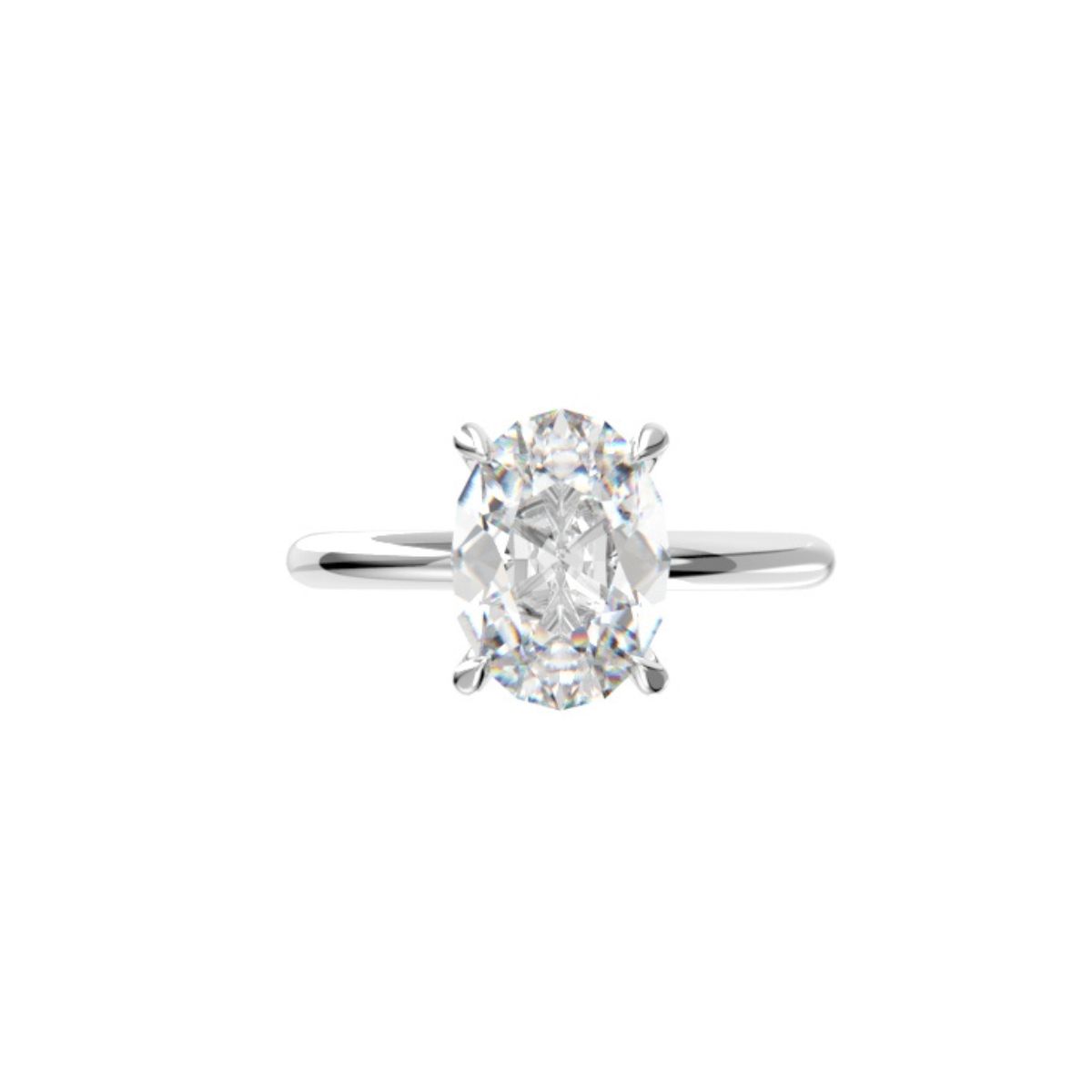
1.58 ct SI2 I oval, hidden-halo, 18k white gold -
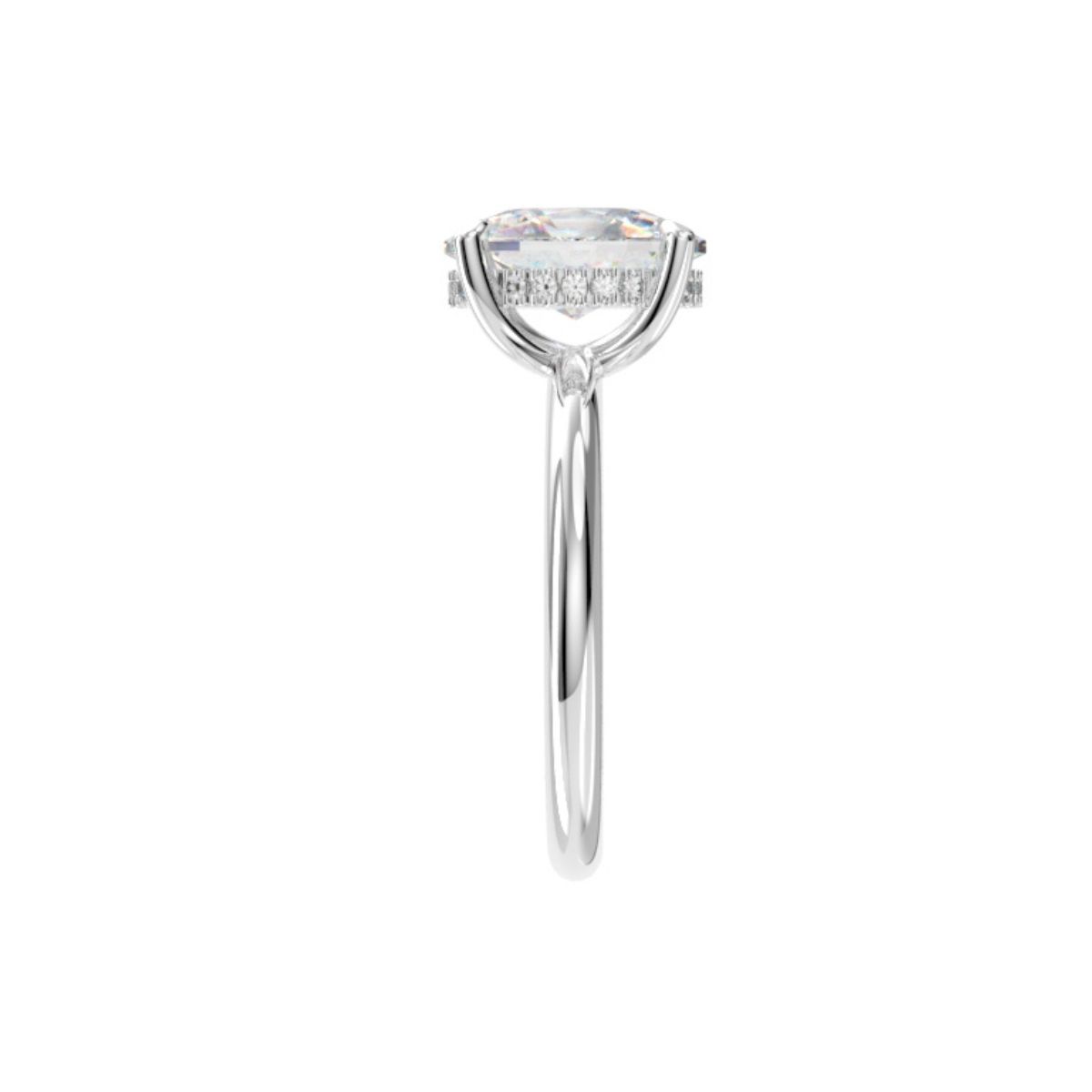
The same oval ring, profile and hidden halo
A past oval commission, photographed at the bench. Each ring is made to order around your chosen stone and priced on application; nothing shown is offered as stock.
-
Natural diamonds only
We sell natural diamonds and diamond-set jewellery. Ask us about the grading report and available origin documentation for your chosen stone. Why we don’t sell lab-grown →
-
Independent grading reports
The grading laboratory is shown per stone. Review its report and the individual diamond before choosing; sourced examples can include GIA, EGL and IGI.
-
Insured delivery, SA & worldwide
Overnight across South Africa via Brink’s, G4S or our nominated jewellery courier. Insured worldwide dispatch via Ferrari Group and FedEx Custom Critical.
-
14-day in-person exchange
In-person sales at the viewing room come with a 14-day exchange courtesy on stock pieces. Distance-sale CPA cooling-off applies.
Example settings · rendered design references
Oval settings we can make
Three ways we set an oval on the Bedfordview bench, rendered as design references: pick a setting, choose your oval from the register, and we quote the complete ring.
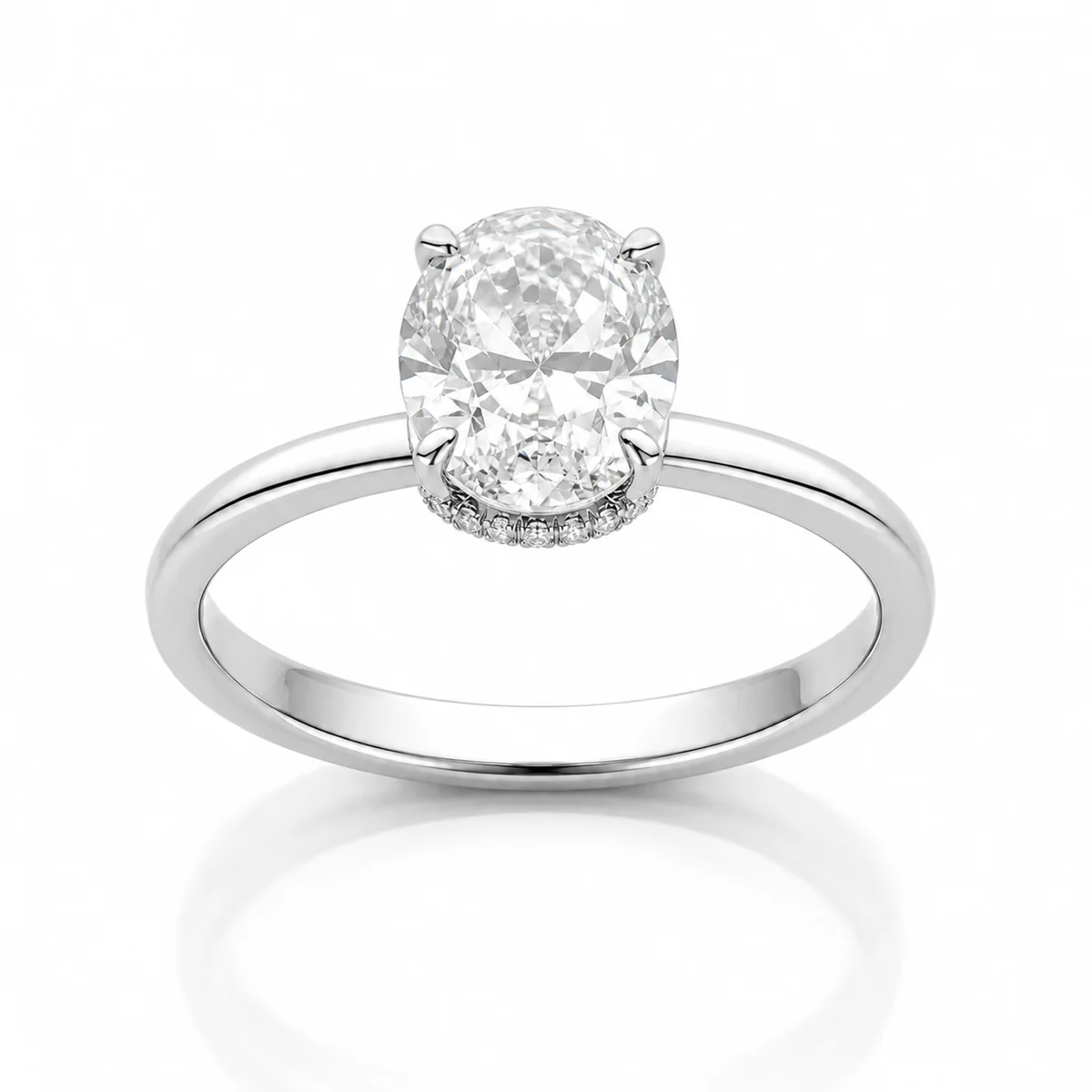
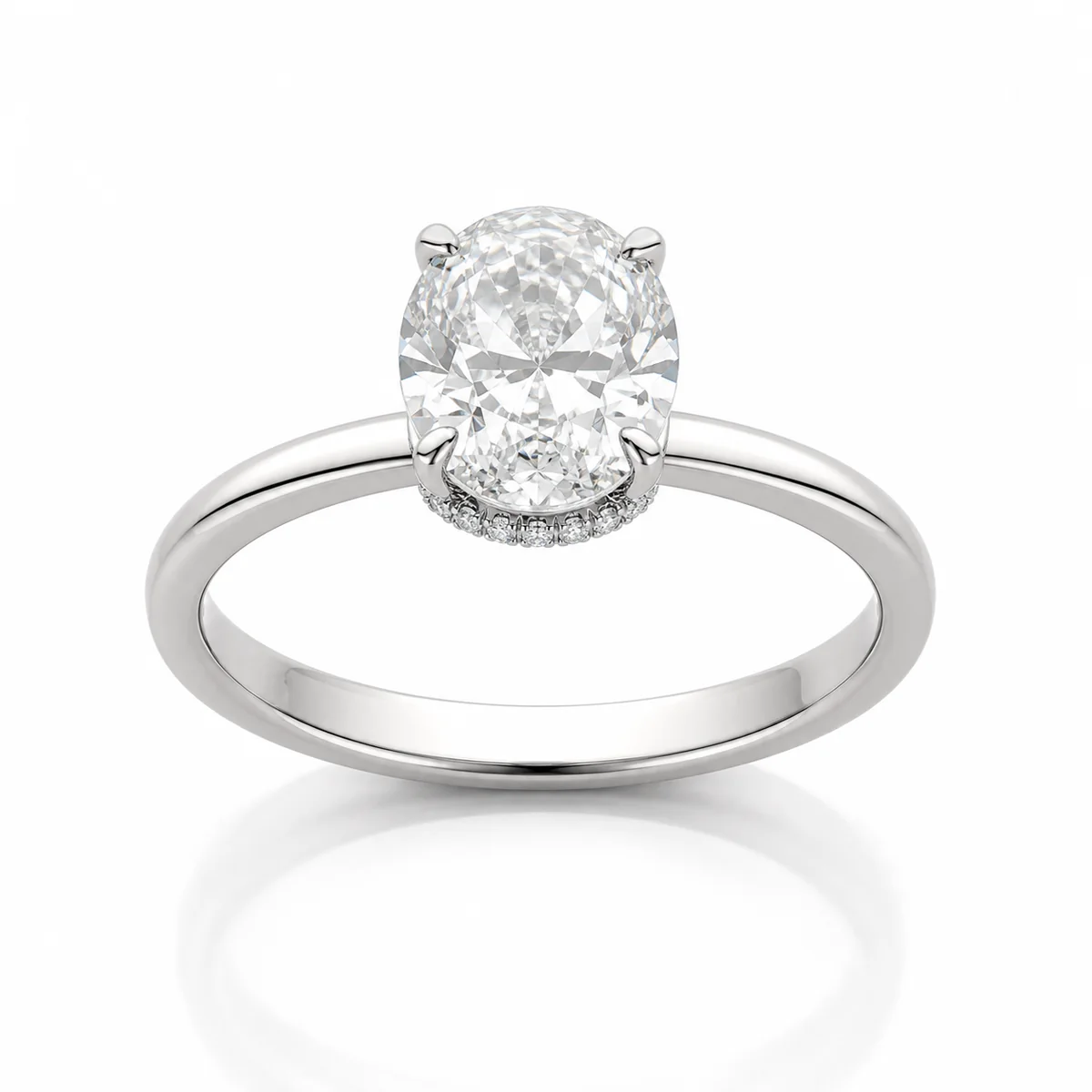
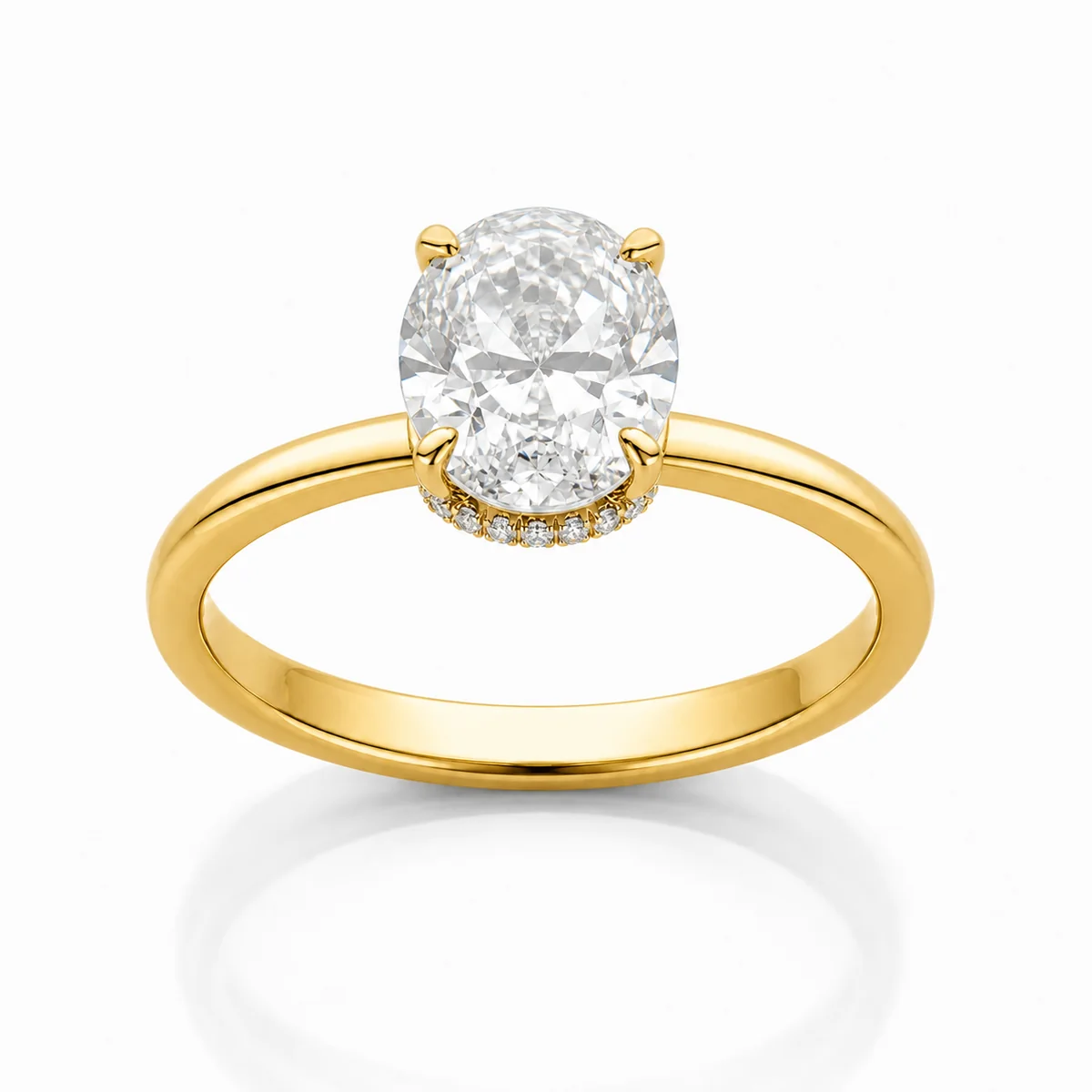
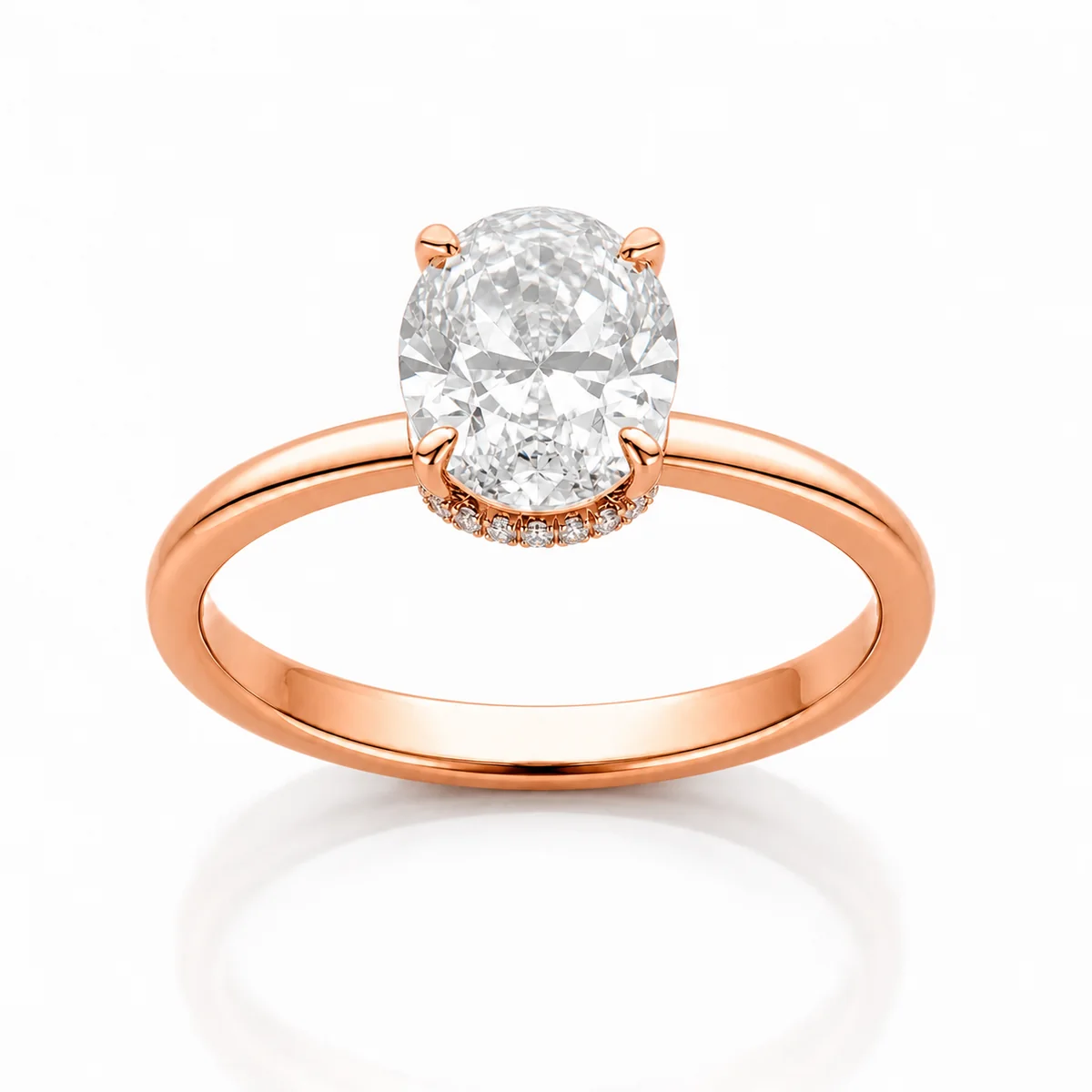 Oval, hidden haloA ring of tiny diamonds tucked under the stone.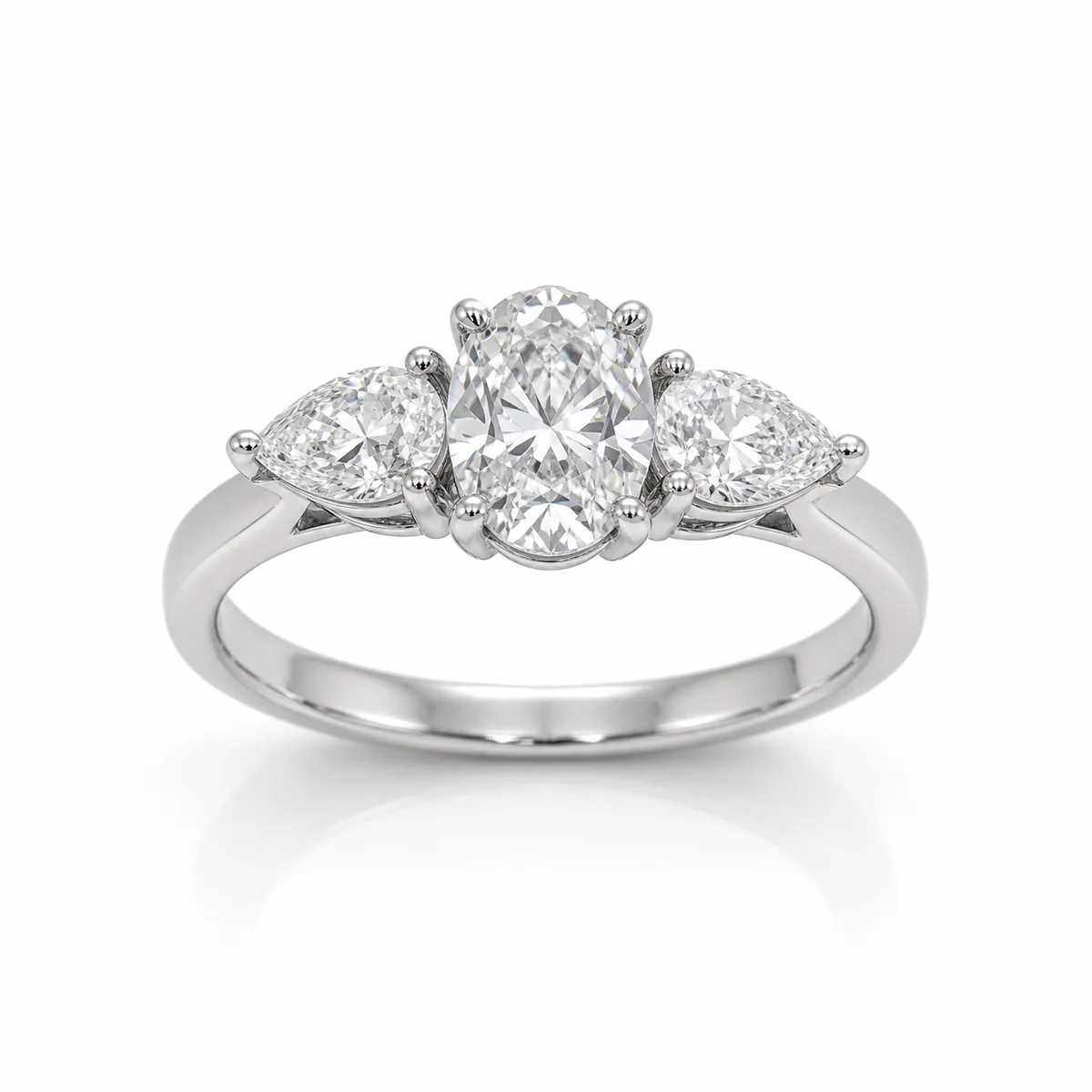
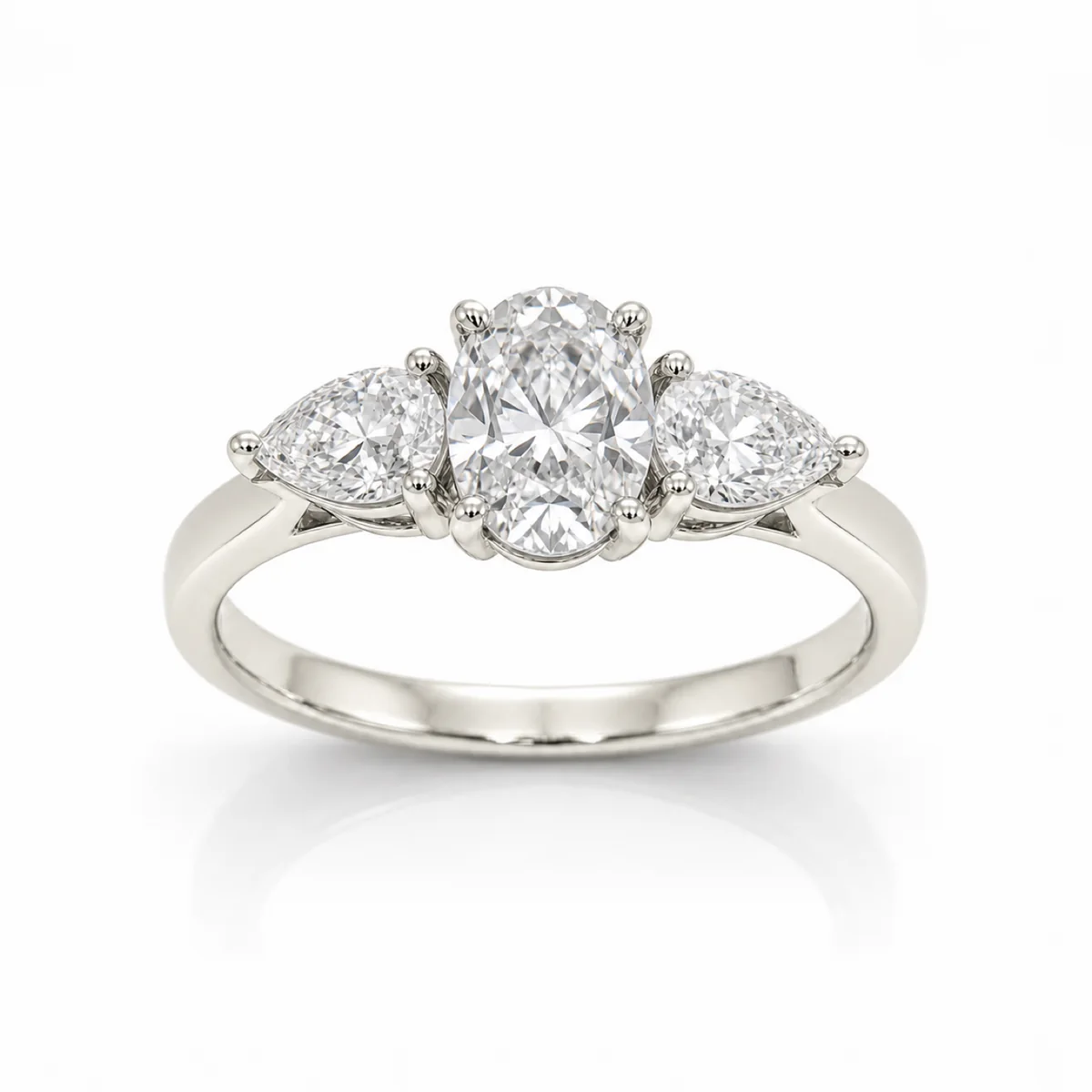
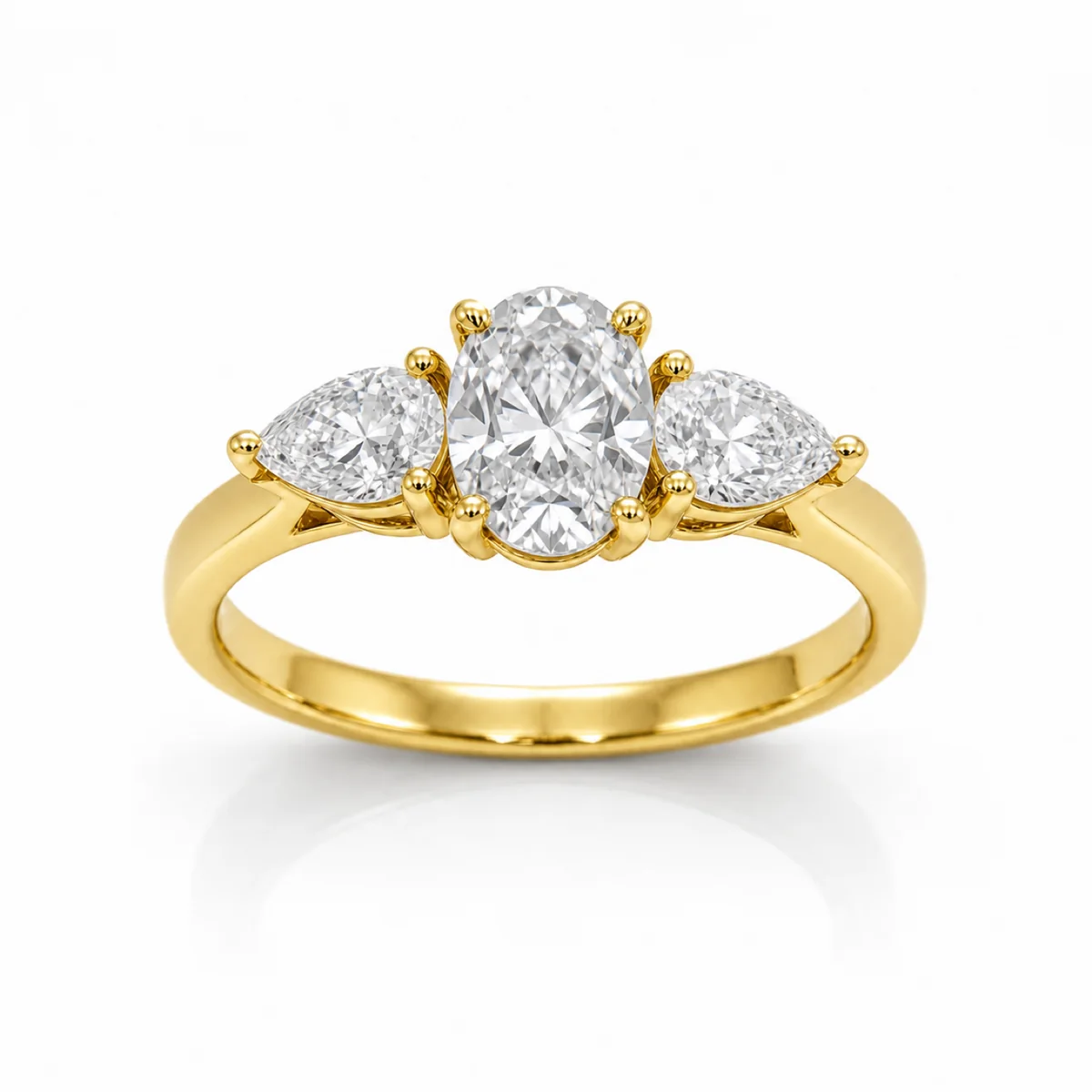
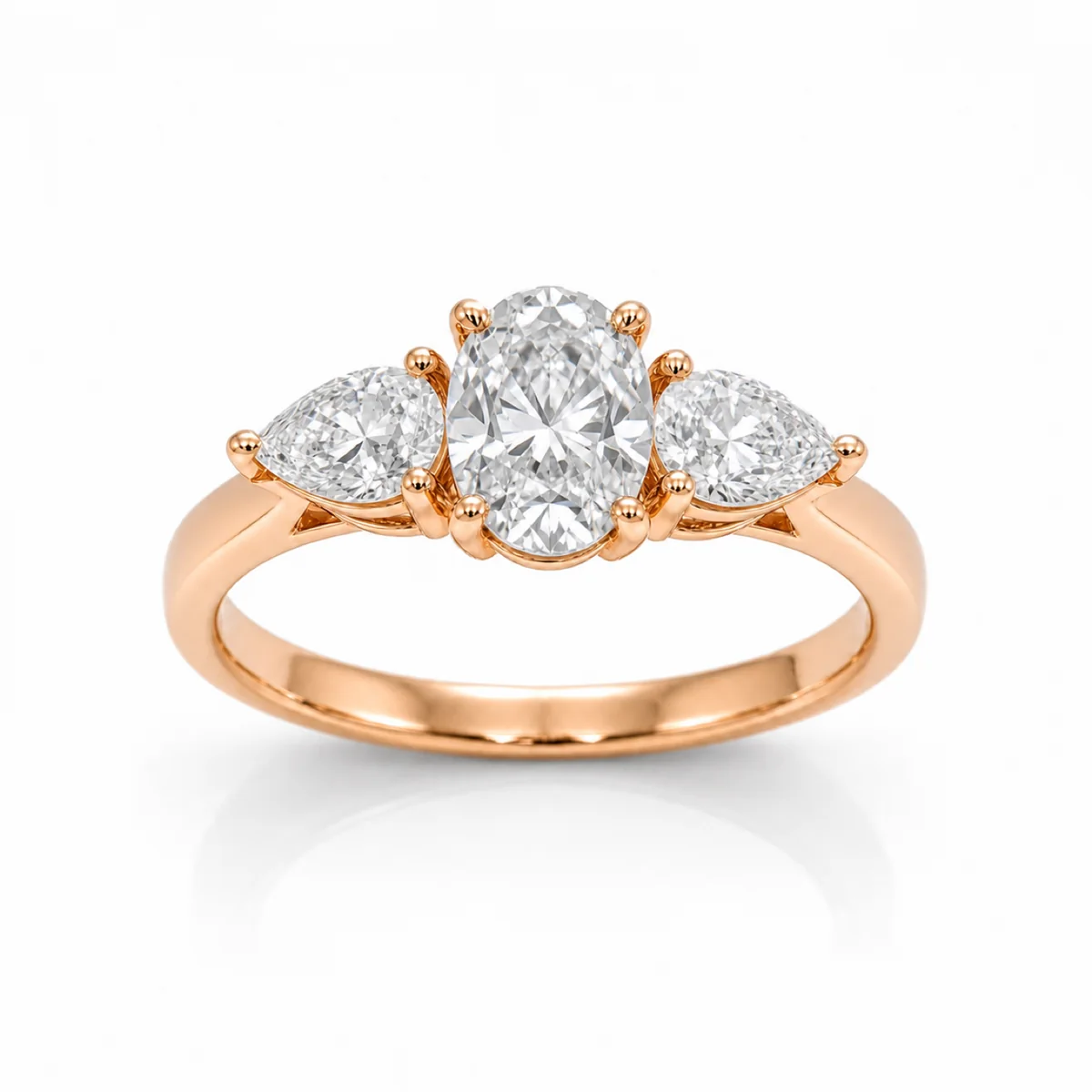 Three-stone, pear sidesPast, present, future. Oval centre, pear shoulders.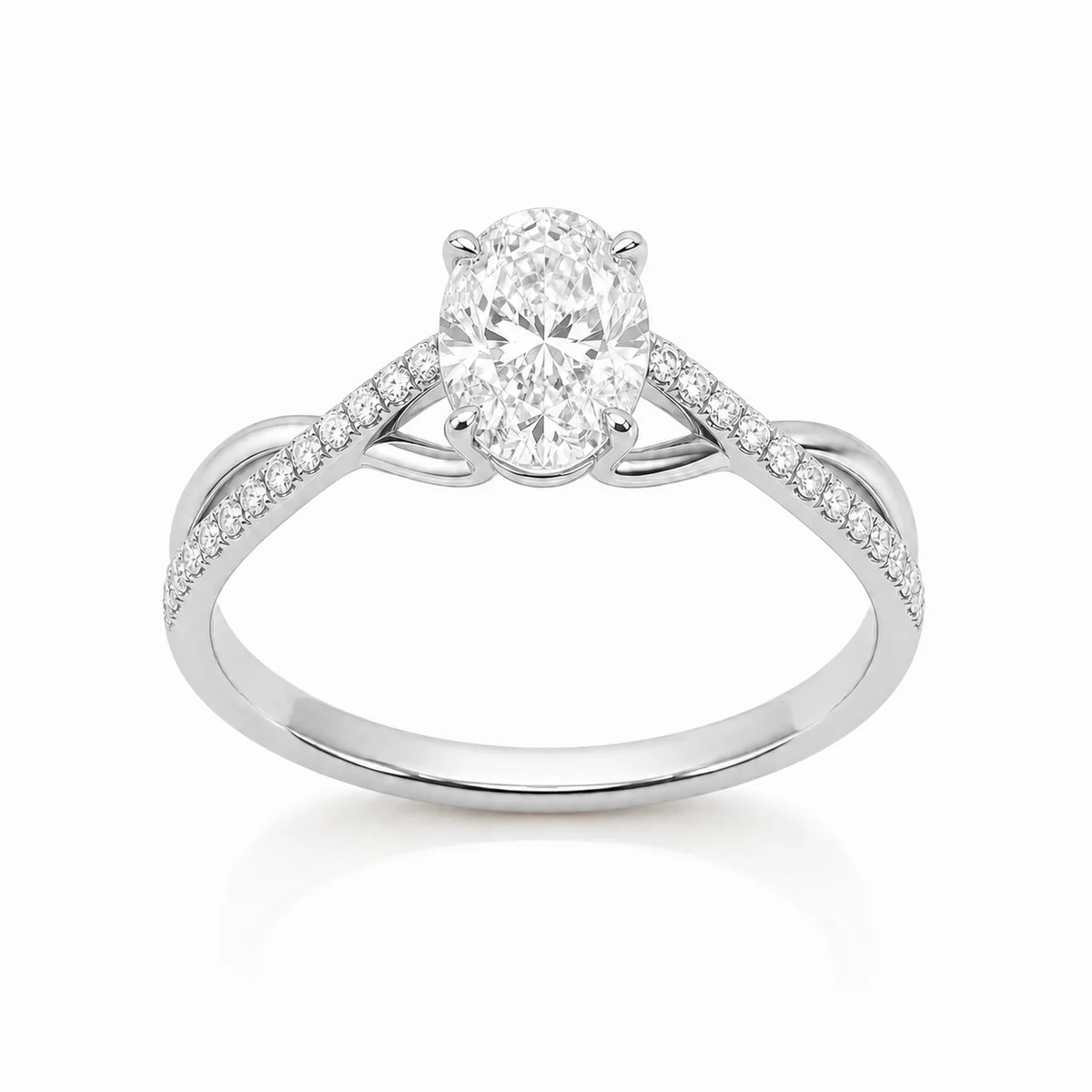
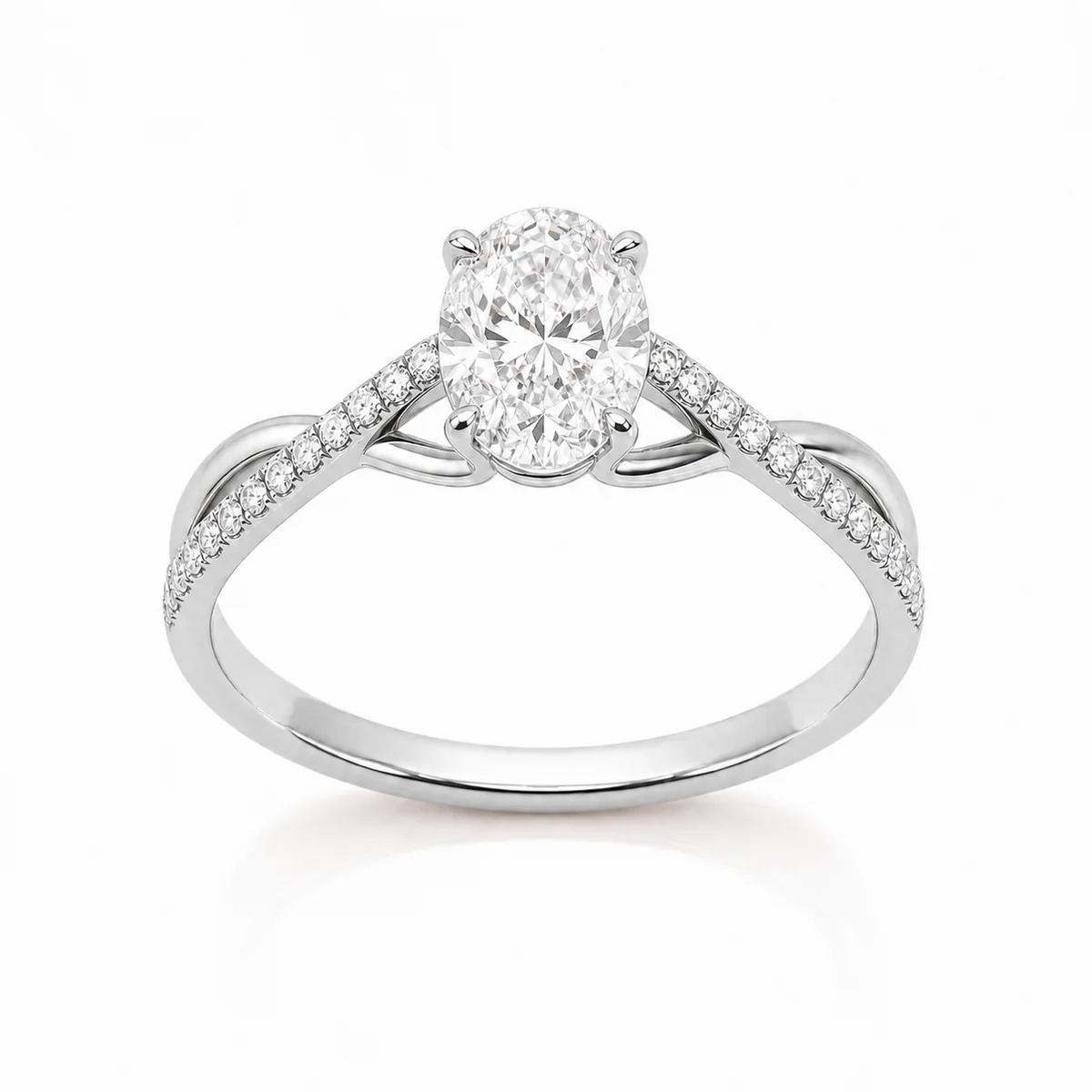
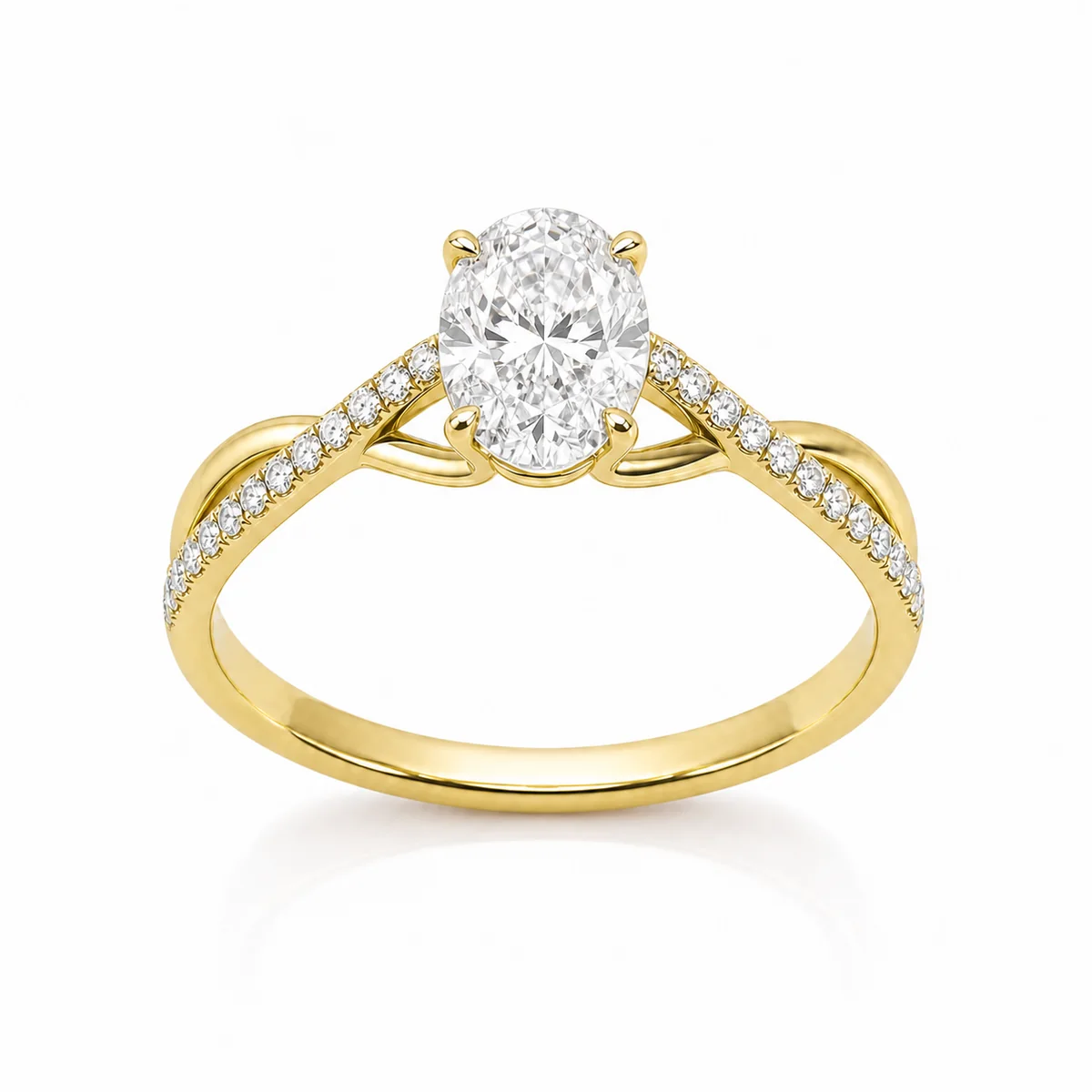
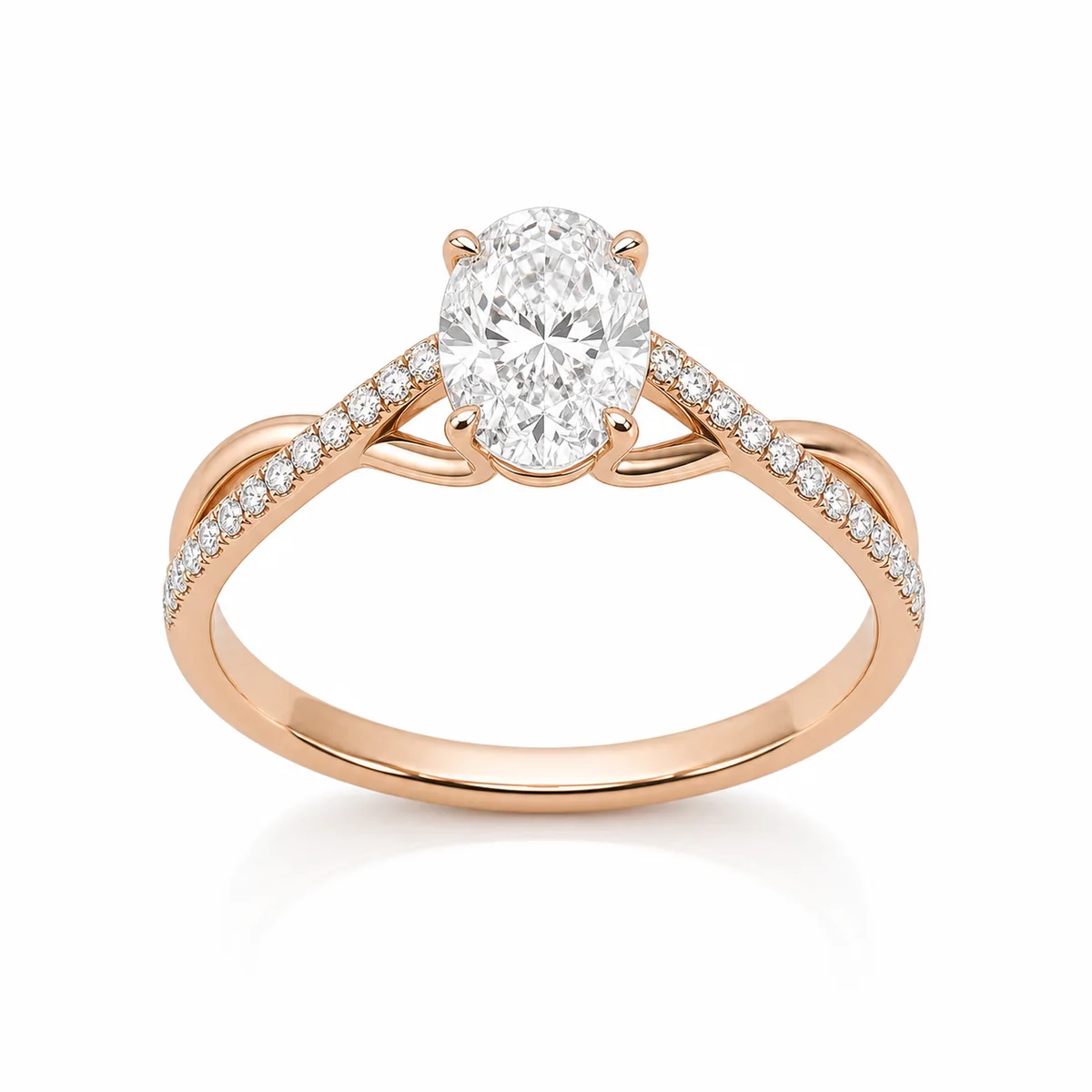 Twisted pavé, ovalA rope of small diamonds up to the centre.
These are examples, not a catalogue
We are a working bench, so we can make essentially anything: a design off this page, one of these changed, a piece you have seen elsewhere, a drawing, a photograph, or an heirloom reset into something new. Bring the idea in whatever form you have it and we will tell you what it takes and what it costs, before any work starts.
Message Prodiam on WhatsAppor send it through the contact page
Renders are illustrations of a design, not photographs of a piece in stock. The stones in the pictures are stand-ins; yours is the one you choose, certified, with its own report.
Why an oval reads larger than its carat weight
An oval is a modified brilliant, the same family of light-returning facets as a round, drawn out into an elongated outline. That shape does two things at once: it presents a larger face-up area than a round of the same carat weight, so the stone looks bigger for the money, and its long axis draws the eye down the finger, which lengthens and slims the hand.
For a buyer who wants visible presence and brilliance together, the oval is often the most efficient way to get both.
The bowtie, and how a good cut beats it
Every elongated brilliant carries some bowtie, a darker band across the centre where the facets shadow the eye rather than returning light. It is not a flaw in the rough; it is a consequence of how the stone is cut, so the amount varies entirely with the cutter’s skill.
A well-cut oval keeps the bowtie faint and the stone bright corner to corner; a poorly cut one shows a heavy dark band that no setting can hide. Because we cut our own stones on our Bedfordview bench, we select and finish ovals to keep the bowtie minimal, and we always show you the stone face-up under daylight so you judge it with your own eyes.
Settings for an oval, solitaire and hidden halo
- Solitaire, the oval alone, usually in a four- or six-claw head, often with east-west or north-south orientation to taste. The clearest way to show the stone’s length.
- Hidden halo, a concealed pavé collar beneath the centre stone that adds light and lift without widening the outline, as on the ring shown above.
- Halo, a visible pavé frame that exaggerates the oval’s size and sparkle, matched to the centre on our bench.
- Pavé shoulders, small diamonds set along the band to carry light down the finger, in any of the above.
Ovals suit a slightly lower claw profile and benefit from claws that protect the two narrow ends, which take the most wear. We will talk you through the trade-offs against how the ring will be worn.
Choosing an oval: ratio, colour and clarity
| Choice | What we make to order |
|---|---|
| Length-to-width | ~1.30 (fuller) to ~1.50 (longer, more elegant) |
| Carat | From around 0.50 ct to 5 ct and above, to your budget and hand |
| Colour | D–F colourless, or G–I near-colourless; ovals can carry colour at the ends, so we check face-up |
| Clarity | An eye-clean VS–SI1, chosen so inclusions do not show at the table |
| Metal | 18k white, yellow or rose gold, or platinum |
| Certification | GIA / EGL certified; report supplied with the stone |
Pricing is on application, the stone drives the figure, and you receive a firm ZAR quote, VAT inclusive, before any work begins.
How an oval ring is made to order
- 01
Brief
Ratio, carat, colour and clarity range, setting style, metal, budget and deadline. We respond within 24 hours.
- 02
Choose the stone
We present GIA-certified ovals at different ratios, face-up on the daylight tray or by video, each with its report.
- 03
Build & cast
The setting is built and cast in your chosen metal, with any halo or hidden-halo pavé matched at the bench.
- 04
Set & finish
The oval is set with protected ends, the ring hand-polished, and checked under loupe and microscope.
- 05
Hand-over
Presentation at Bedfordview by appointment, or insured overnight courier nationwide. Certification and a written valuation included.
Comparing shapes? See the round brilliant, princess, emerald and radiant cuts, or start from the loose diamonds on the bench. When you are ready, brief us and Darren will come back within 24 hours.
Oval engagement rings: common questions
Do oval diamonds look bigger than round diamonds of the same carat?
Generally, yes. An oval is an elongated shape, so for the same carat weight it presents a larger face-up area than a round, and the long axis draws the eye down the finger, which makes both the stone and the hand look longer and slimmer. It is one of the main reasons clients choose an oval, you tend to read more visible size per rand than you would from a round of equal weight.
What is the bowtie effect in an oval diamond?
The bowtie is a dark band that can appear across the centre of an oval (and other elongated brilliants), where the facets shadow the eye instead of returning light. Every oval has some bowtie; the question is how much. It is a function of cutting, not an inherent flaw, so a well-cut oval keeps it faint while a poorly cut one shows a heavy dark band.
Because we cut our own stones, we select and finish ovals to keep the bowtie minimal, and we show you the stone face-up so you can judge it yourself.
Are oval diamonds GIA certified and graded for cut?
Our oval diamonds are GIA or EGL certified and the report grades carat, colour and clarity in full. GIA does not, however, assign an overall cut grade to fancy shapes such as the oval, it grades only polish and symmetry, so for an oval the cutter’s skill, not a printed cut grade, is what governs brilliance and how faint the bowtie is. That is exactly the part a working cutting house controls.
What length-to-width ratio is best for an oval engagement ring?
It is a matter of taste, but most clients prefer a length-to-width ratio between about 1.30 and 1.50. Nearer 1.30 looks fuller and rounder; nearer 1.50 looks longer and more elegant. The report lists the measurements so you can work the ratio out, and we will show you stones at different ratios so you can see the difference on the hand before you choose.
Can you make an oval engagement ring if I am not in Johannesburg?
Yes, clients commission oval rings across South Africa. The stone and design conversation happens by video and WhatsApp, you approve the diamond and the setting, and the finished ring is delivered insured and overnight nationwide via Brink’s or G4S, with its certification and a written insurance valuation on request.