
Three-Stone & Trilogy Rings · Bedfordview, Johannesburg
Three-stone engagement rings (trilogy): past, present and future, in South Africa.
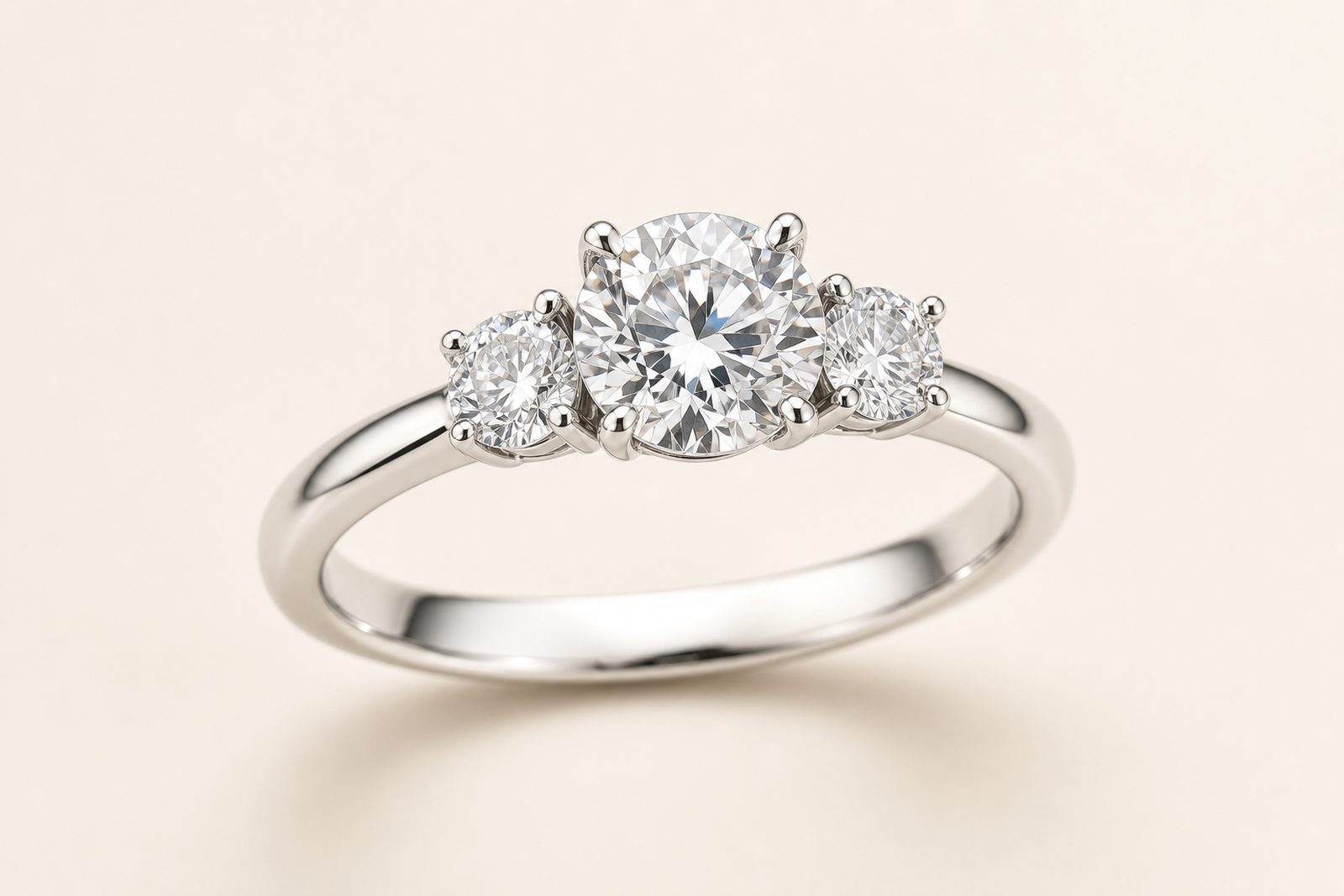
Three-stone diamond engagement rings, also called trilogy rings, place a natural centre diamond between two complementary side stones. Choose matching or contrasting shapes, balanced proportions and your preferred metal, with all three stones included in the ring quote.
Every Prodiam trilogy is made to order in our Bedfordview, Johannesburg workshop, with the centre and both sides cut and matched on our Bedfordview bench to GIA Excellent cut grade, so the trio agrees as one ring. Natural, GIA-certified diamonds, in any metal, with insured delivery anywhere in South Africa.
Brief us on a trilogy ring Get a firm ZAR diamond price → Compare with solitaire →
-
Natural diamonds only
We sell natural diamonds and diamond-set jewellery. Ask us about the grading report and available origin documentation for your chosen stone. Why we don’t sell lab-grown →
-
Independent grading reports
The grading laboratory is shown per stone. Review its report and the individual diamond before choosing; sourced examples can include GIA, EGL and IGI.
-
Insured delivery, SA & worldwide
Overnight across South Africa via Brink’s, G4S or our nominated jewellery courier. Insured worldwide dispatch via Ferrari Group and FedEx Custom Critical.
-
14-day in-person exchange
In-person sales at the viewing room come with a 14-day exchange courtesy on stock pieces. Distance-sale CPA cooling-off applies.
Example settings · rendered design references
Three-stone settings we can make
Three ways we set a centre stone with two companions, rendered as design references. The side stones are cut and matched in house.
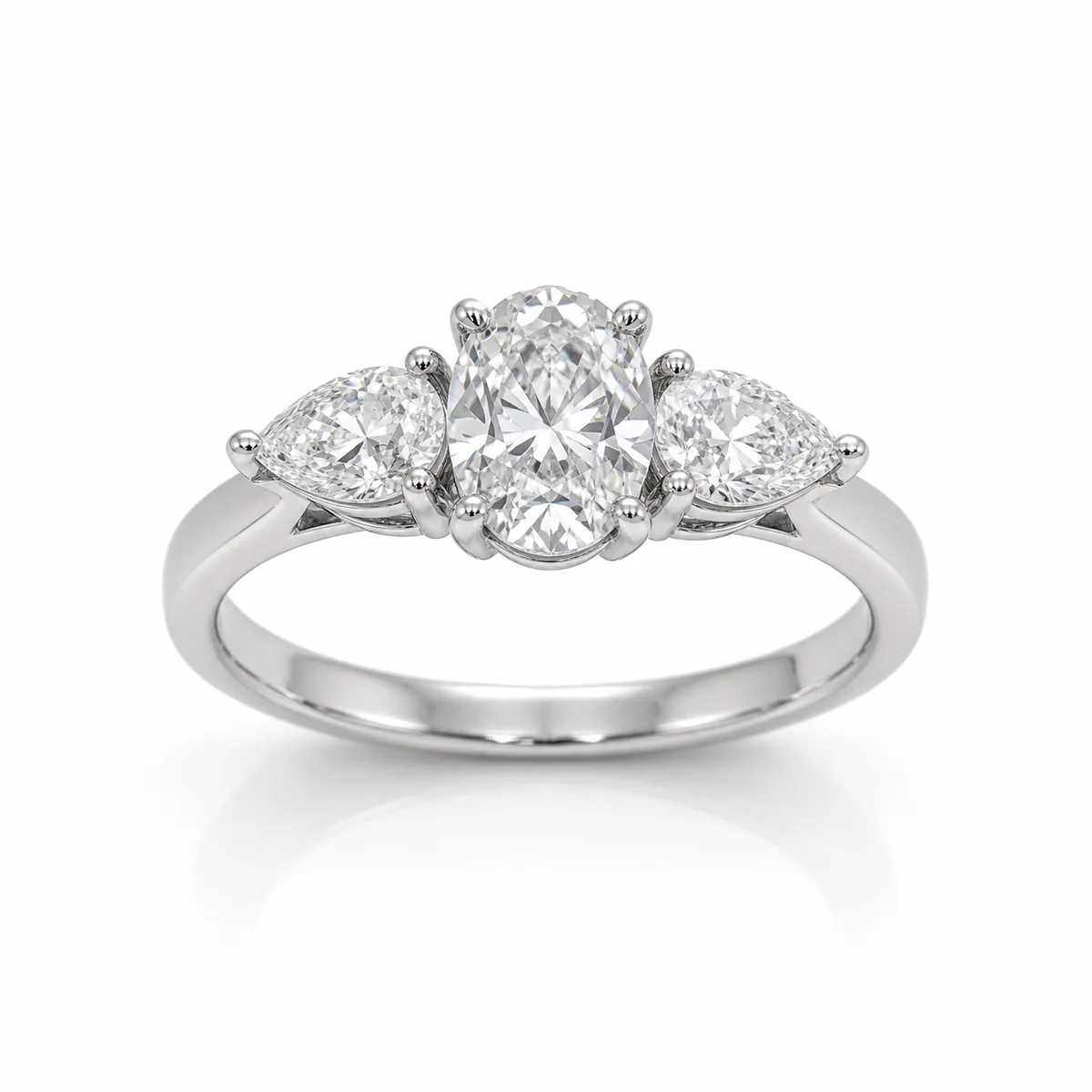
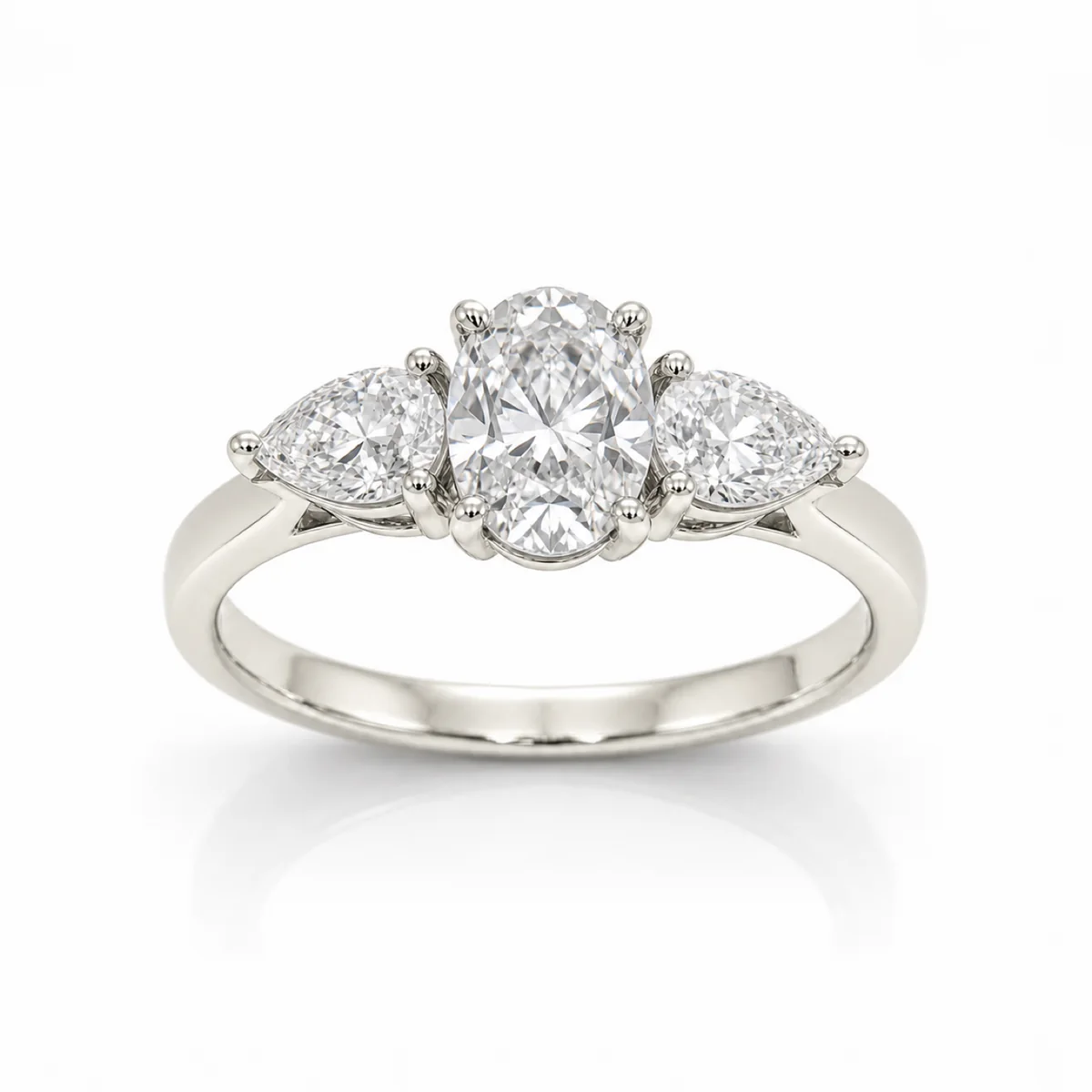
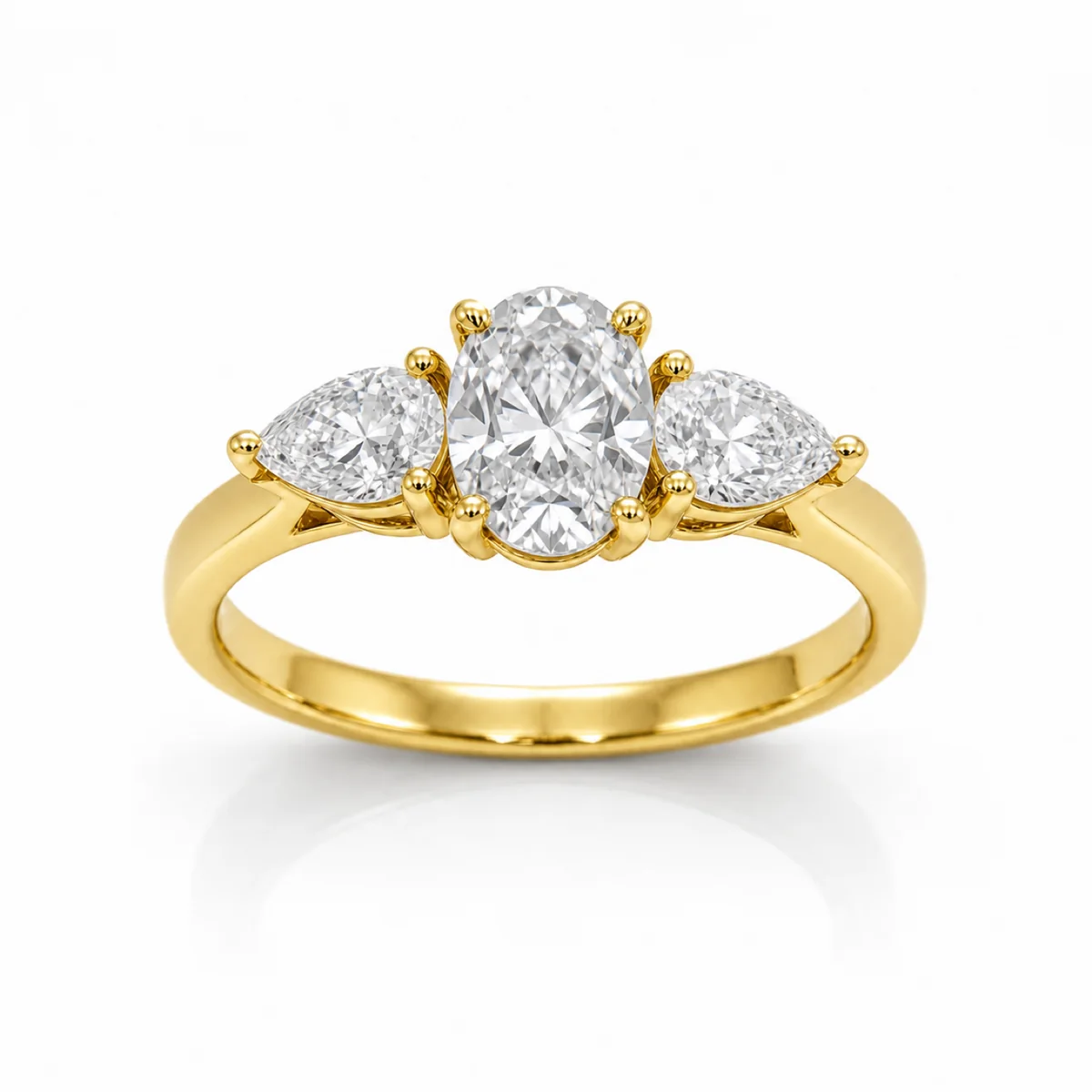
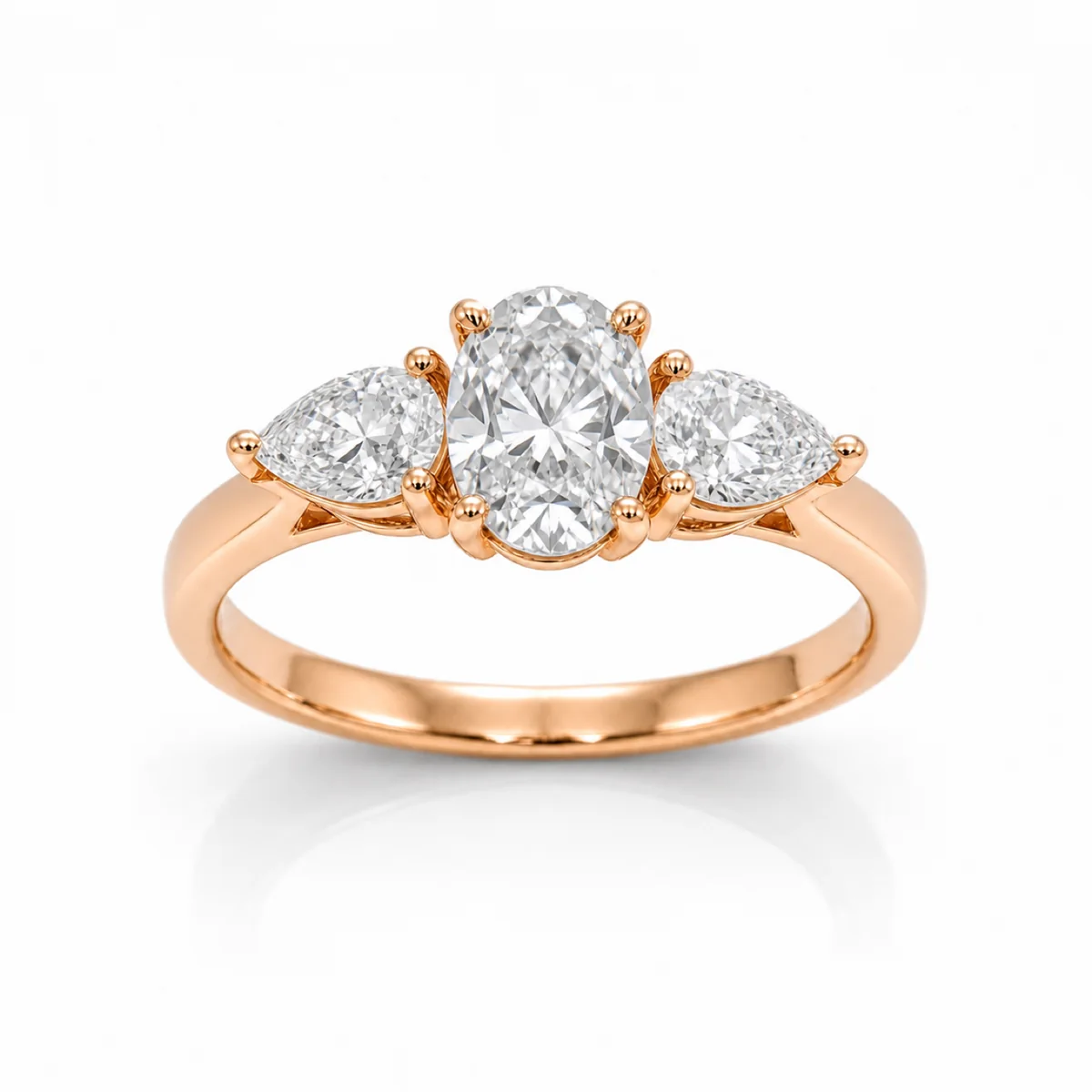 Three-stone, pear sidesPast, present, future. Oval centre, pear shoulders.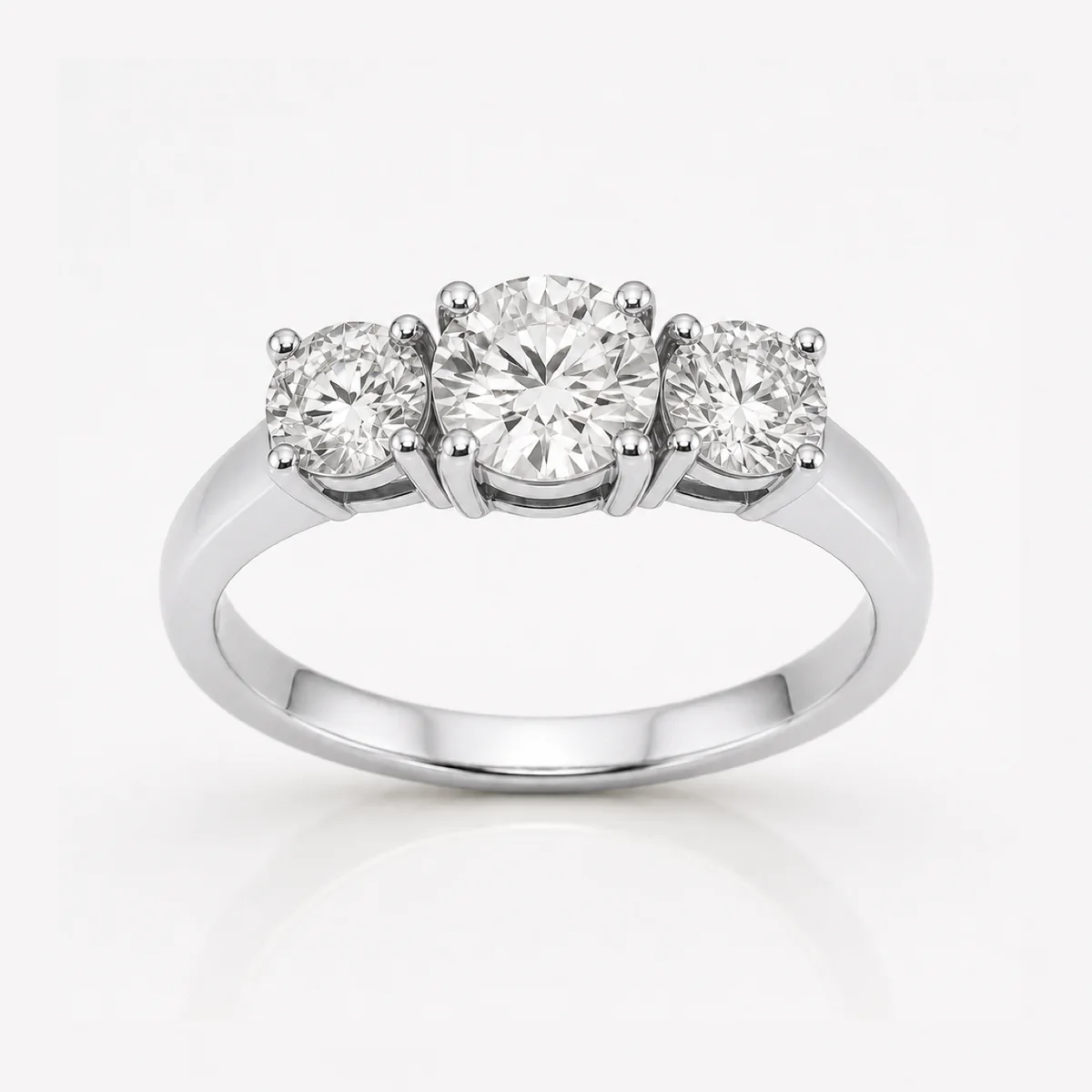
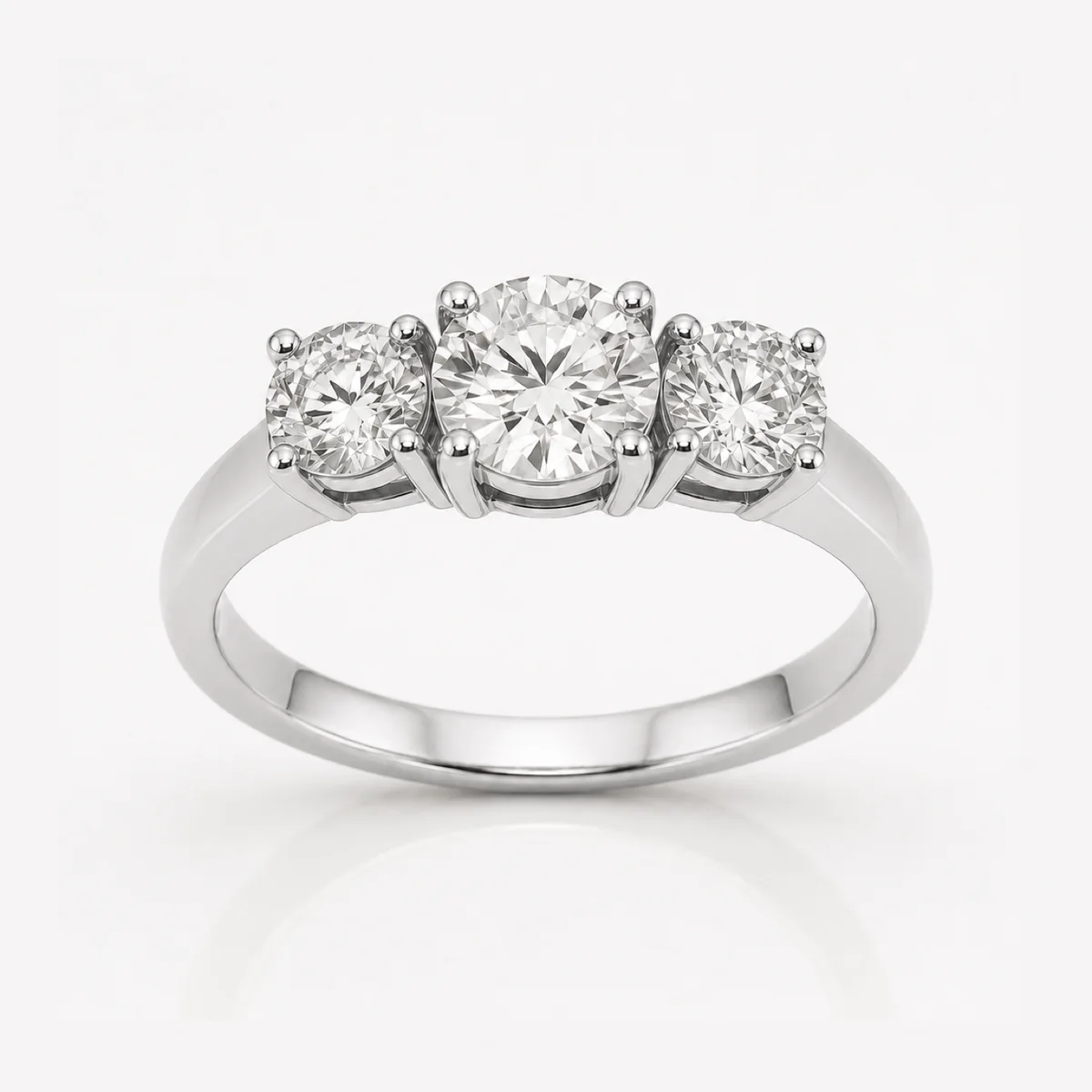
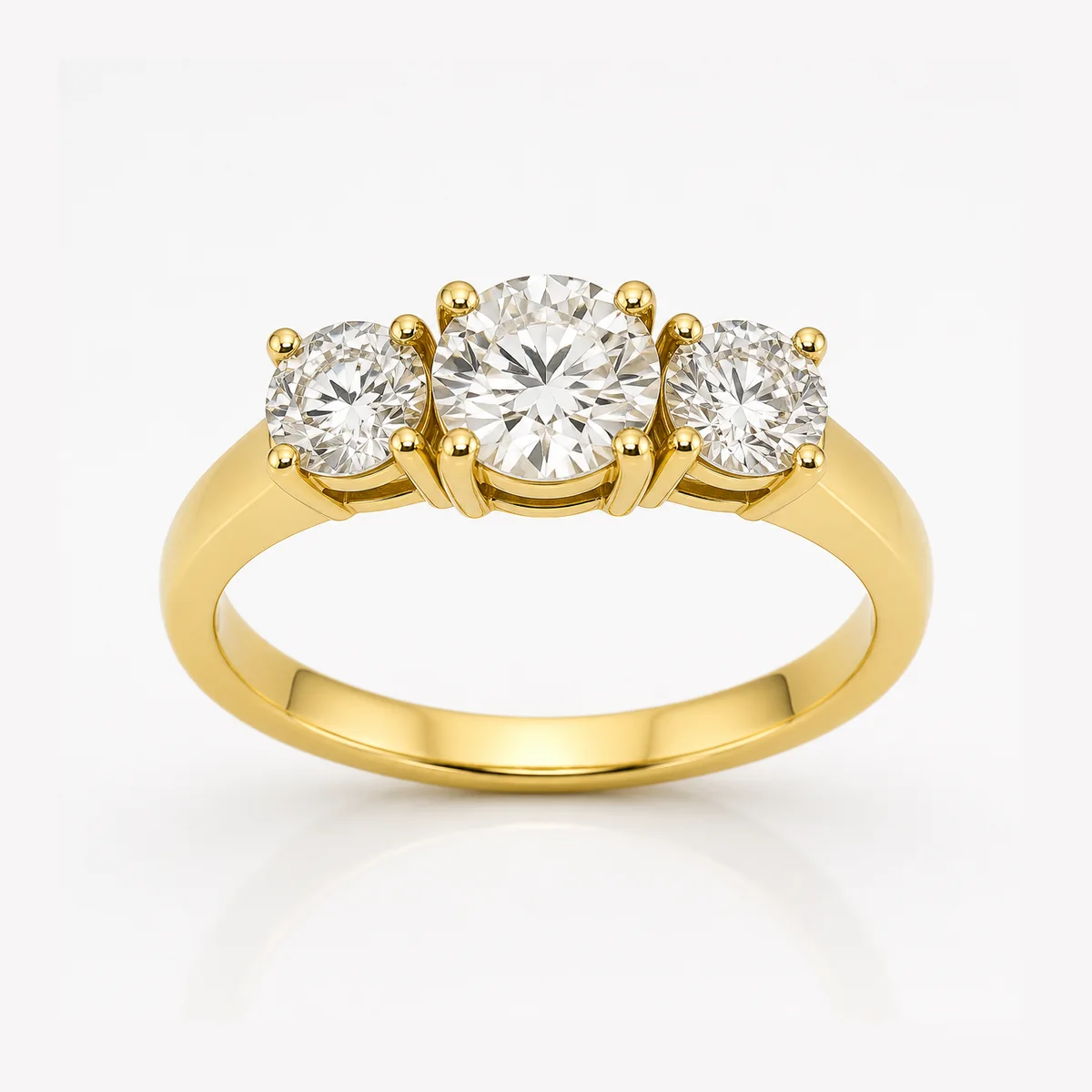
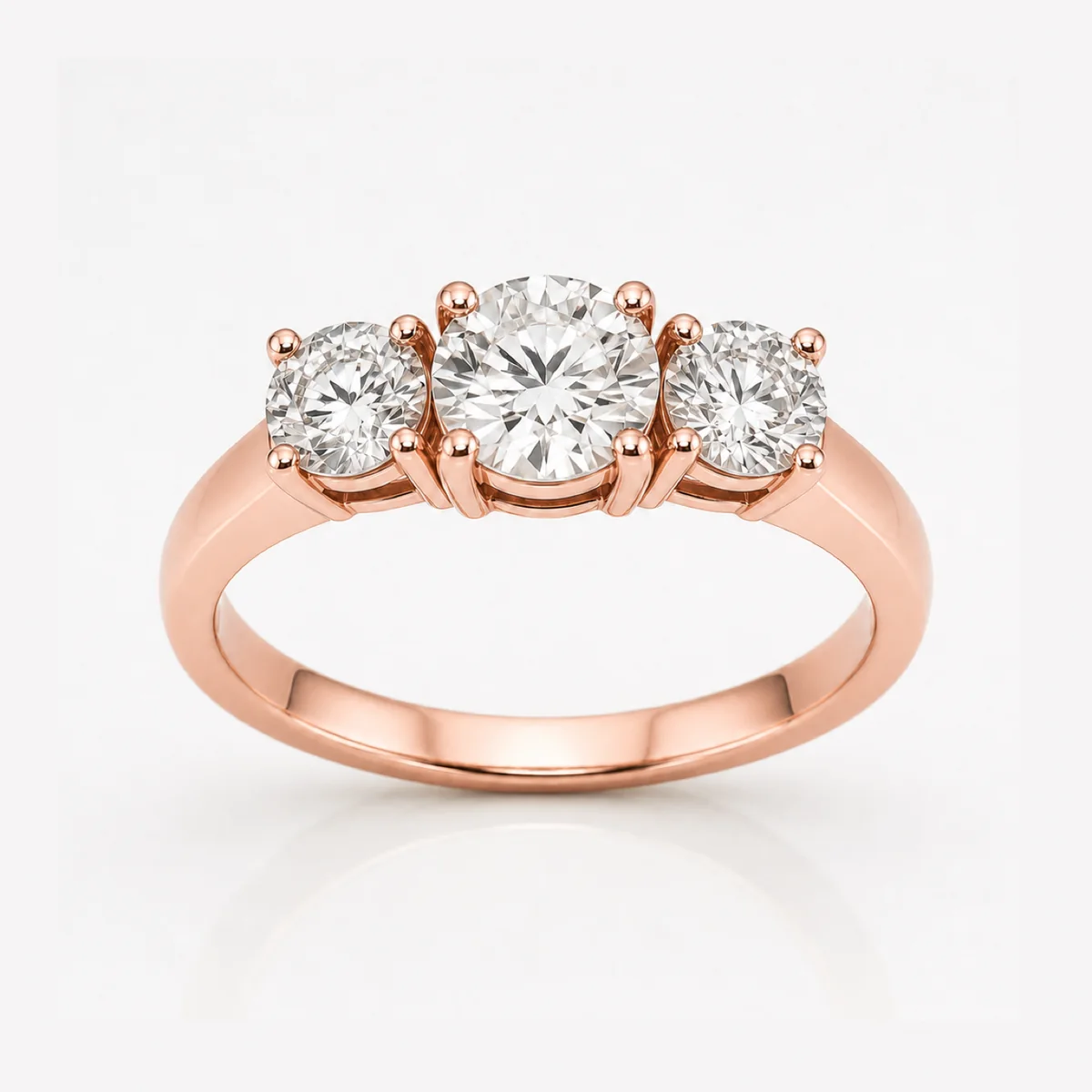 Round trilogyThree rounds, four claws each.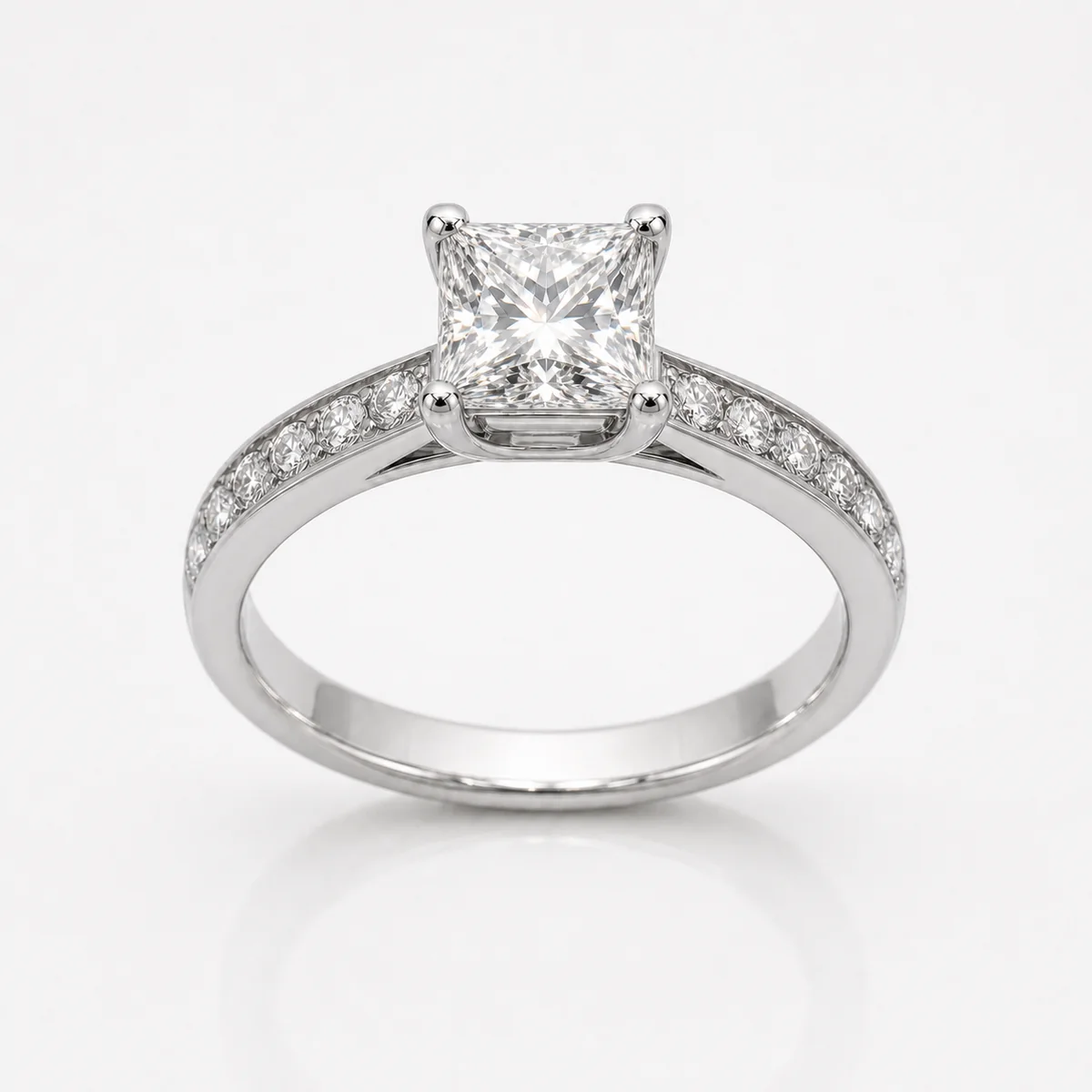
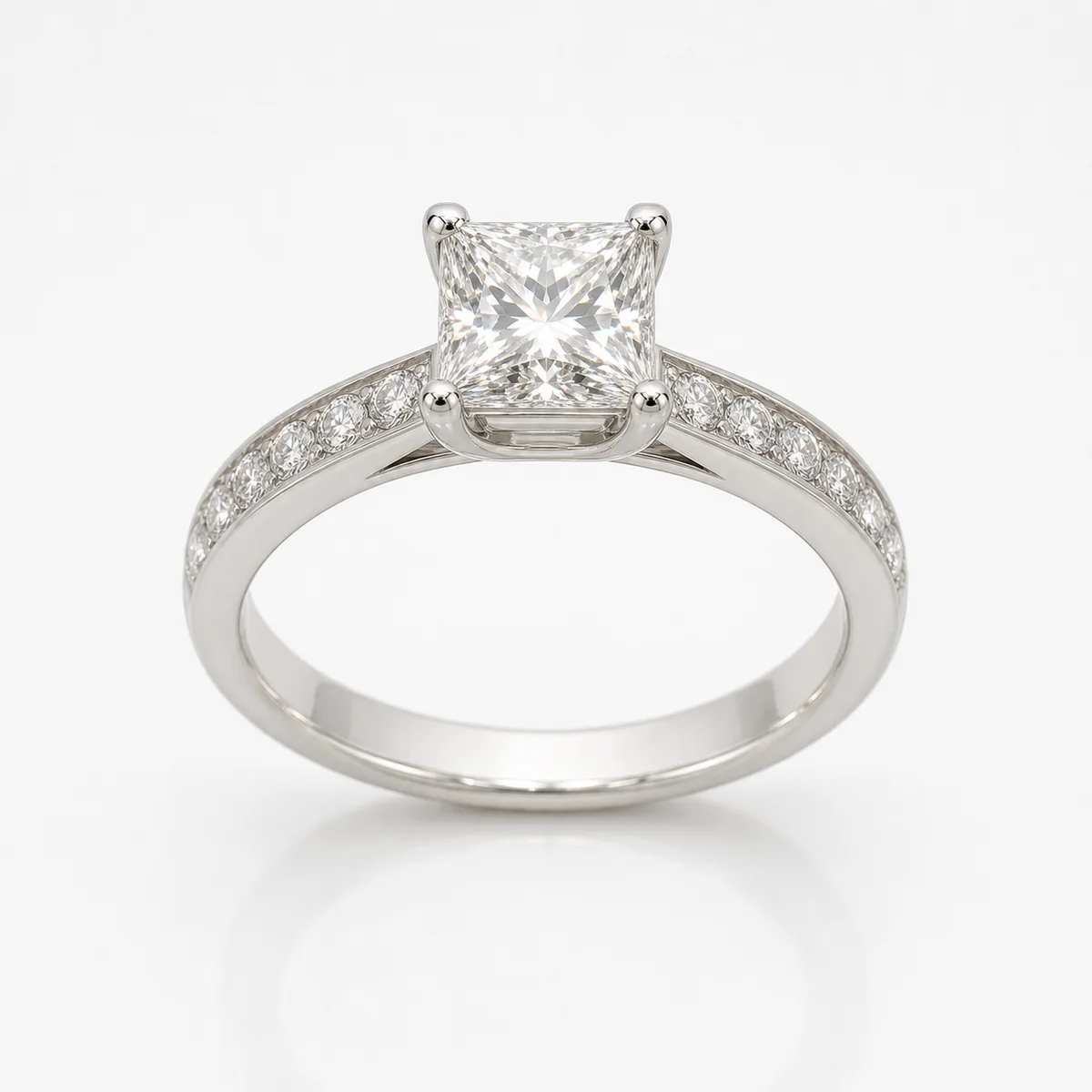
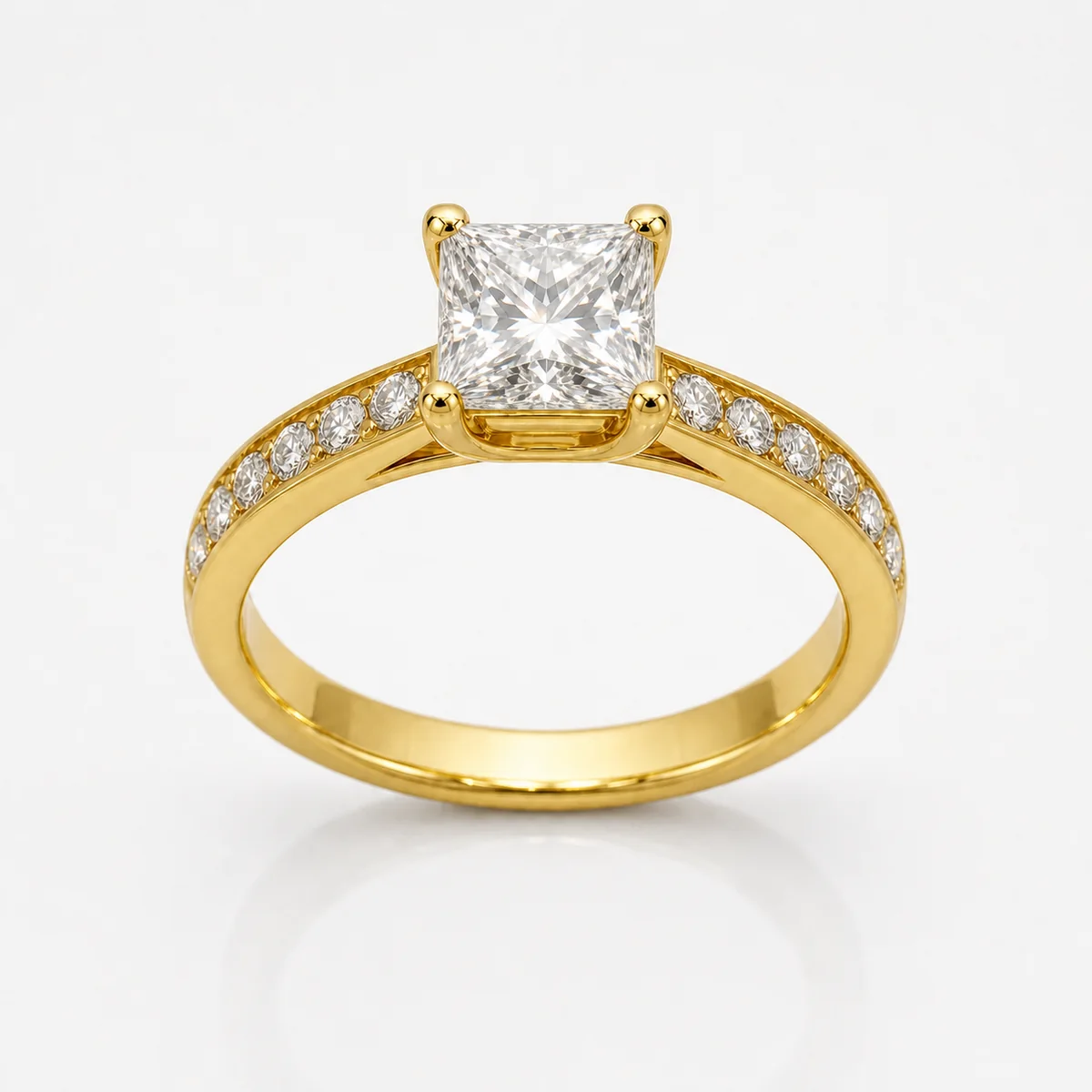
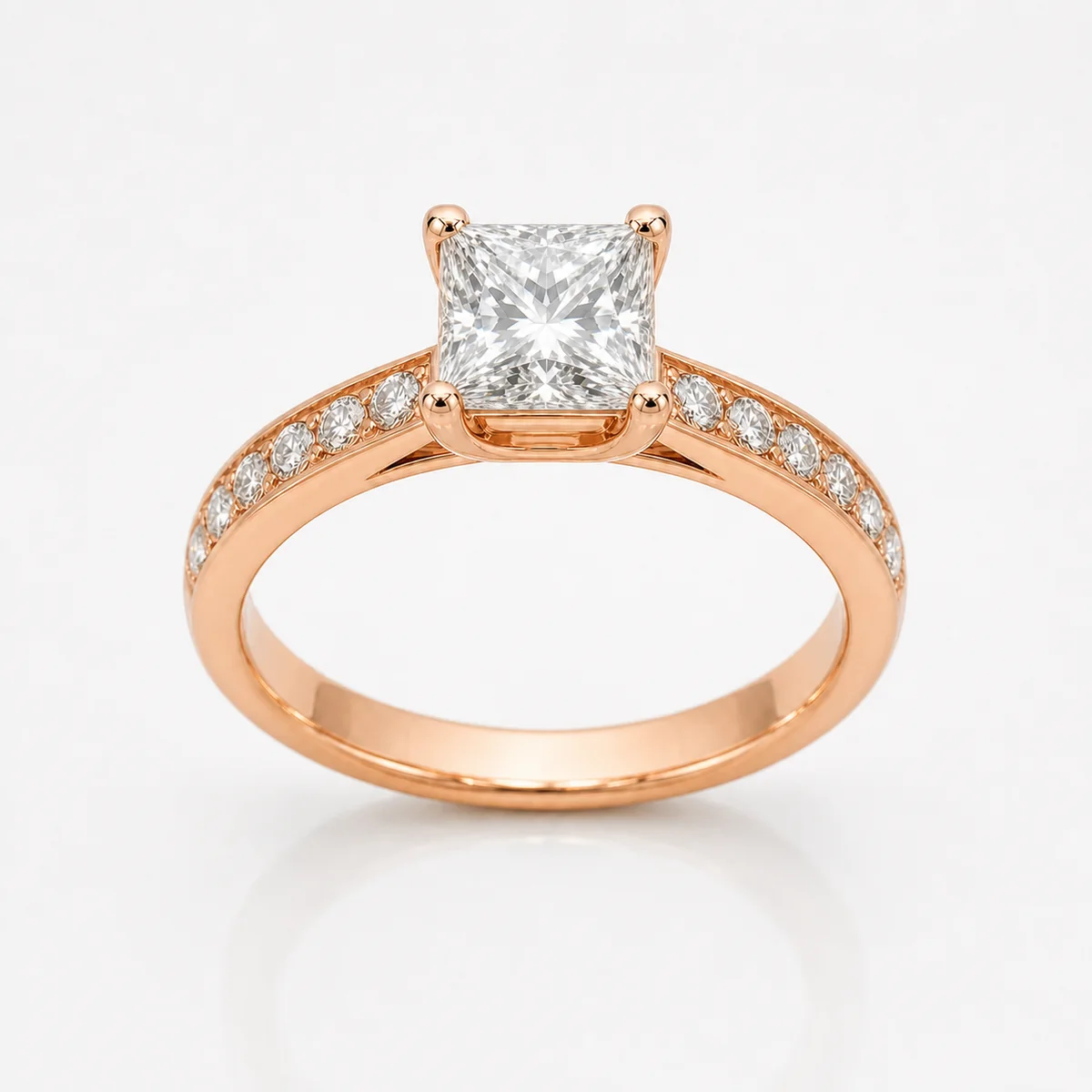 Princess with side stonesSquare centre, a line of small stones each side.
These are examples, not a catalogue
We are a working bench, so we can make essentially anything: a design off this page, one of these changed, a piece you have seen elsewhere, a drawing, a photograph, or an heirloom reset into something new. Bring the idea in whatever form you have it and we will tell you what it takes and what it costs, before any work starts.
Message Prodiam on WhatsAppor send it through the contact page
Renders are illustrations of a design, not photographs of a piece in stock. The stones in the pictures are stand-ins; yours is the one you choose, certified, with its own report.
Diamond price guidance, captured 8 September 2026. These figures describe samples of sourced listings, with VAT and delivery for the stones included. They are not current stock guarantees. Settings and making are additional where jewellery is discussed; confirm the complete written quote.
What an engagement ring costs, by centre stone
An engagement ring's total is the centre diamond plus the setting, metal and making. In our captured H-colour sample, a one-carat stone was about R61 300, a 1.5ct about R148 700 and a two carat about R300 500. These are diamond-only guide prices at VS1–VS2 clarity, with an Excellent cut filter and no fluorescence. We quote your complete ring before work begins.
| Centre stone | H-colour guide | J-colour guide | At capture | |
|---|---|---|---|---|
| half carat | R12 400 | R10 500 | 34 053 | See these → |
| 1 carat | R61 300 | R41 700 | 25 599 | See these → |
| 1.5 carat | R148 700 | R100 400 | 11 390 | See these → |
| 2 carat | R300 500 | R198 300 | 5 877 | See these → |
| 3 carat | R880 300 | R574 500 | 2 060 | See these → |
Both columns show sampled guide prices, not an entry price or a complete ring. The count includes all grades in each weight band at capture. Set a budget for the whole ring, then choose the diamond and setting together.
No two diamonds are the same
A table describes a market, not a stone. Two diamonds identical on paper can differ by a third in price and both figures be right: how well the stone is actually cut and how much light it returns, where the inclusions sit and whether the eye finds them, how strongly it fluoresces, and how keenly that one happens to be priced against the international trade benchmark on the day. We check every stone against that benchmark before we show it to anybody, and the number that matters is the one quoted in writing on the stone you actually choose.
Ask us what your budget buysSearch the live inventory →
Captured 8 September 2026; guide figures rounded up to the next R100. Colour and clarity tables use sampled medians and percentile bands; rows without a measured range may use a limited lower-priced sample. Prices and availability can change. Your written quote identifies the actual stone and all inclusions.
What a three-stone ring is, and what it says
A three-stone ring, the trilogy, sets a centre diamond between two side stones, so three diamonds run in a line across the finger. The arrangement carries a meaning that has kept it popular for generations: the three stones are read as past, present and future, the journey a couple has already shared, the moment they are standing in, and the life still ahead.
That story is why a trilogy suits not only an engagement but also a landmark anniversary or a vow renewal, where the same three-part idea fits the occasion. It is a setting with something to say, and it says it with real diamonds rather than a symbol.
That is the first thing that sets a trilogy apart from its neighbours. A solitaire is one diamond standing alone, the purest single statement. A halo rings a centre stone with a frame of tiny matched melee to make it read larger. A three-stone ring does neither: it gives you three distinct, individually graded diamonds, each one a stone you could certify on its own.
That changes both what the ring is worth and what makes it look right, because with three real stones on show, the way they agree with one another becomes the heart of the design.
The matched-trio challenge, where a cutting house earns its place
A trilogy is the engagement style that most rewards a cutting house, because its success rests entirely on how well its three diamonds agree, and matching them is exactly what we control and a shop buying finished stones cannot.
For the trio to read as one considered ring rather than three stones that happen to sit together, the centre and the two sides have to agree on colour, so one stone does not look warmer than the next. They must agree on clarity too, so the eye is not caught by an inclusion in only one.
Most demanding of all, all three have to be cut to return light at the same rate, so they come alive together instead of one out-sparkling its neighbours.
Get that wrong and the ring looks mismatched no matter how good each stone is on paper.
A jeweller assembling a trilogy from bought-in stock is limited to whatever loose diamonds happen to match on the day, which is why so many retail three-stone rings settle for sides that are close enough rather than truly matched. Prodiam works the other way around.
We are a Johannesburg diamond dealer and cutting house, directed by Darren Etkind, and we cut and select the centre and both side stones in-house at Procut DCW to GIA Excellent cut grade, so the set is matched at its source.
That lets us do either of the two things a good trilogy needs: a trio that agrees almost exactly, for a seamless, balanced look, or a deliberately graduated set, a larger centre with two smaller sides chosen to step down evenly and match each other precisely.
Controlling the cutting and the selection under one roof is the whole case for commissioning a trilogy from the cutter rather than buying one off a tray.
Proportions: getting the centre and the sides to balance
The character of a three-stone ring is set by the relationship between the centre and its sides, and there is no single correct ratio, only the look you are after. A common, classic balance puts a clearly dominant centre between two noticeably smaller sides, often with each side stone somewhere around a quarter to a third of the centre’s weight, so the centre leads and the sides support.
Move the sides larger and the ring becomes a bolder, more horizontal statement that fills the finger; move them smaller and the centre reads almost like a solitaire with a quiet accent. A graduated set keeps the eye travelling smoothly from the band up to the centre and back down.
Because the sides change the total carat weight on the hand, a trilogy is also a way to gain presence without putting everything into one stone. A centre with two well-matched sides spreads weight across the finger and can read larger overall than a solitaire of the same centre size, while keeping every stone a real, certified diamond.
We work the proportions out with you against the centre stone you choose, and balance them on the bench so the finished ring sits true and even, not front-heavy or crowded.
Side-stone shapes: round, tapered baguette, trillion, pear
The two side stones do much of the work of giving a trilogy its personality, and the shape you choose for them changes the ring’s whole mood. We cut and match all of the classic side shapes in-house so they sit balanced and true against the centre.
- Round brilliants, the softest, brightest and most classic choice, echoing a round centre and keeping the ring timeless. Two round sides flanking a round centre is the quintessential trilogy.
- Tapered baguettes, long step-cut diamonds that narrow towards the band, framing the centre with clean architectural lines and a calmer, more vintage flash than a brilliant. Elegant and understated.
- Trillions, bold triangular cuts that flare the ring out at the shoulders, adding width and presence. They make a trilogy read larger and more striking across the finger.
- Pears, set with their points facing outward, adding an elongating, graceful sweep that flatters an oval, pear or marquise centre and lengthens the look of the hand.
The side shape is usually chosen to complement the centre. A round centre sits beautifully between rounds or tapered baguettes; an emerald or other step cut pairs naturally with baguette sides for an architectural, Art-Deco feeling; a pear or oval centre is flattered by pear or trillion sides that echo its sweep. Weigh the centre’s outline first on our guide to every diamond shape, then choose the sides to frame it.
Settings and metals for a trilogy
How the three stones are held shapes both the look and the security of a trilogy.
The two most common approaches are a shared prong setting, where single claws sit between the stones and hold two diamonds at once for a close-set, almost continuous line of light, and an individually clawed setting, where each stone has its own prongs for a slightly more defined, separated look and a touch more security.
The centre is often lifted a little proud of the sides so it leads the eye, and a trilogy can sit on a plain polished band, a knife-edge shank, or a band with pavé or accent diamonds running down the shoulders into the sides.
We make every trilogy in 18k white, yellow or rose gold, or in platinum. White gold and platinum are the most-requested, because a cool, bright metal reads seamlessly against a colourless or near-colourless trio and lets the three stones run together as one line of light, while yellow and rose gold give a warmer, more vintage character that suits baguette or step-cut sides especially well.
Platinum is denser and naturally white the whole way through, where white gold is rhodium-plated and benefits from re-plating over the years. We talk you through which suits the stones, the wearer and the budget in the brief.
Choosing the three stones: the 4Cs across a matched set
| Choice | What we make to order |
|---|---|
| Layout | Graduated centre with smaller matched sides, or three stones of equal size |
| Centre shape | Round, oval, cushion, emerald, pear, princess, radiant and more, set to lead the trio |
| Side shape | Round, tapered baguette, trillion or pear, cut to complement the centre |
| Cut | Centre and sides matched to return light at the same rate; rounds to GIA Excellent on our bench |
| Colour | D–F colourless, or a near-colourless G–I, with all three stones matched so none reads warmer |
| Clarity | IF–VVS, or an eye-clean VS–SI1, matched so no single stone catches the eye |
| Metal | 18k white, yellow or rose gold, or platinum |
| Certification | GIA / EGL certified; reports supplied with the stones |
A trilogy adds a dimension the 4Cs do not cover on their own: matching. It is not enough for each stone to be good in isolation; the centre and the two sides have to agree, so a near-colourless trio that is all the same grade reads better than a colourless centre between two warmer sides.
Many clients put cut and the quality of the match first, then choose a near-colourless colour that faces up white across all three and an eye-clean clarity where inclusions do not show. The 4Cs explained sets out the order of trade-offs, and because we cut the centre and the sides ourselves and read and sort them in-house, we can hold all three to the same standard rather than hoping bought-in stones agree.
How a trilogy is priced
There is no single trilogy price, because the ring is built around three diamonds and each stone’s value is set by four grades, not one.
The trade prices every polished stone against the Rapaport list, an international wholesale benchmark quoted in US dollars per carat, then trades at a discount to that list for the exact make, converts it to rands at the rate of the day, and adds 15% VAT.
A three-stone ring spreads carat weight across three stones rather than concentrating it in one, so the same total weight can read larger across the finger than a single stone, while the two matched sides add cost a solitaire does not carry. The centre still leads the figure, but the sides are part of it, and matching them well is part of the make.
Where those three stones are bought makes the biggest difference to what you pay. Because Prodiam buys rough and cuts the centre and the sides in-house on our Bedfordview bench, the importer-and-wholesaler markup is simply not in your price; you pay at a landed, Rapaport-referenced level for the same GIA-certified specification on all three stones.
That is the heart of buying direct rather than from a retail jeweller, and it matters more on a trilogy than on most rings because there are three stones, not one, carrying a markup. The only honest number is one quoted for your exact stones, so we show fully-landed ZAR prices on the diamond search, then quote your chosen ring firm in writing, excl.
VAT, before any work begins.
When a three-stone ring is the right choice
A trilogy suits a buyer who wants the ring to mean something explicit: the past, present and future reading gives it a story a solitaire carries only by implication. It suits anyone who would rather have three real, certified diamonds than one stone framed by tiny melee, and it rewards a couple who like a ring with presence across the finger rather than a single high point.
The graduated set is forgiving on budget in one useful way, spreading weight across three stones can give more visual size for a given spend than chasing one large stone, while every diamond stays a real, graded stone.
It is also a natural choice for an anniversary or an upgrade, where the three-part symbolism fits a relationship with history behind it. If you are torn between a trilogy and the alternatives, the cleanest way to decide is to compare them directly: the single-stone solitaire for purity, the halo for maximum face-up size from a melee frame, and the trilogy for three diamonds and a story.
For the full bespoke route across any of these, the custom engagement process walks through every step.
Two-stone and toi et moi rings, the trilogy’s cousin
If the three-part story is one stone too many for the look you want, a two-stone ring tells a simpler version of the same idea. A toi et moi, French for you and me, sets two diamonds side by side, usually curving around the finger, to represent two people and two lives joining.
Where a trilogy speaks of past, present and future, a toi et moi speaks of two, which makes it a quietly personal engagement choice. The two stones can be matched as a symmetrical pair, or deliberately contrasted as two different shapes, a round with a pear, or an oval with a marquise, for a more individual, modern result.
Like a trilogy, a two-stone ring depends on its diamonds being either well matched or cleanly and deliberately contrasted, which is the same cutter’s judgement, so we cut and match both stones in-house and build the setting to order on the same Bedfordview bench.
Whether you want three stones for past, present and future, or two for you and me, the principle is identical: the stones are matched at the source, not assembled from whatever happens to be in stock.
How a trilogy is made to order
- 01
Brief
The centre-stone shape and carat, the side-stone shape and proportion, the colour and clarity range, the metal, the finger size, your budget and your deadline. We respond within 24 hours.
- 02
Cut & match the trio
We cut or select the centre and both sides on our Bedfordview bench to GIA Excellent cut grade, matched for colour, clarity and light return, each with its report, and quote a firm ZAR figure against all three stones and the make.
- 03
Design & sign-off
The setting is drawn up, by CAD render where helpful, with the centre and sides balanced in proportion, the shared or individual claws decided, and the band finished to your taste.
- 04
Cast, set & finish
The setting is cast in your chosen metal, all three diamonds are set true and level by hand at the bench, and the ring is hand-polished to a mirror finish, then checked under loupe and microscope.
- 05
Hand-over
Presentation at the Bedfordview studio by appointment, or insured overnight courier nationwide via Brink’s or G4S. Certification are included, and a written insurance valuation is available on request.
A trilogy is one of several ways to set a meaningful ring. Compare the single-stone solitaire and the framed halo, browse the wider world of diamond rings we make, or start from the round brilliant that most often serves as a trilogy centre. When you are ready, brief us and Darren will come back within 24 hours.
Three-stone and trilogy rings: common questions
What is a three-stone (trilogy) engagement ring?
A three-stone engagement ring, also called a trilogy ring, is a setting with a centre diamond flanked by two side stones, three diamonds in a row across the finger. The three stones are most often read as past, present and future, which is why a trilogy is a popular choice for an engagement, an anniversary or a milestone.
It differs from a solitaire, which is one stone alone, and from a halo, which surrounds a centre with a frame of tiny melee: a trilogy gives you three real, individually graded diamonds.
At Prodiam the centre and both sides are cut on our own bench or sourced to order, and matched here to GIA Excellent cut grade and set on our own Bedfordview, Johannesburg bench, so the trio agrees as one ring rather than three stones that happen to sit together.
What do the three stones in a trilogy ring symbolise?
The three diamonds in a trilogy ring are traditionally read as past, present and future, the journey a couple has shared, the moment they are in, and the life still ahead. That meaning is the reason the style endures for engagements, and it is why a trilogy is also chosen for a significant anniversary or a vow renewal, where the same three-part story fits.
There is no rule that the centre must be the largest, though it usually is; some couples set three stones of equal size to say the three parts carry equal weight. Because the symbolism rests on three distinct stones, the way those stones are matched, in colour, clarity and cut, is what makes the meaning read cleanly on the hand, and that matching is a cutter’s work.
Why is a cutting house better for a three-stone ring than a jeweller buying finished stock?
Because a three-stone ring lives or dies on how well its three diamonds agree, and matching them is exactly what a cutting house controls and a shop buying in finished stones cannot.
For the trio to look like one considered ring, the centre and the two sides have to agree on colour and clarity, sit at proportions that graduate evenly, and, critically, be cut to return light at the same rate so all three sparkle together rather than one stone out-shining its neighbours.
A jeweller assembling a ring from bought-in stones is limited to whatever loose diamonds happen to match on the day. Prodiam cuts and selects the centre and both sides in-house on our Bedfordview bench to GIA Excellent cut grade, so the set is matched at the source, whether you want three stones that agree exactly or a centre with deliberately graduated, well-matched sides.
That control is the whole case for buying a trilogy from the cutter.
What shapes are used for the side stones on a three-stone ring?
The two side stones on a three-stone ring are most often round brilliants, tapered baguettes, trillions (triangular cuts) or pears, and each gives the ring a different character. Round side stones echo a round centre and keep the ring soft, bright and classic. Tapered baguettes are long, step-cut diamonds that narrow towards the band, framing the centre with clean, architectural lines and a calmer, more vintage flash.
Trillions are bold triangular stones that flare the ring out at the shoulders for maximum presence. Pears, set with their points outward, add an elegant, elongating sweep that flatters an oval or pear centre. The side shape is usually chosen to complement the centre’s shape, and we cut and match all of these in-house so the sides sit true and balanced against the centre stone.
How much does a three-stone engagement ring cost in South Africa?
There is no single price, because a three-stone ring is built around three diamonds, and each stone’s four grades, carat, cut, colour and clarity, set most of the cost, with the metal and the making on top.
The trade prices every stone against the Rapaport list, an international wholesale benchmark in US dollars per carat, then trades at a discount to that list for the exact make and converts it to rands at the day’s rate, with 15% VAT added.
A trilogy spreads carat weight across three stones rather than one, so the same total weight can read larger across the finger, while the matched sides add cost a solitaire does not carry. Because Prodiam buys rough and cuts all three stones in-house on our Bedfordview bench, you pay a landed, Rapaport-referenced price for the centre and the sides rather than a retail markup on bought-in stock.
You receive a firm ZAR quote, VAT inclusive, before any work begins, and you can see fully-landed ZAR prices on real GIA-certified stones on our diamond search.
What is a toi et moi or two-stone engagement ring, and do you make them?
Yes, we make them. A toi et moi, French for you and me, is a two-stone engagement ring in which two diamonds sit side by side, usually curving around the finger, to represent two people and two lives joining. It is the close cousin of the trilogy: where a three-stone ring tells a past, present and future story, a two-stone ring tells a story of two.
The two stones can be the same shape and size for symmetry, or deliberately paired as contrasting shapes, a round with a pear, or an oval with a marquise, for a more individual look.
Like a trilogy, a two-stone ring depends on its diamonds being well matched or deliberately and cleanly contrasted, which is a cutter’s job, so Prodiam cuts and matches both stones in-house and builds the setting to order on the same Bedfordview bench.
Last reviewed: June 2026.