
Cubic Zirconia vs Diamond · Simulant, Not a Diamond
Cubic zirconia versus a natural diamond: how to tell them apart, and what each is for.
Cubic zirconia is a synthetic diamond simulant, a man-made stone that imitates the look of a diamond but is a different material, not a diamond and not a lab-grown diamond. It is softer, so it scratches and clouds over years; it is heavier; and it throws more rainbow flash, which is one of the tells. Crucially, it holds no resale or heirloom value, where a certified natural diamond does.
Cubic zirconia has a real place as a costume or travel piece. For a stone you intend to keep, you want the real thing.
See fully-landed ZAR prices on natural stones Talk to Darren →
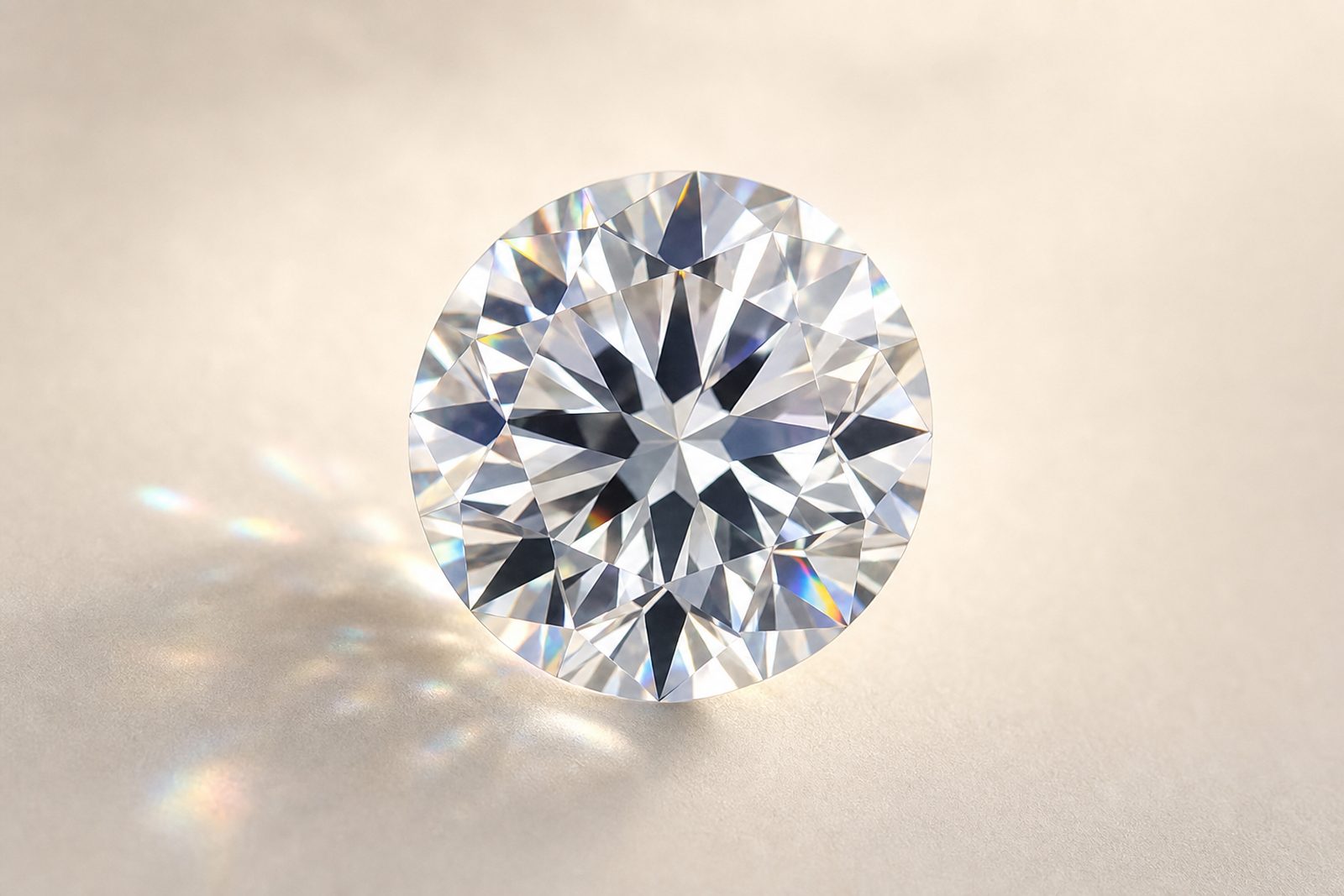
-
Natural diamonds only
We sell natural diamonds and diamond-set jewellery. Ask us about the grading report and available origin documentation for your chosen stone. Why we don’t sell lab-grown →
-
Independent grading reports
The grading laboratory is shown per stone. Review its report and the individual diamond before choosing; sourced examples can include GIA, EGL and IGI.
-
Insured delivery, SA & worldwide
Overnight across South Africa via Brink’s, G4S or our nominated jewellery courier. Insured worldwide dispatch via Ferrari Group and FedEx Custom Critical.
-
14-day in-person exchange
In-person sales at the viewing room come with a 14-day exchange courtesy on stock pieces. Distance-sale CPA cooling-off applies.
What cubic zirconia actually is
Cubic zirconia, often shortened to CZ, is a laboratory-made crystal of zirconium dioxide. It was developed as an inexpensive stand-in for diamond and does the job well to a casual glance: cut and polished, a fresh cubic zirconia is clear, bright and sparkly.
But it is a simulant, a material chosen only because it resembles a diamond, and it contains no carbon and shares none of a diamond’s defining physical properties. Calling it a “diamond” of any kind is simply incorrect.
The distinction that trips most people up is the one between a simulant and a lab-grown diamond, so it is worth stating plainly. A lab-grown diamond is real diamond, the same pure crystallised carbon as a mined stone, grown in a reactor over a few weeks rather than in the earth over a billion years. Cubic zirconia is not diamond at all.
So there are three separate things in play here, and only two of them are actually diamonds. The honest comparison of the two that are is set out on our lab-grown versus natural diamonds page; this page is about the simulant.
Cubic zirconia versus a diamond, row by row
Side by side, the two stones differ on every measure that matters except the first impression. This is the working comparison, and it is also the list a jeweller runs through when separating them.
| Natural diamond | Cubic zirconia | |
|---|---|---|
| What it is | Real diamond, pure crystallised carbon, mined from the earth | A synthetic simulant (zirconium dioxide); not a diamond |
| Hardness | 10 on the Mohs scale, the hardest natural material | About 8 to 8.5; softer, so it scratches and clouds over time |
| Durability | Stays sharp and bright for a lifetime of daily wear | Surface dulls and goes cloudy within a few years of wear |
| Weight | The reference | Roughly 1.6× denser; heavier for the same dimensions |
| Fire (dispersion) | Balanced white brilliance with measured colour flash | More rainbow flash; can look showier and less “white” |
| Value retention | Holds a market floor; tradeable against its GIA report | Effectively none; no resale, trade-in or heirloom value |
| Certification | Independent GIA report on the individual stone | None; a simulant is not laboratory-graded as a diamond |
Neither stone is “wrong” in the abstract. They are built for different jobs, and the useful thing is to be honest about which job you are buying for rather than to pretend a simulant is a substitute for a diamond when it is not.
How a jeweller tells them apart
A fresh, well-cut cubic zirconia can fool the eye, which is exactly what it is designed to do, so guesswork is unreliable. What separates them is a short, dependable set of checks, some of which you can attempt and some of which need a bench.
- Weight in the hand. Cubic zirconia is roughly 1.6 times denser than diamond, so a CZ and a diamond cut to the same millimetre measurements will not weigh the same. A loose stone that feels heavy for its size is a strong hint it is a simulant.
- The flash. Cubic zirconia disperses more light into rainbow colour than diamond does. An excess of coloured fire, more than a real diamond of that size would throw, is one of the classic tells, though on its own it is suggestive rather than proof.
- Wear and clarity. An older cubic zirconia almost always shows it: scratched facet edges, abraded points and a clouded, slightly greasy look, because the stone is too soft to survive daily wear cleanly. A diamond of the same age stays sharp.
- The instruments. The certain answer is a jeweller’s. A thermal and electrical conductivity probe separates diamond from cubic zirconia in seconds, and a loupe read confirms the facet quality and surface condition.
- The paperwork. A real diamond carries an independent GIA report tied to that individual stone, with its measurements and inclusions recorded. A simulant has none. The full method is on our diamond verification page.
Skip the kitchen tests you will read about online. The fog test and the scratch test are folklore: a hard simulant can scratch glass too, and a careless scratch test can damage a genuine stone. If you want certainty, have the stone screened on proper equipment, which is something Prodiam will do for a stone you already own, with no obligation.
The durability gap, and why it matters for a ring
The single most practical difference between the two is hardness, and it plays out over years rather than at the counter. Diamond is a 10 on the Mohs scale, the hardest known natural material. Cubic zirconia sits at roughly 8 to 8.5. That looks like a small gap, but the Mohs scale is not linear: a diamond is dramatically more scratch-resistant than two points would suggest.
The everyday consequence is simple. A cubic zirconia worn daily in a ring slowly accumulates fine scratches across its facets, the points and edges abrade, and within a few years the stone loses its polish and takes on a cloudy, dull cast. A diamond shrugs off the same wear and stays bright for a lifetime.
For an engagement ring or any piece worn every day, that is the difference between a stone you replace and a stone you keep, and it is the most concrete reason a keepsake should be a real diamond.
When cubic zirconia is the right choice
None of this is a dismissal of cubic zirconia, because it has a genuine and sensible place. As an inexpensive costume stone it lets a piece of fashion jewellery carry plenty of visible sparkle for very little, and nobody should feel they overpaid for that.
It is also the sane choice for a travel piece: a holiday or duplicate ring you can wear without worrying about loss or theft, while the real diamond stays at home or in the safe. And it is a perfectly reasonable placeholder, a stand-in setting while you save for the stone you actually want.
The mistake is not buying cubic zirconia; it is buying it under the impression that it is a diamond, or expecting it to hold value or last like one. Used for what it is, it is useful. Mistaken for what it is not, it disappoints.
Why a real diamond is the choice for a keeper
If the piece is meant to be kept, insured or passed on, the case for a certified natural diamond is straightforward and rests on three things a simulant cannot offer. The first is durability: a 10-on-the-Mohs-scale stone survives a lifetime of wear where a softer simulant clouds.
The second is value: because the earth made a finite amount of natural diamond, it holds a market-clearing floor and can be traded in against its GIA report, while cubic zirconia has effectively no resale value at all. The third is provenance, a documented origin you can stand behind. A natural diamond carries a real story and a real certificate; a simulant carries neither.
This is also where buying from the people who cut the stone changes the sum. Prodiam is a South African dealer and cutting house: we buy natural rough at De Beers DBCM viewings and South African tender houses, cut and polish it ourselves at Procut DCW in Bedfordview, Johannesburg, to GIA Excellent cut grade, and sell direct.
Because there is no retail counter in the chain, more of what you pay sits in the stone itself rather than in a markup.
We do not publish a rand figure on a page, because no honest one exists in the abstract: a diamond is priced on its own carat, colour, clarity and cut, read against the Rapaport wholesale list, converted at the day’s dollar-to-rand rate, with 15% VAT on top for a local sale.
For the number on a real stone, the live diamond search shows fully-landed ZAR pricing, or tell us your brief and Darren will quote you firm. If you are weighing a simulant against a diamond, the comparison that matters most is not the sticker, it is what you are left holding in ten years, and there the real stone wins on every count a keeper cares about.
Cubic zirconia versus diamond: common questions
Is cubic zirconia a diamond?
No. Cubic zirconia is a synthetic diamond simulant, a man-made stone (zirconium dioxide) that is engineered to look like a diamond but is a completely different material. It is not a diamond of any kind.
This is also where cubic zirconia differs from a lab-grown diamond: a lab-grown diamond is real diamond, the same crystallised carbon as a mined stone, just grown in a reactor, whereas cubic zirconia contains no carbon and is not diamond at all. A natural diamond, a lab-grown diamond and cubic zirconia are three separate things, and only the first two are actually diamonds.
How do you tell cubic zirconia from a diamond?
Not reliably by eye, but several physical tells separate them. Cubic zirconia is noticeably heavier for its size, about 1.6 times denser than diamond, so two stones cut to the same millimetre dimensions will not weigh the same. It throws far more rainbow-coloured flash, called dispersion or fire, which can look showier than the whiter sparkle of a real diamond. Over time it scratches and clouds because it is softer.
The certain methods are a jeweller’s, though: a thermal and electrical conductivity probe separates diamond from cubic zirconia in seconds, a loupe reads the wear and facet quality, and a real diamond carries an independent GIA report a simulant never will.
What is a diamond simulant?
A diamond simulant is any material that imitates the appearance of a diamond without being one. Cubic zirconia is the most common, and moissanite is the other one you will meet, along with older stand-ins like white sapphire and glass. The key point is that a simulant is a substitute look, not a real diamond: it has different chemistry, different hardness and different optical behaviour.
That is the line that separates a simulant from a lab-grown diamond, which is genuinely diamond. Prodiam works in natural diamonds only, but we will tell you plainly whether any stone you bring us is a diamond, a lab-grown diamond or a simulant.
Is cubic zirconia as hard as a diamond?
No, and this is the difference you feel over years of wear. Diamond is the hardest known natural material, a 10 on the Mohs scale of scratch hardness. Cubic zirconia sits around 8 to 8.5, which sounds close but is not, because the Mohs scale is not linear, diamond is many times more scratch-resistant than the gap suggests.
In practice a cubic zirconia worn daily picks up surface scratches and gradually goes cloudy and dull, where a diamond stays sharp and bright for a lifetime. For a ring meant to be worn every day, that durability gap is one of the strongest reasons to choose a real diamond.
Does cubic zirconia have any resale value?
Effectively none. Cubic zirconia is inexpensive to produce in unlimited quantity, so it carries no meaningful resale, trade-in or heirloom value, and a jeweller will not buy it back. A certified natural diamond is the opposite: because supply is finite it holds a market-clearing floor and can be traded in against its GIA report. That is the honest divide.
Cubic zirconia has a real and legitimate place as an inexpensive costume or travel stone, but if you are buying something to keep, to insure or to pass on, you want a certified natural diamond, not a simulant.
Last reviewed: June 2026.