
Diamond necklaces · Bedfordview, Johannesburg
Diamond necklaces in South Africa, priced
Explore listed natural diamond tennis necklaces, or commission a pendant, station or other diamond-set design with Prodiam in Bedfordview. Explore past commissions and design references below, then agree the natural diamonds, length, metal and complete VAT-inclusive quote.
A diamond necklace is a pendant built around one feature stone, a tennis necklace of matched diamonds set all the way around, or a lighter station or riviere style. Bespoke pieces are made to order on our Bedfordview bench around natural diamonds: some we cut ourselves, others we source to order from the certified trade. You get a firm rand figure before any work begins.
View available necklaces ↓ See the price table ↓ Diamond pendants → WhatsApp Prodiam Email Prodiam
Tennis necklaces available to enquire about
Compare the listed pieces below, then ask Prodiam to confirm availability, length and the final details. Prices shown include VAT.
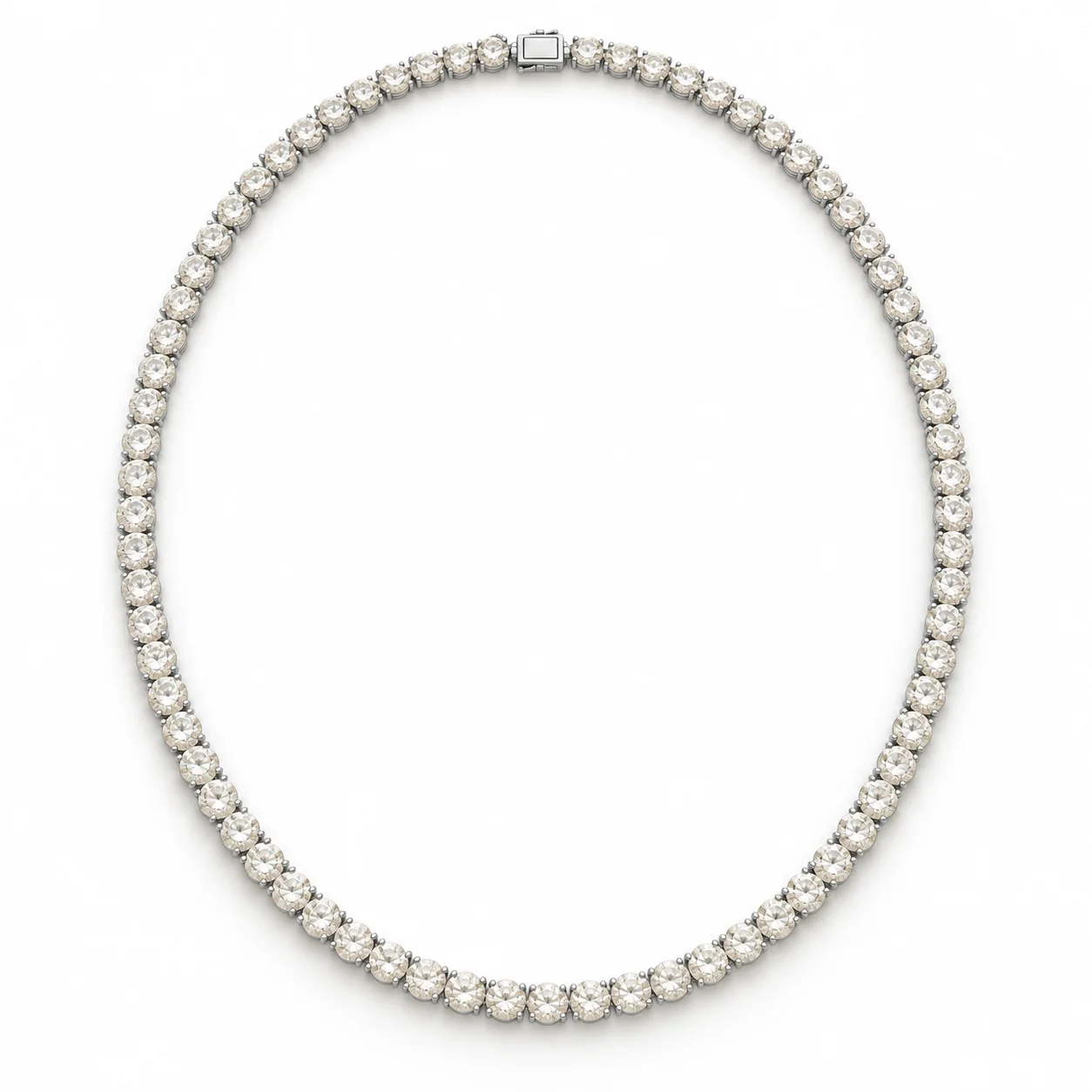 Indicative render
23.95ct Diamond Tennis Necklace
18kt white gold
23.95ct total natural diamonds · 101 round stones, approximately 4mm · K-L colour, VS-SI clarity · Ref PDTN304
R 628 190,15 incl. VATView details & enquire →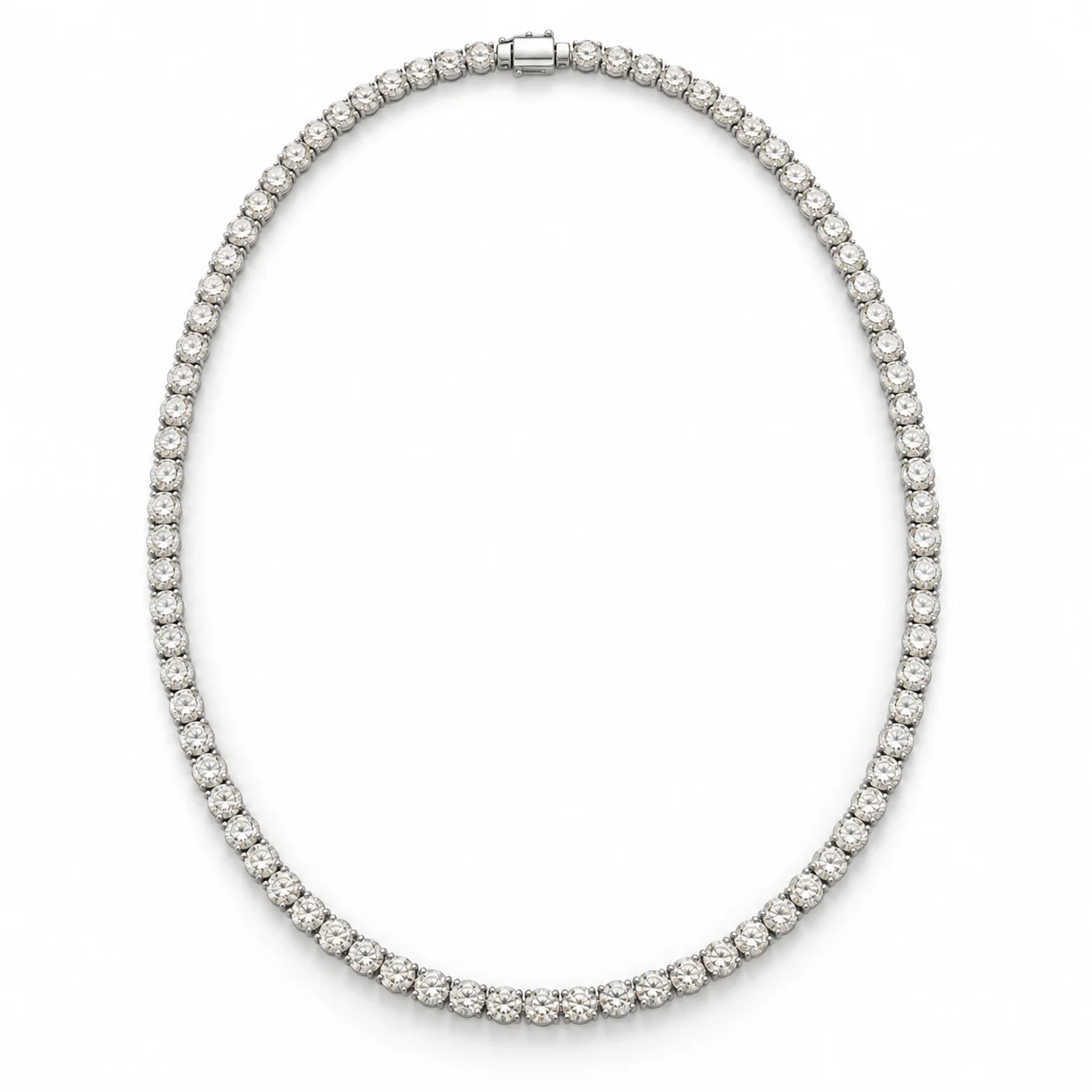 Indicative render
25.97ct Diamond Tennis Necklace
18kt white gold
25.97ct total natural diamonds · 94 round stones, approximately 3.9mm · I-J colour · Ref PDTN305
R 853 875,00 incl. VATView details & enquire →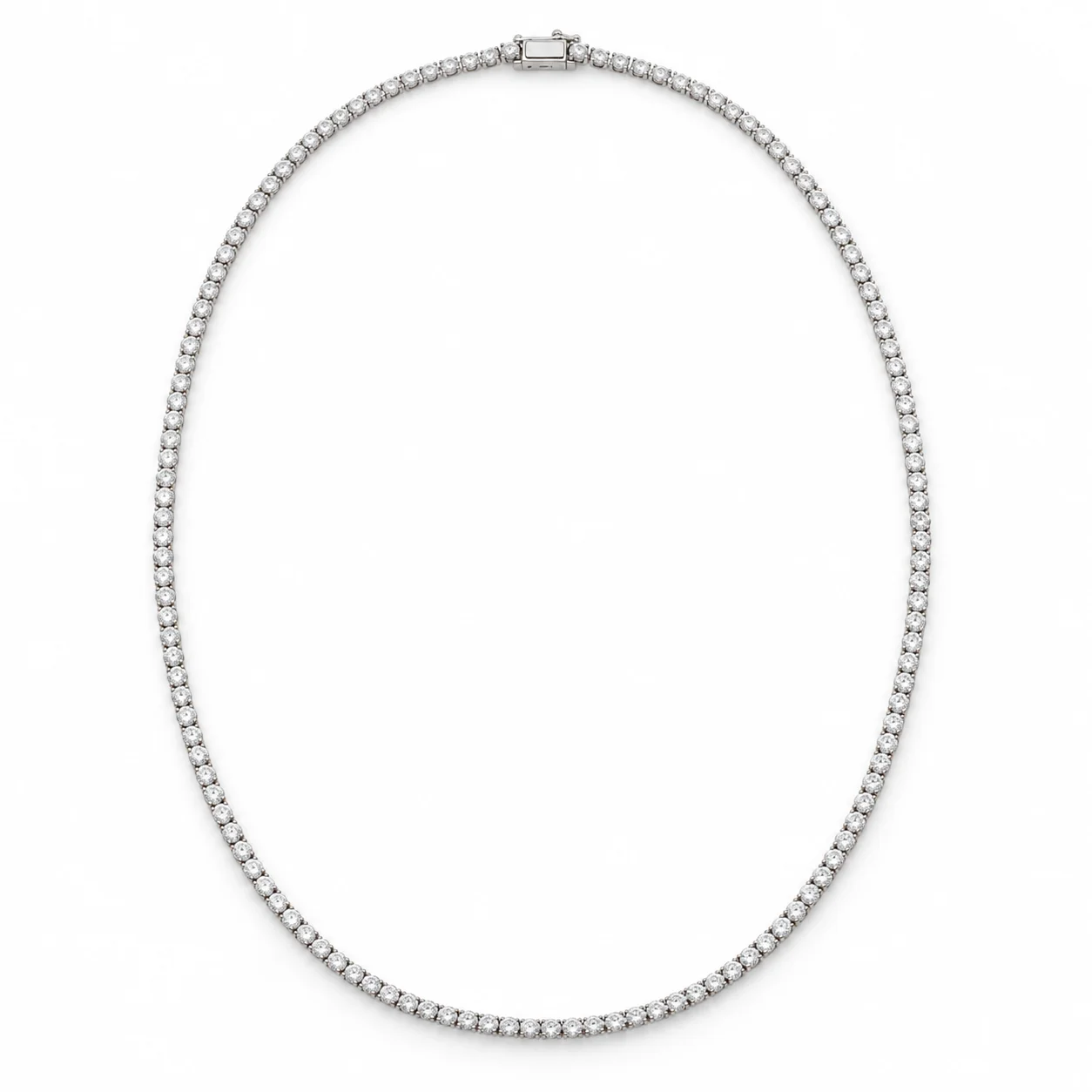 Indicative render
3.00ct Fine Diamond Tennis Necklace
18kt white gold
3.00ct total natural diamonds · 215 round stones, approximately 1.5mm · G-H colour · 16 inches (40.6cm) · Ref PDTN310
Price on requestView details & enquire →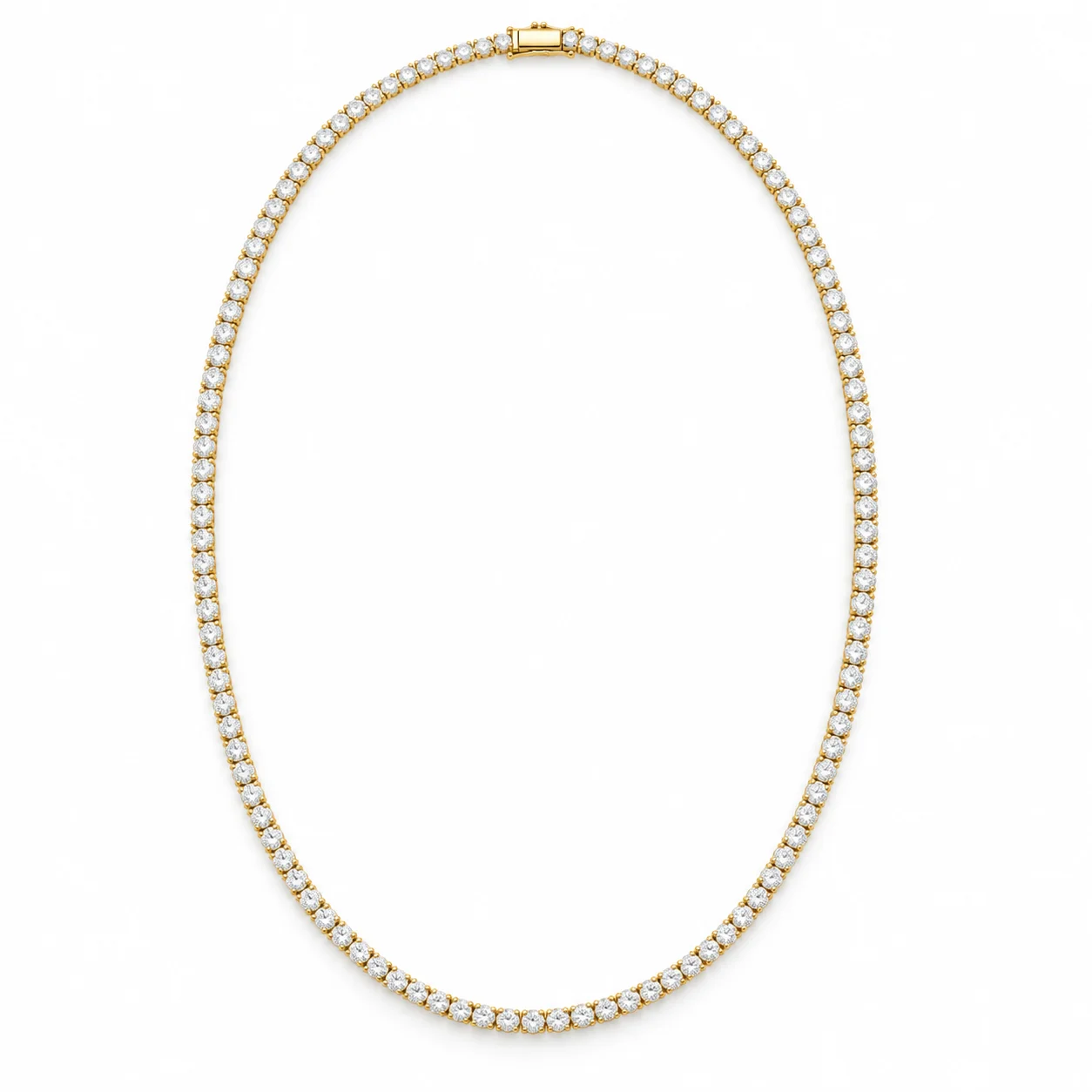 Indicative render
5.94ct Yellow Gold Diamond Tennis Necklace
18kt yellow gold
5.94ct total natural diamonds · 181 round stones, approximately 2mm · H-I colour, VS clarity · Ref PDTN312
R 130 028,09 incl. VATView details & enquire →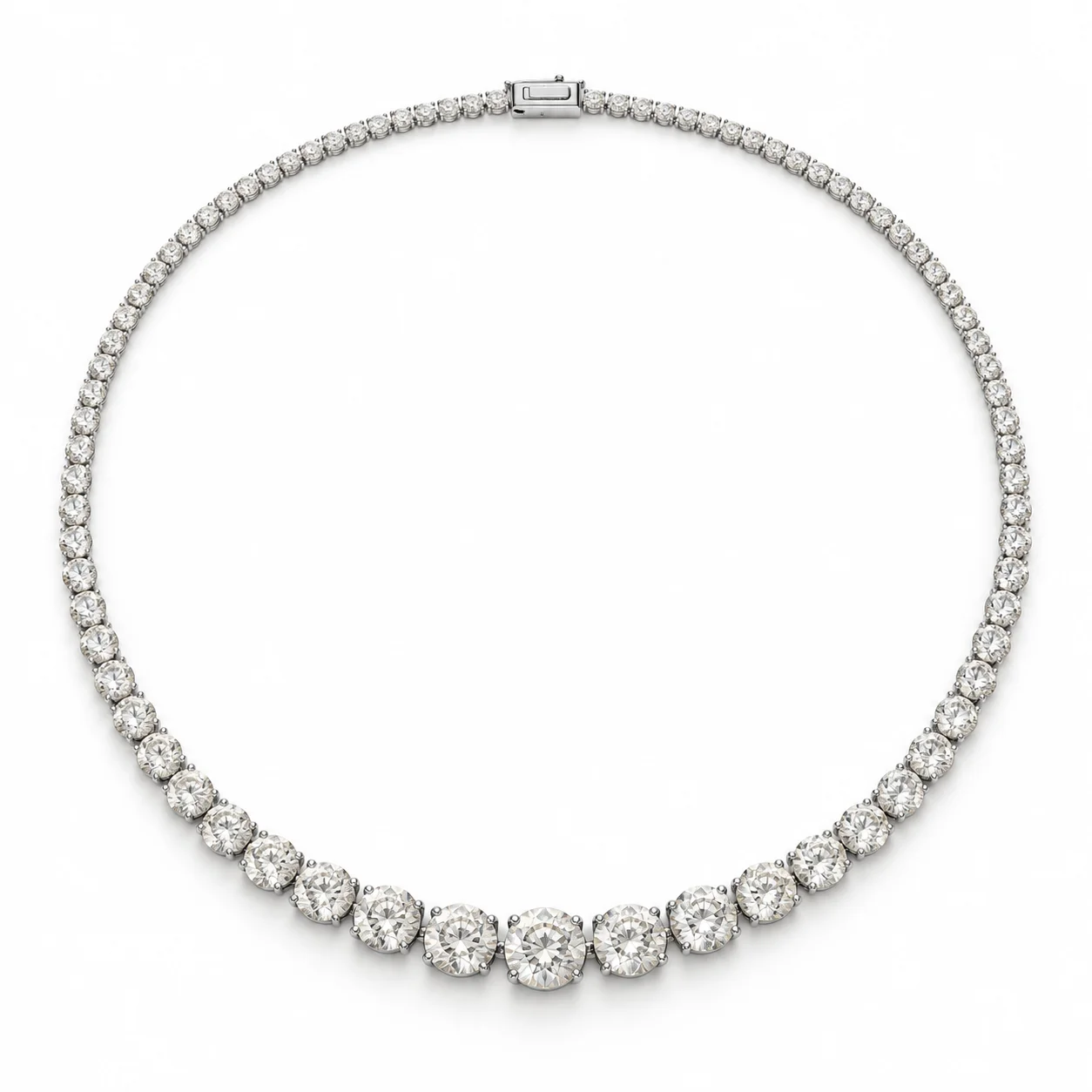 Indicative render
7.60ct Graduated Diamond Tennis Necklace
18kt white gold
7.60ct total natural diamonds · Graduated round brilliants · I-J colour, VS-SI clarity · Ref PDTN302
R 210 394,80 incl. VATView details & enquire →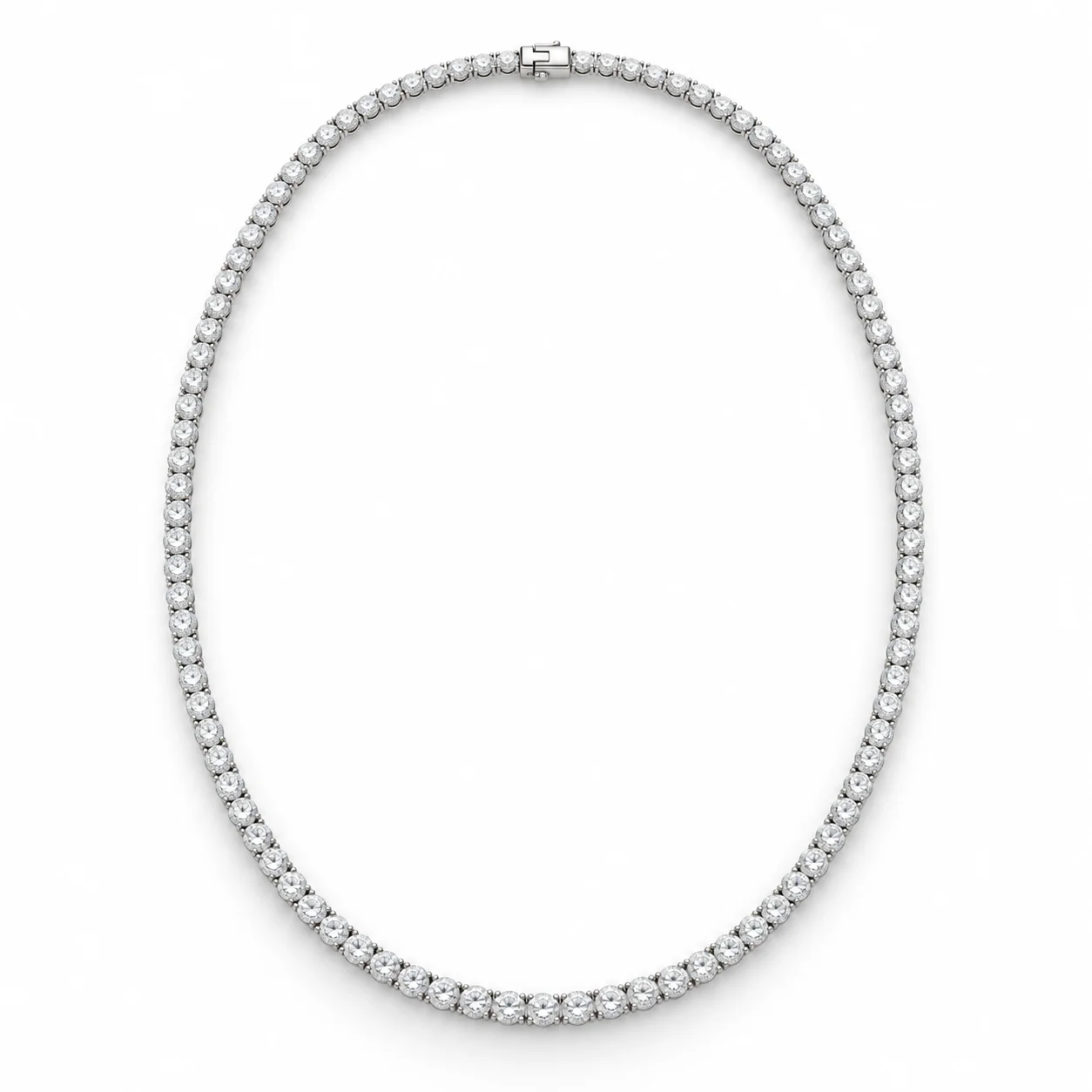 Indicative render
9.38ct Diamond Tennis Necklace
18kt white gold
9.38ct total natural diamonds · 150 round stones, approximately 2.5mm · G-H colour, VS clarity · Ref PDTN311
R 274 668,82 incl. VATView details & enquire →
Images labelled “Indicative render” are AI-generated illustrations, not photographs of the individual necklaces. Request current photographs before purchase.
Diamond necklaces from the Prodiam bench
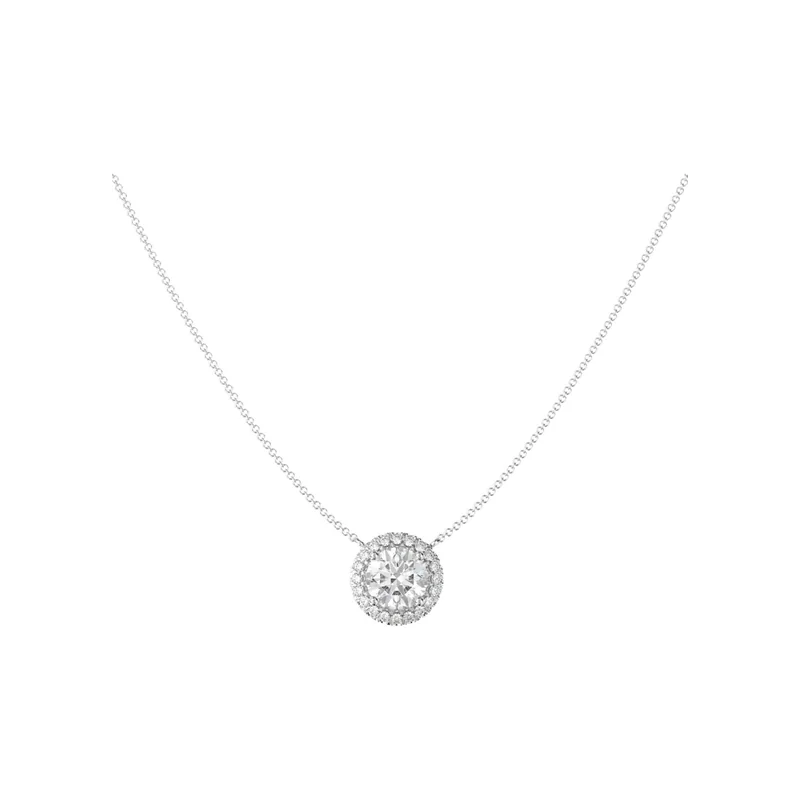
2 ct diamond halo pendant necklace 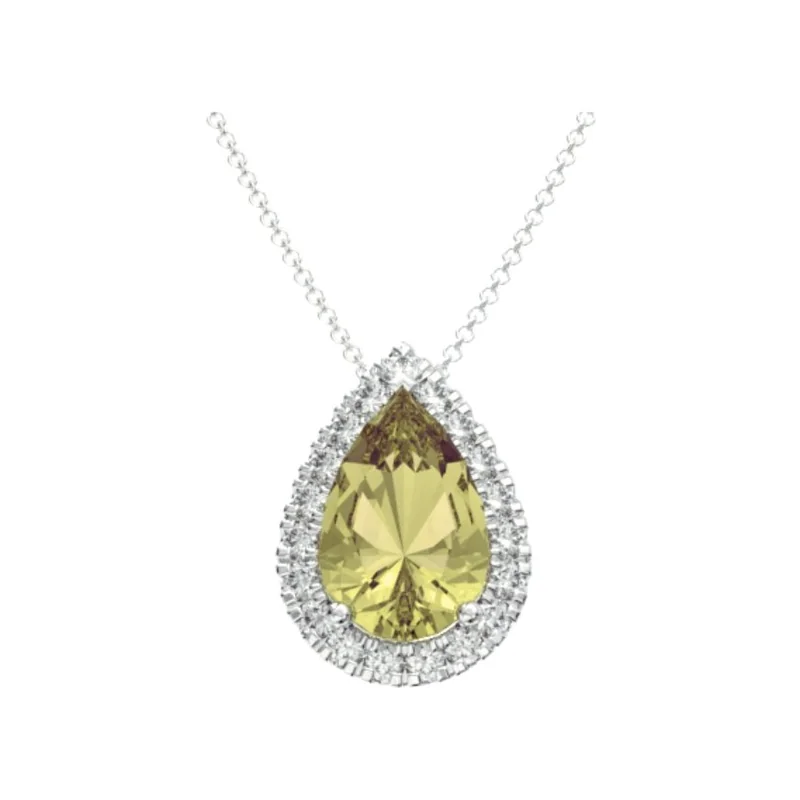
3.01 ct pear diamond pendant necklace 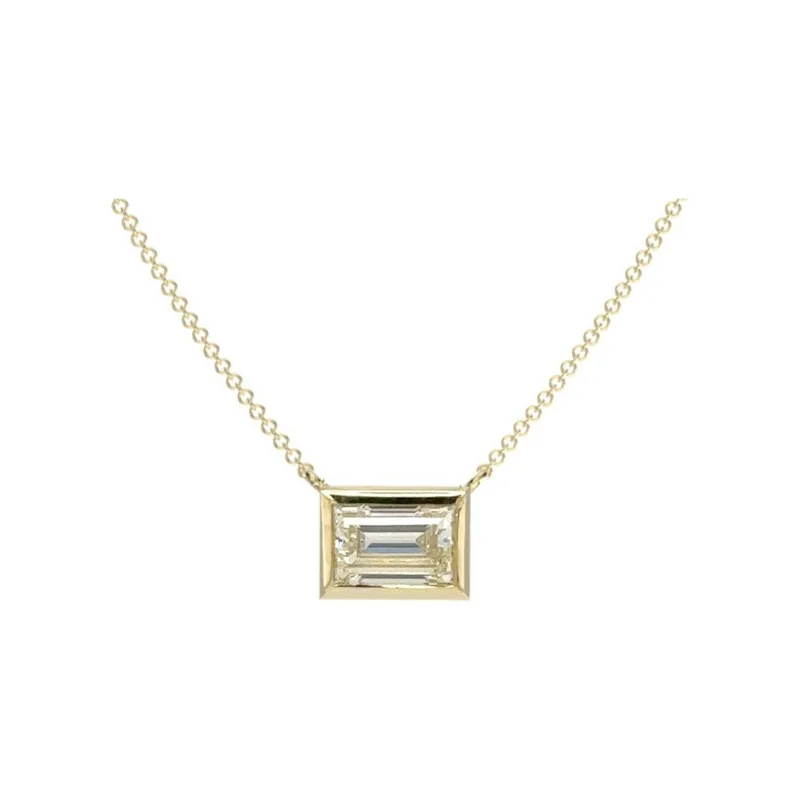
1.42 ct baguette diamond pendant necklace 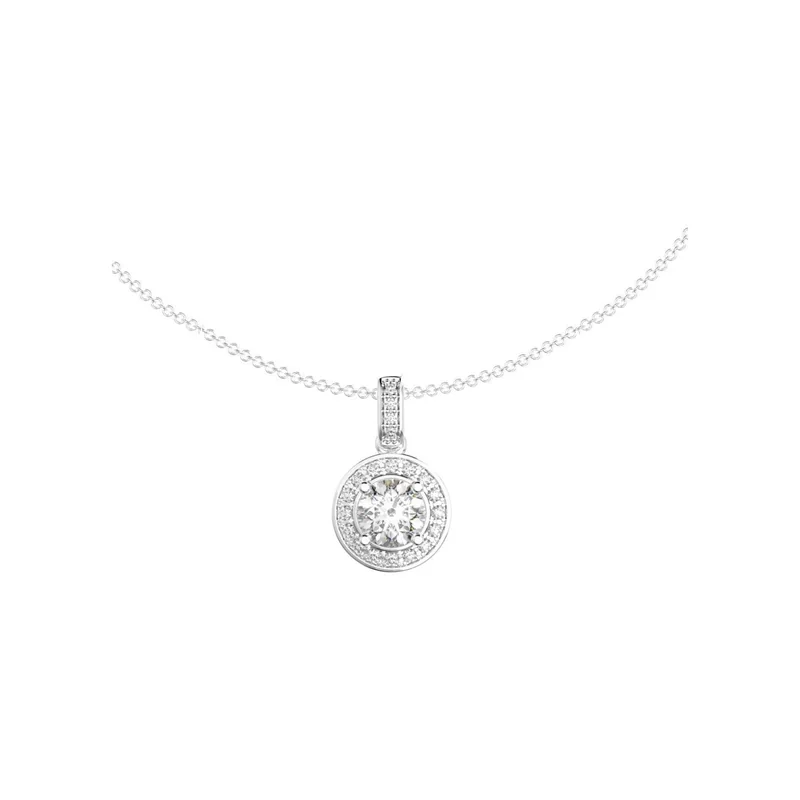
0.91 ct halo pavé pendant necklace
Past commissions from the Prodiam bench. These photographed examples are not current stock; commission a similar piece to your specification.
-
Natural diamonds only
We sell natural diamonds and diamond-set jewellery. Ask us about the grading report and available origin documentation for your chosen stone. Why we don’t sell lab-grown →
-
Independent grading reports
The grading laboratory is shown per stone. Review its report and the individual diamond before choosing; sourced examples can include GIA, EGL and IGI.
-
Insured delivery, SA & worldwide
Overnight across South Africa via Brink’s, G4S or our nominated jewellery courier. Insured worldwide dispatch via Ferrari Group and FedEx Custom Critical.
-
14-day in-person exchange
In-person sales at the viewing room come with a 14-day exchange courtesy on stock pieces. Distance-sale CPA cooling-off applies.
Diamond tennis necklace prices
The type of diamond necklace we can price openly, because it is the same claw-set line as the tennis bracelets on our bench. VAT included.
| Stone size | Total weight | Indicative price | |
|---|---|---|---|
| 1.5mm | 3 ct | R88 500 | Ask about it → |
| 1.9mm | 5.7 ct | R164 500 | Ask about it → |
| 2mm | 5.7 ct | R164 000 | Ask about it → |
| 2.2mm | 6.2 ct | R177 500 | Ask about it → |
| 2.3mm | 6.8 ct | R174 500 | Ask about it → |
| 2.3mm | 6.9 ct | R176 500 | Ask about it → |
| 2.5mm | 8.3 ct | R201 500 | Ask about it → |
| 2.9mm | 11.8 ct | R290 000 | Ask about it → |
| 3mm | 13 ct | R358 000 | Ask about it → |
| 3mm | 13 ct | R399 500 | Ask about it → |
| 3mm | 13.7 ct | R355 000 | Ask about it → |
| 3mm | 14 ct | R371 000 | Ask about it → |
| 3.2mm | 16.9 ct | R407 500 | Ask about it → |
| 3.5mm | 19.6 ct | R585 000 | Ask about it → |
| 4mm | 22.4 ct | R596 000 | Ask about it → |
| 3.8mm | 23.2 ct | R827 000 | Ask about it → |
| 4.5mm | 29.5 ct | R1 019 500 | Ask about it → |
| 4.8mm | 36.9 ct | R1 158 000 | Ask about it → |
Indicative and VAT inclusive; length, setting and metal move the final figure. A pendant is priced differently, off the single centre stone, and those start far lower: search certified stones by budget.
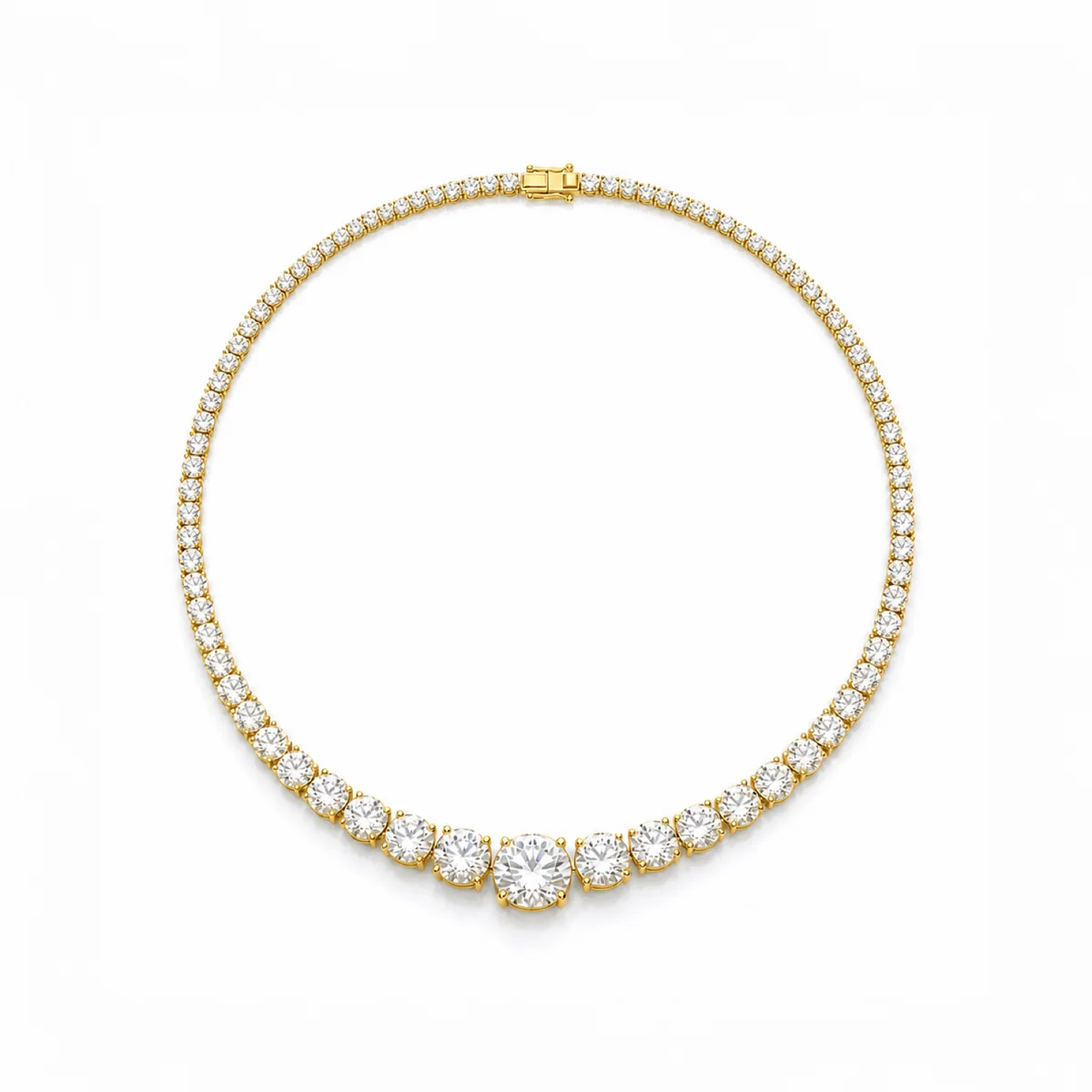
Example necklaces · rendered design references
Diamond necklace designs: examples we can make
Every diamond necklace is made to order on our Bedfordview bench. These are rendered examples of standard designs, in the metal of your choice: point at one and say that, at this weight.
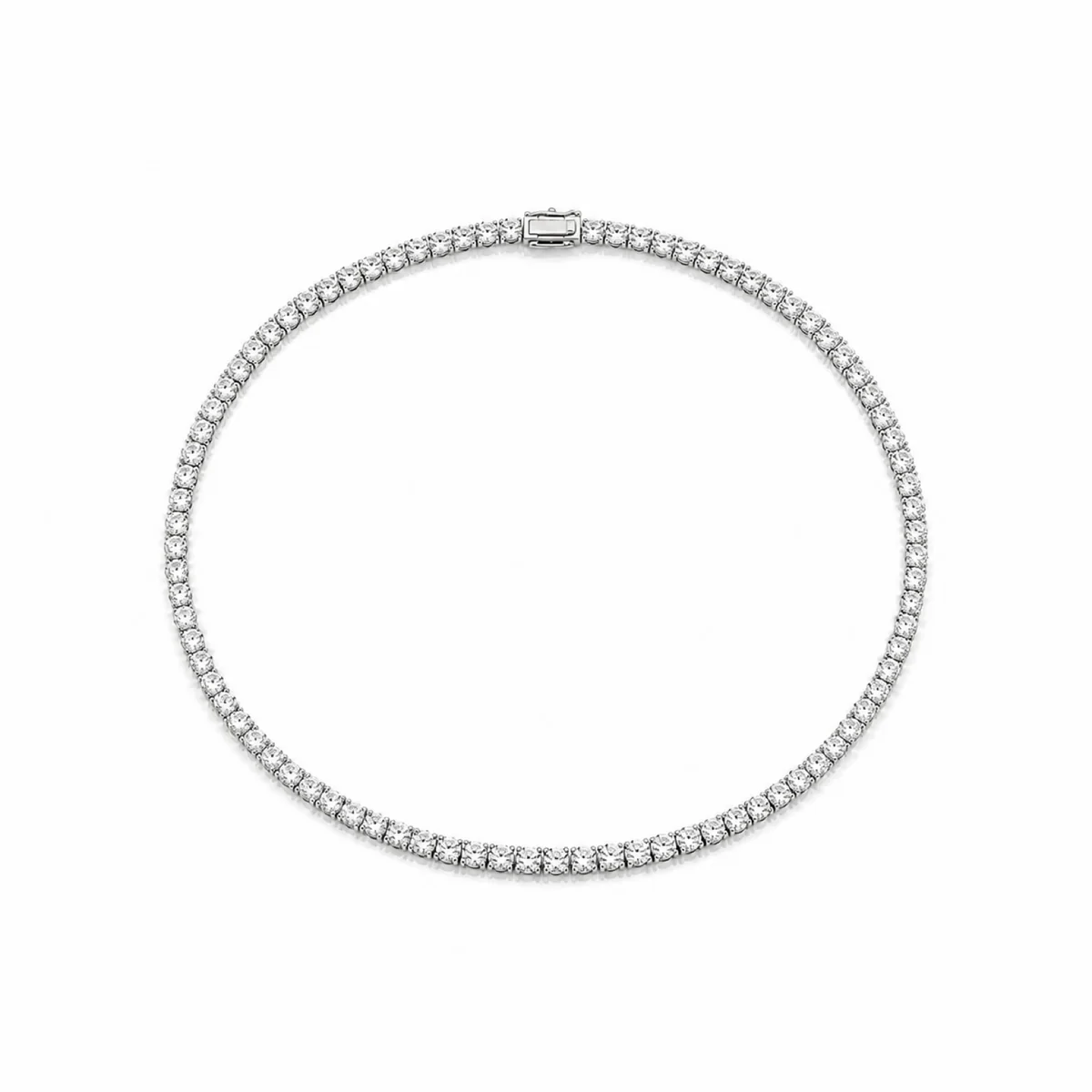
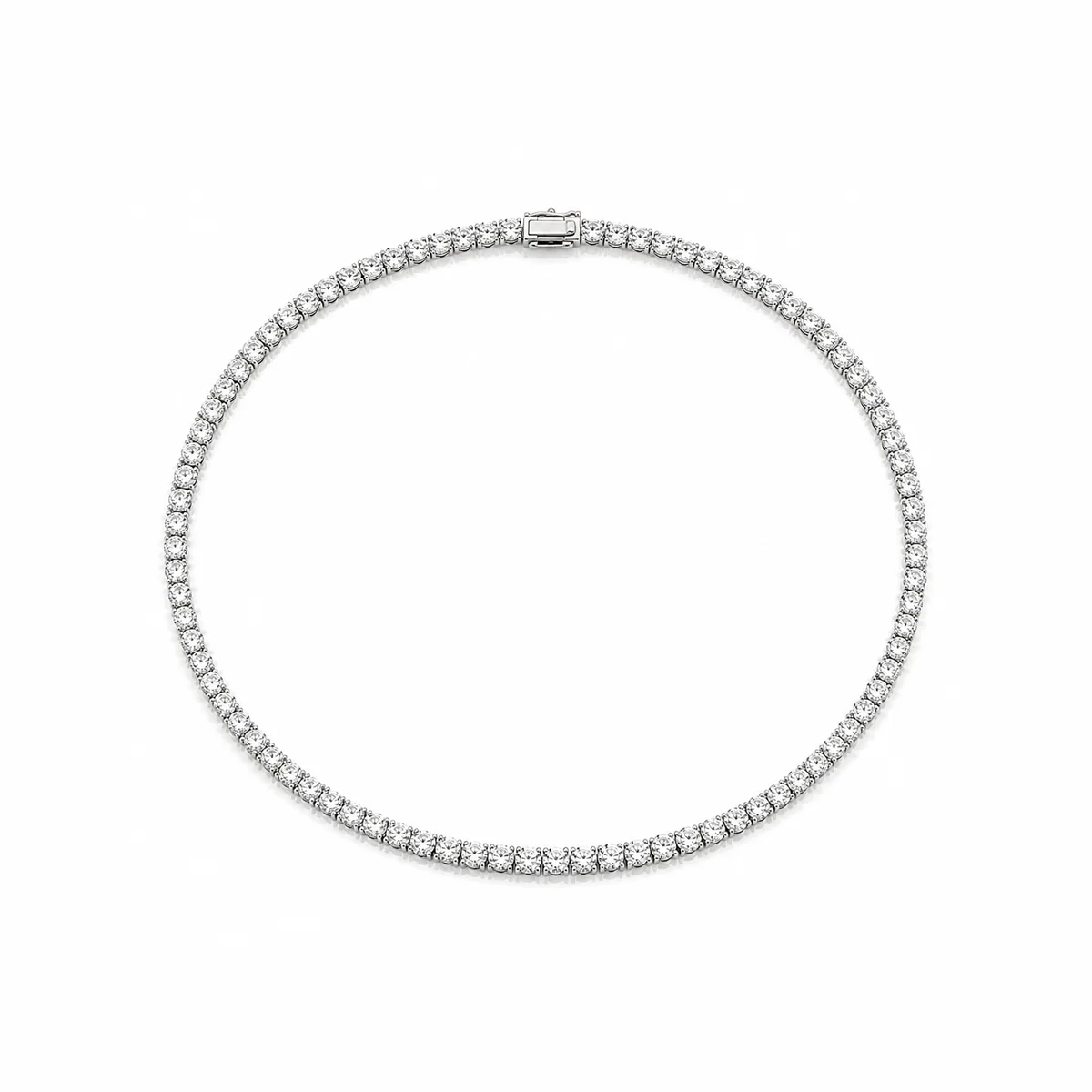
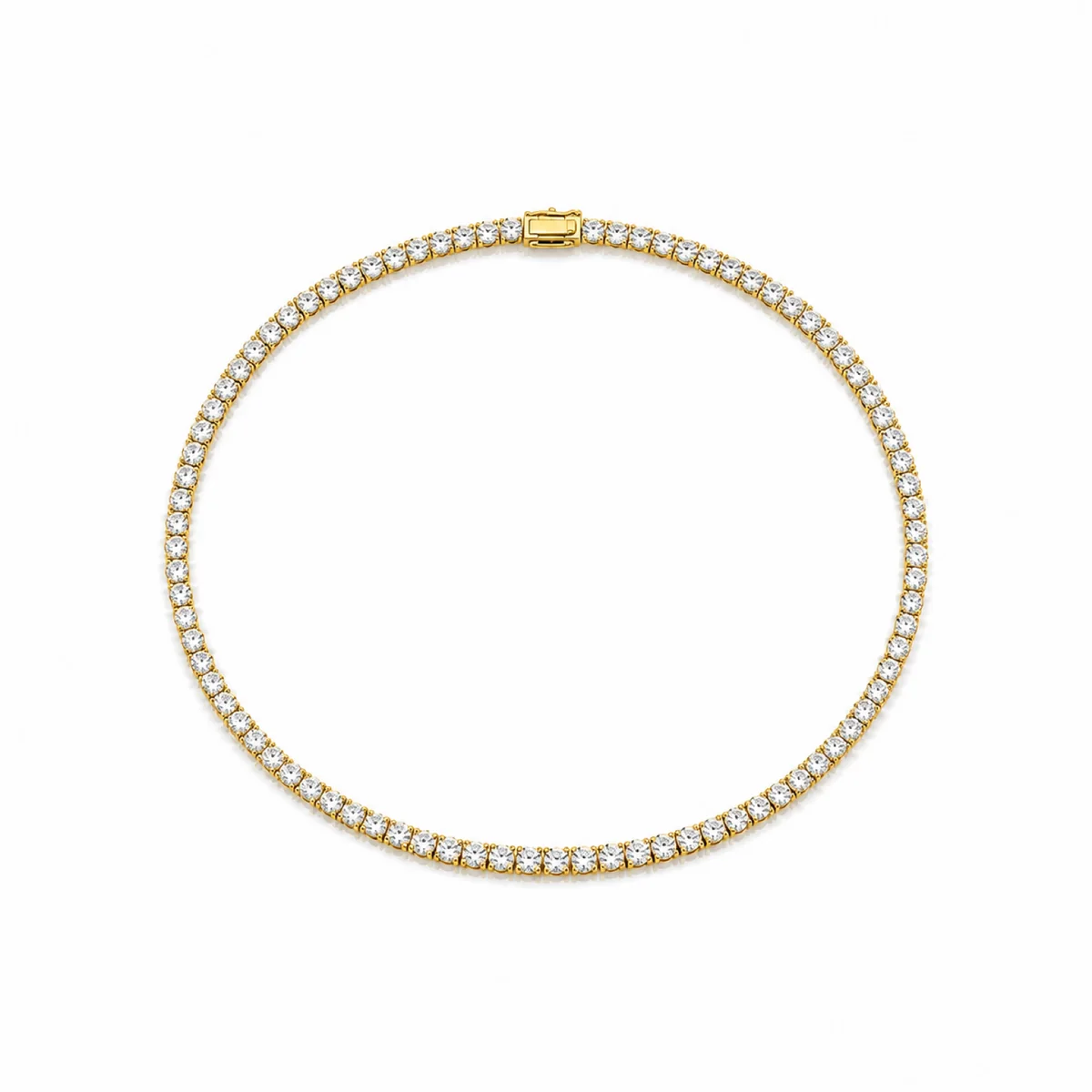
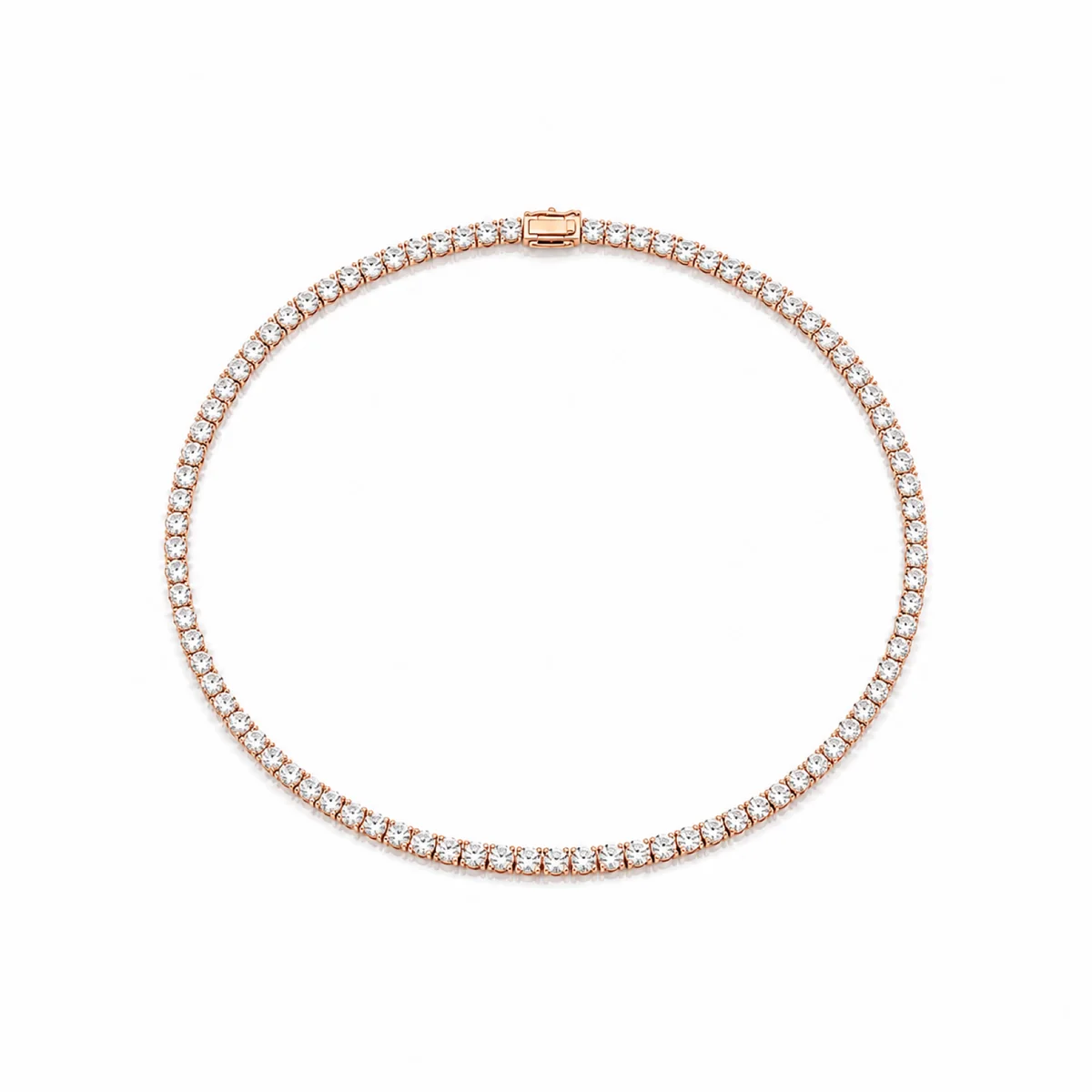 Tennis necklaceOne line of equal diamonds, all the way round.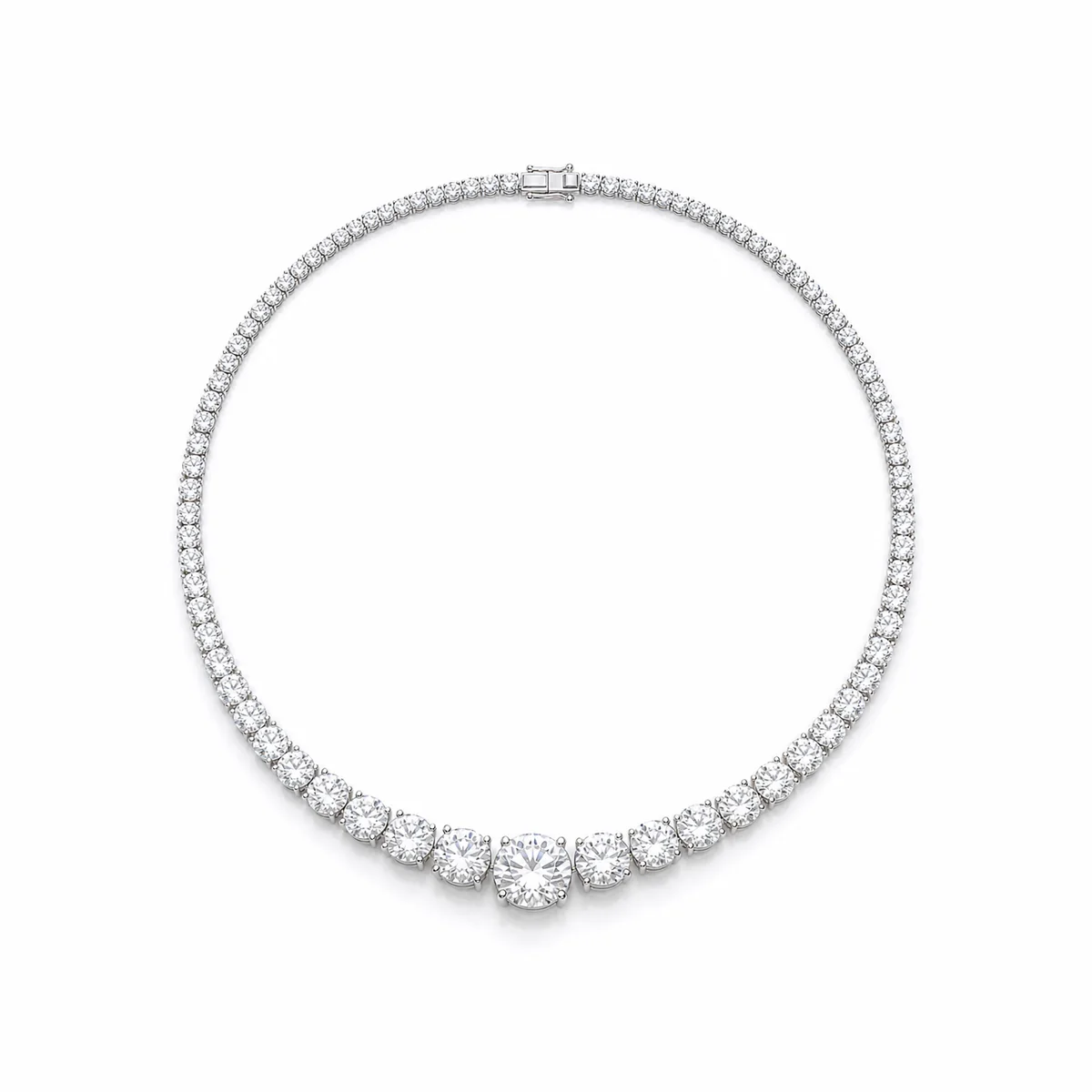
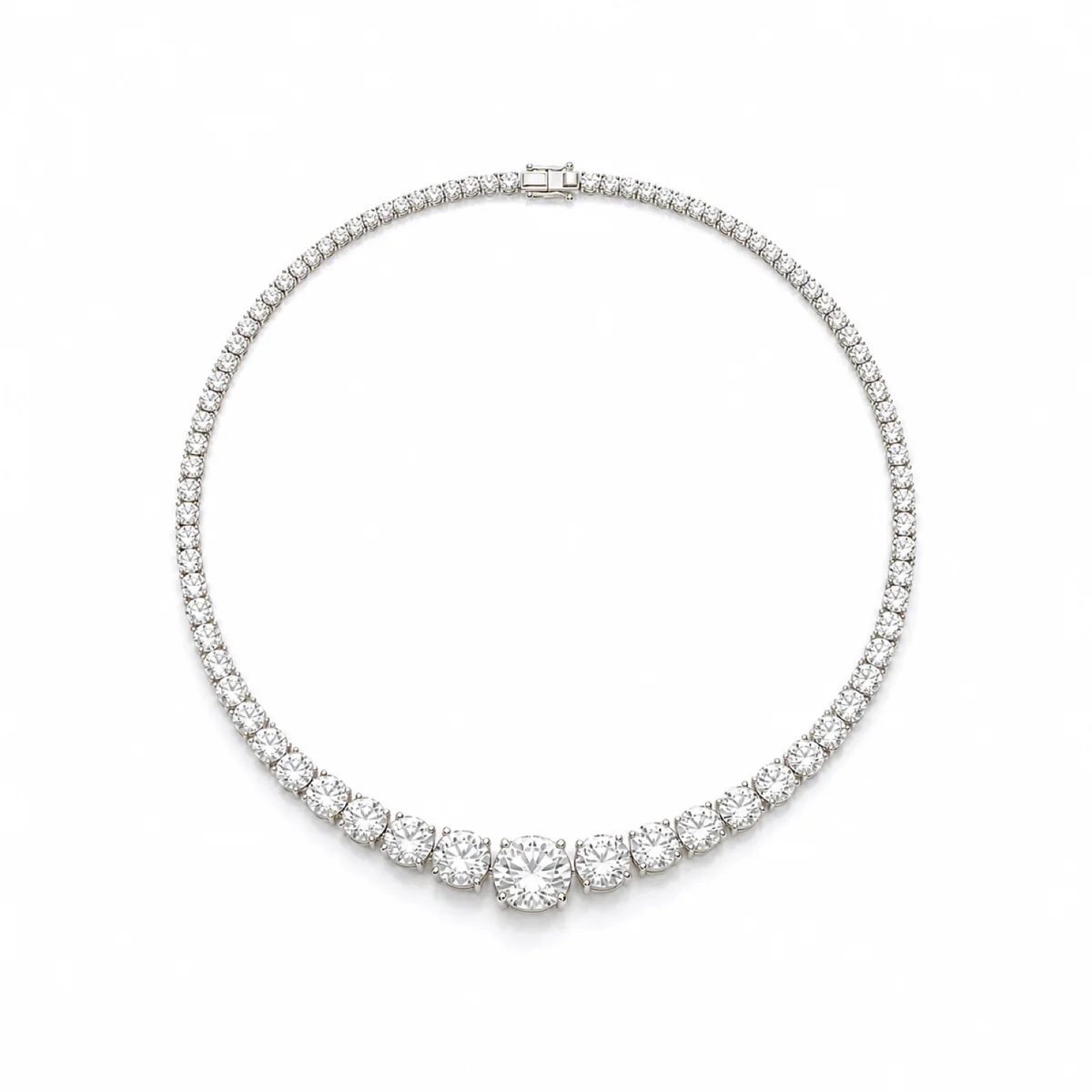
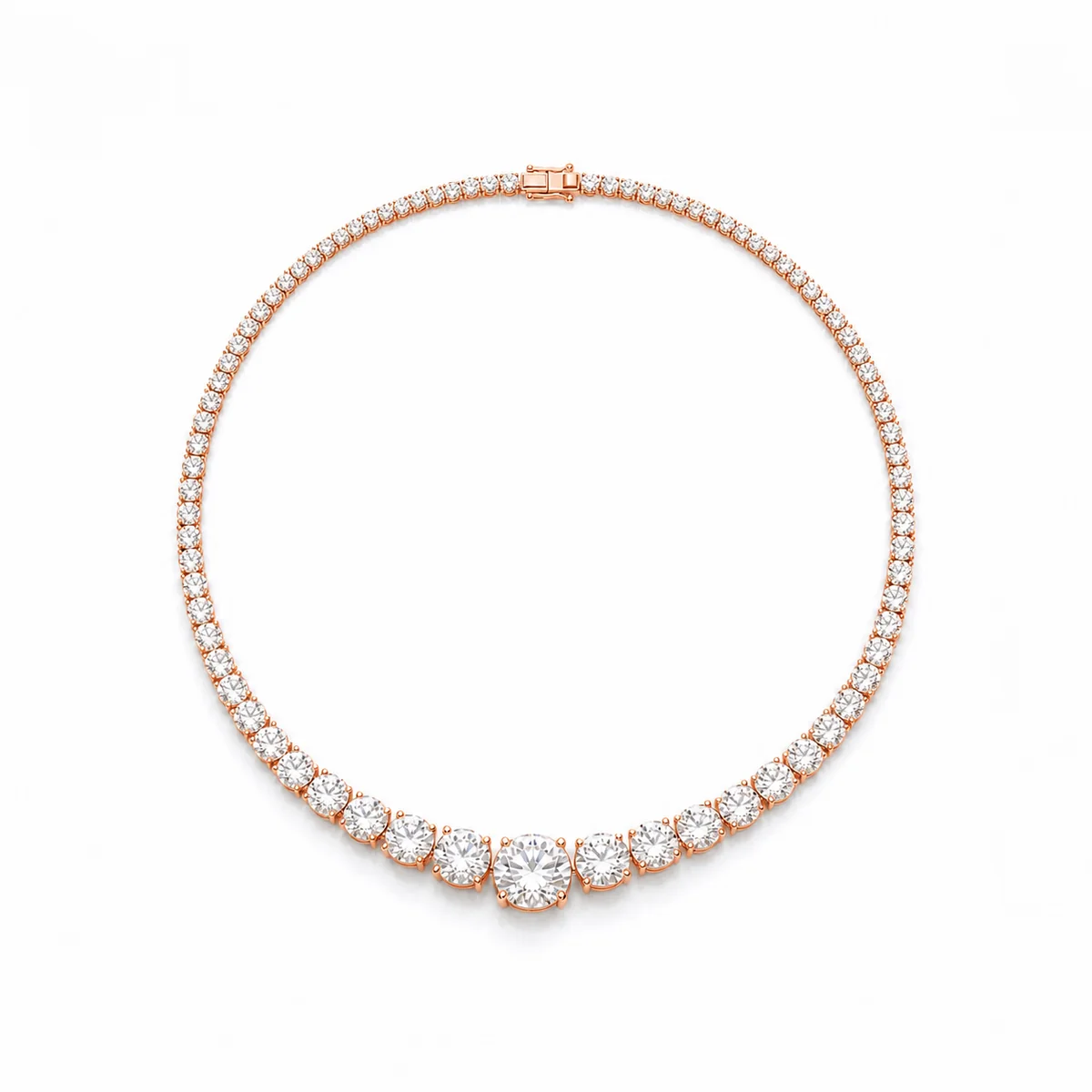 Riviere necklaceLarger at the front, finer toward the clasp.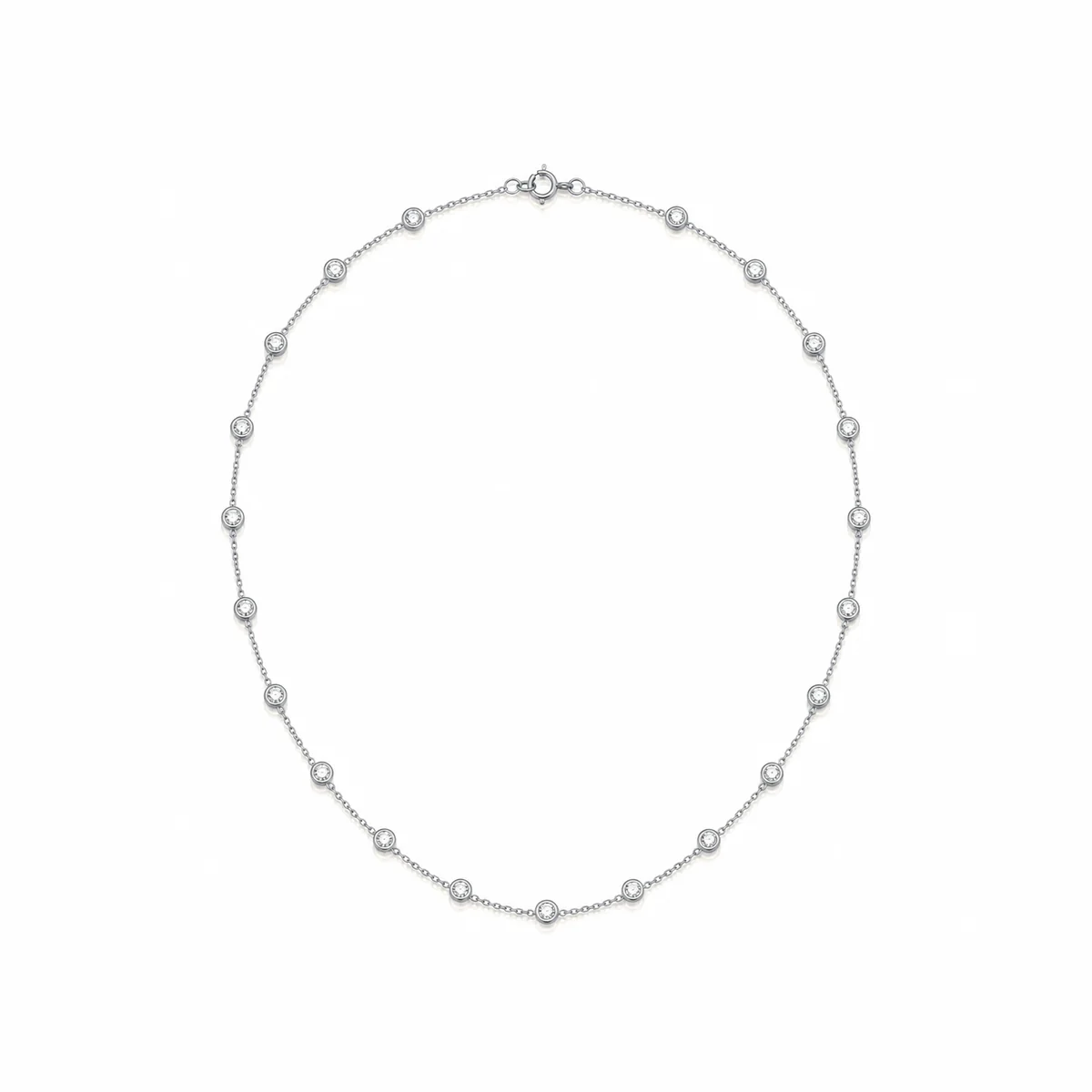
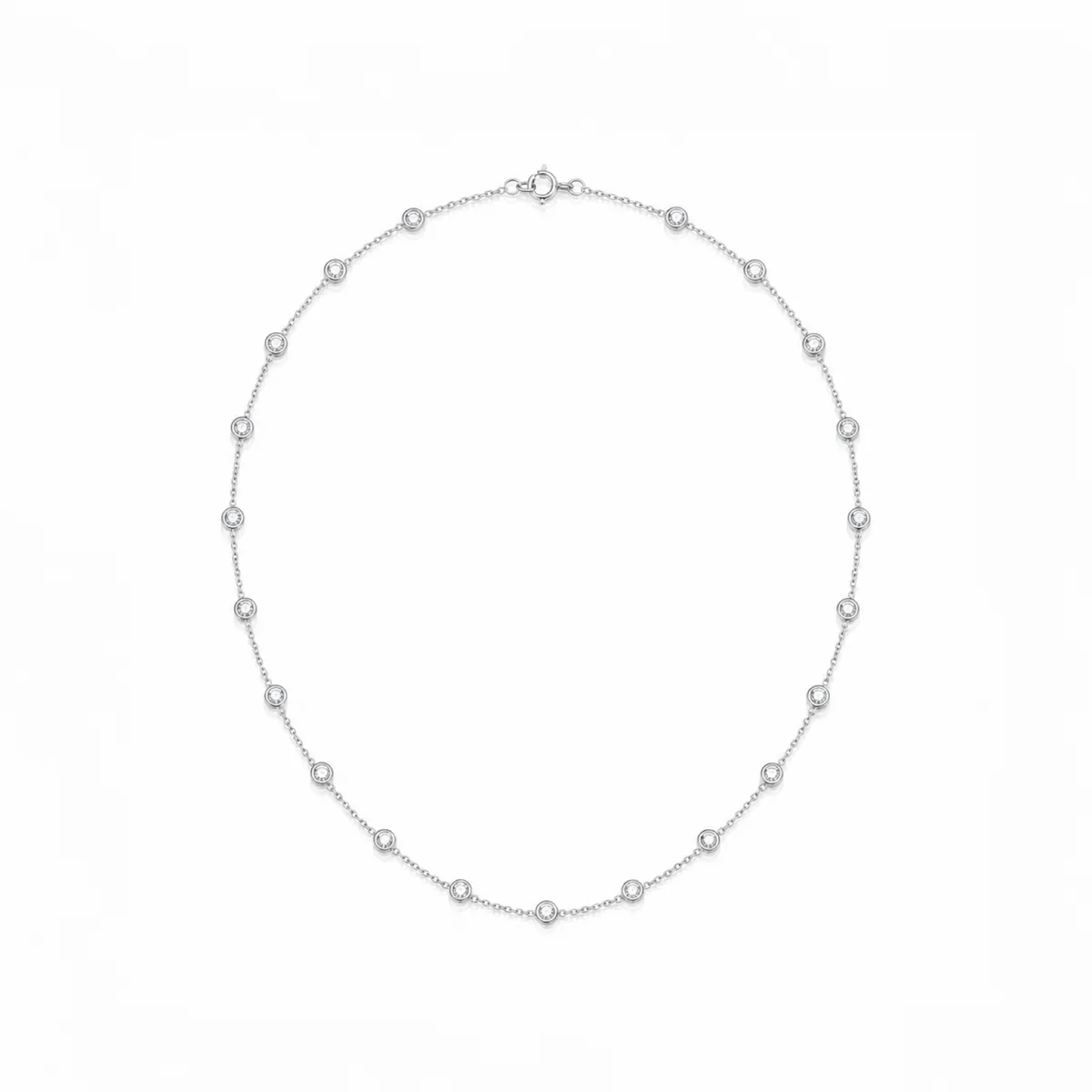
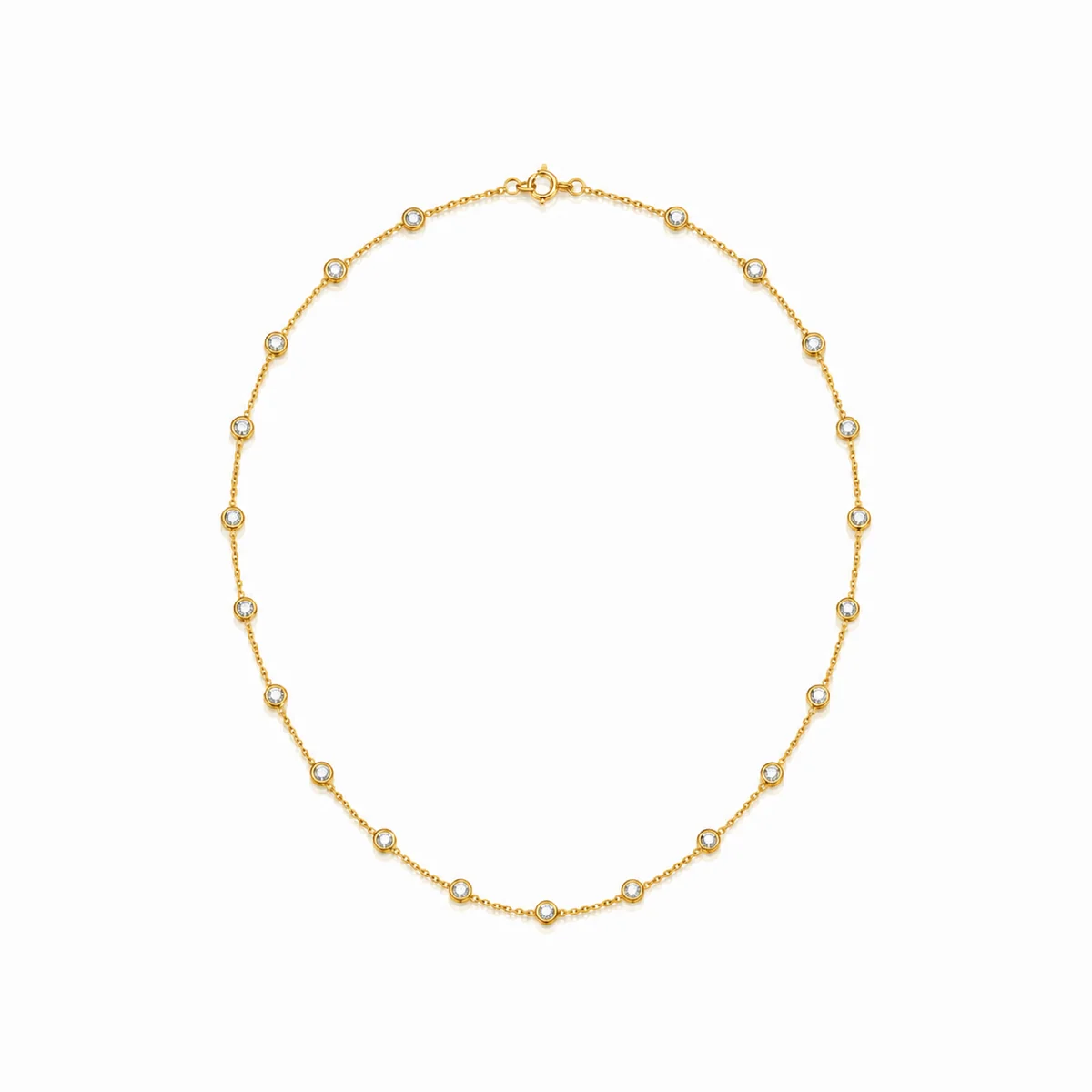
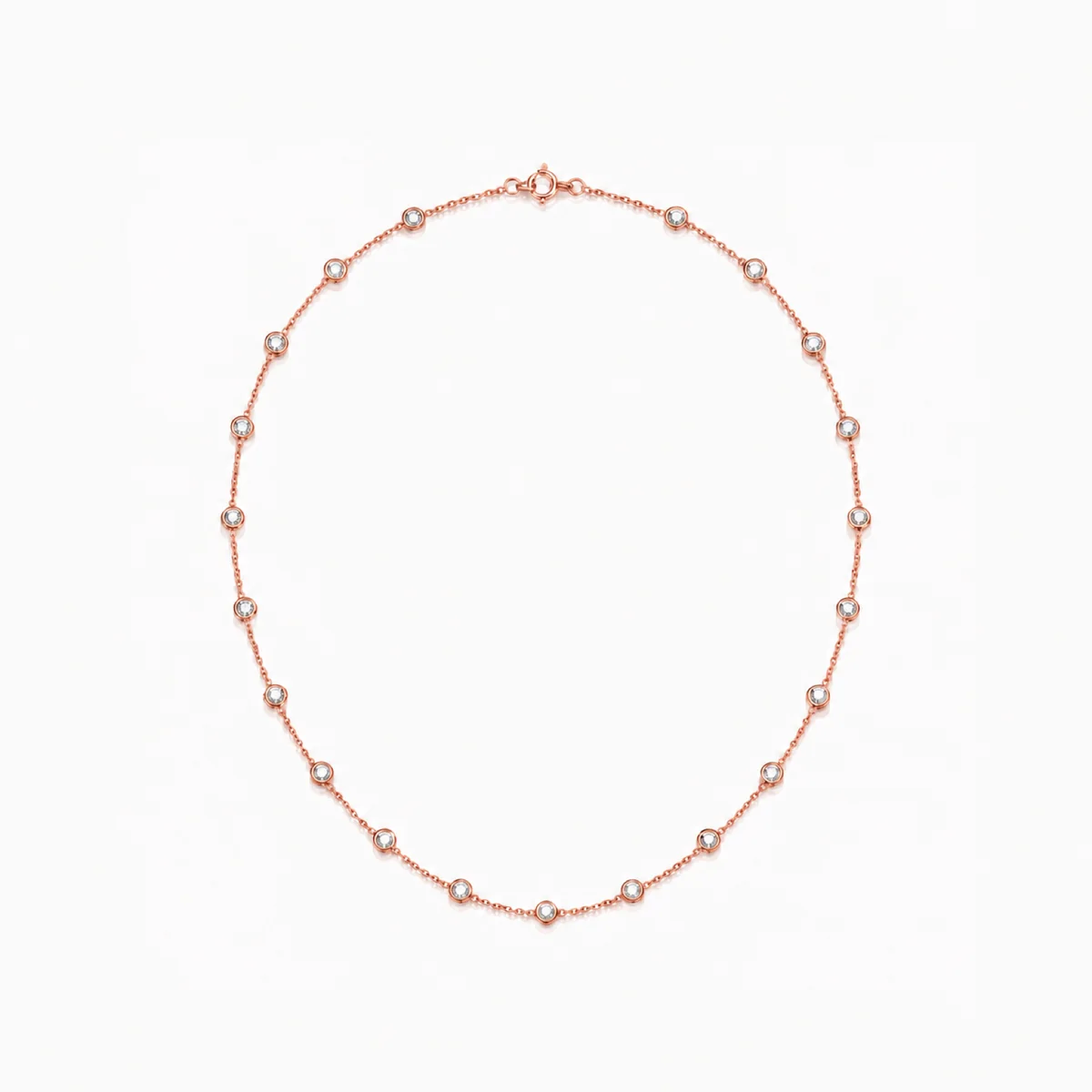 Station necklaceBezel-set diamonds spaced along a fine chain.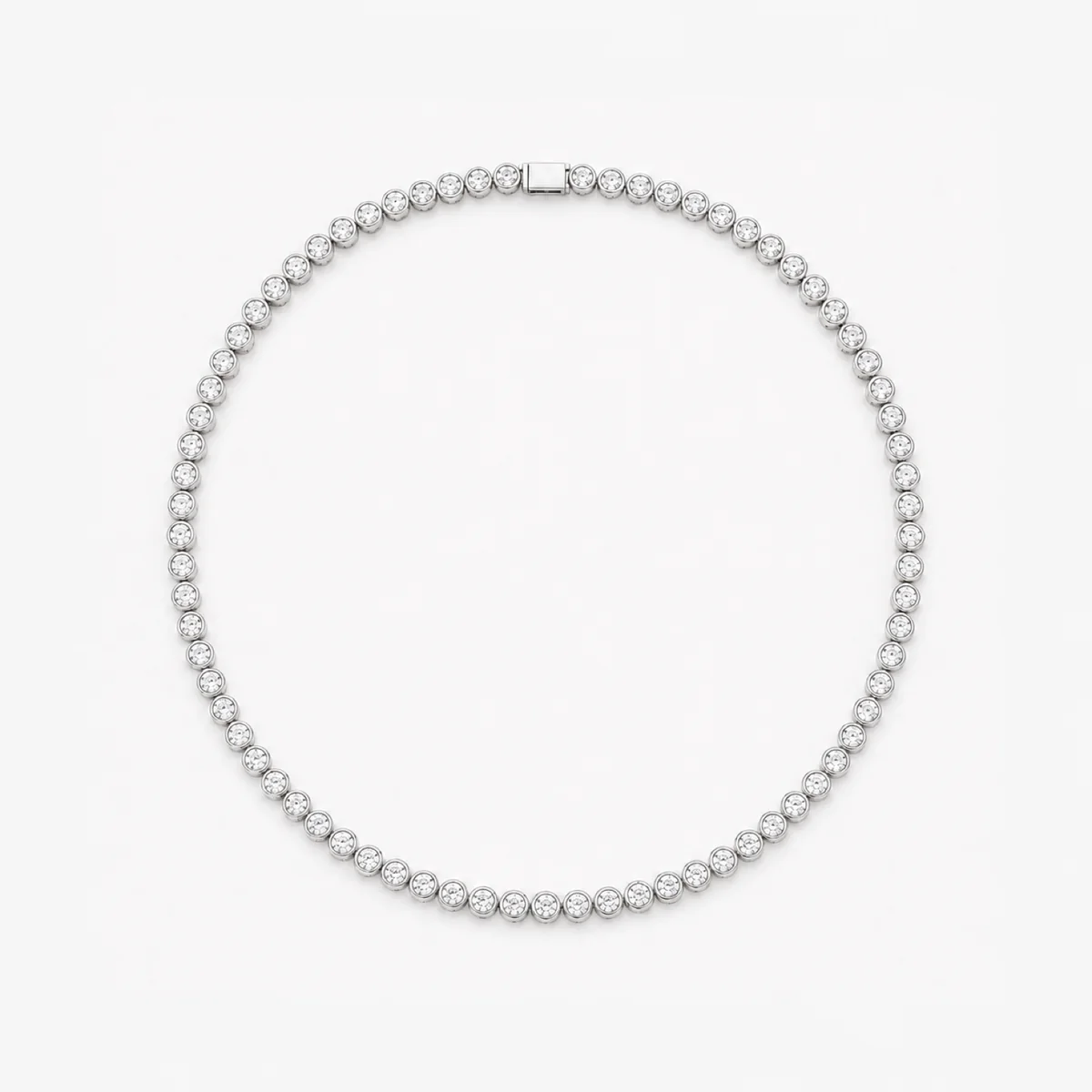
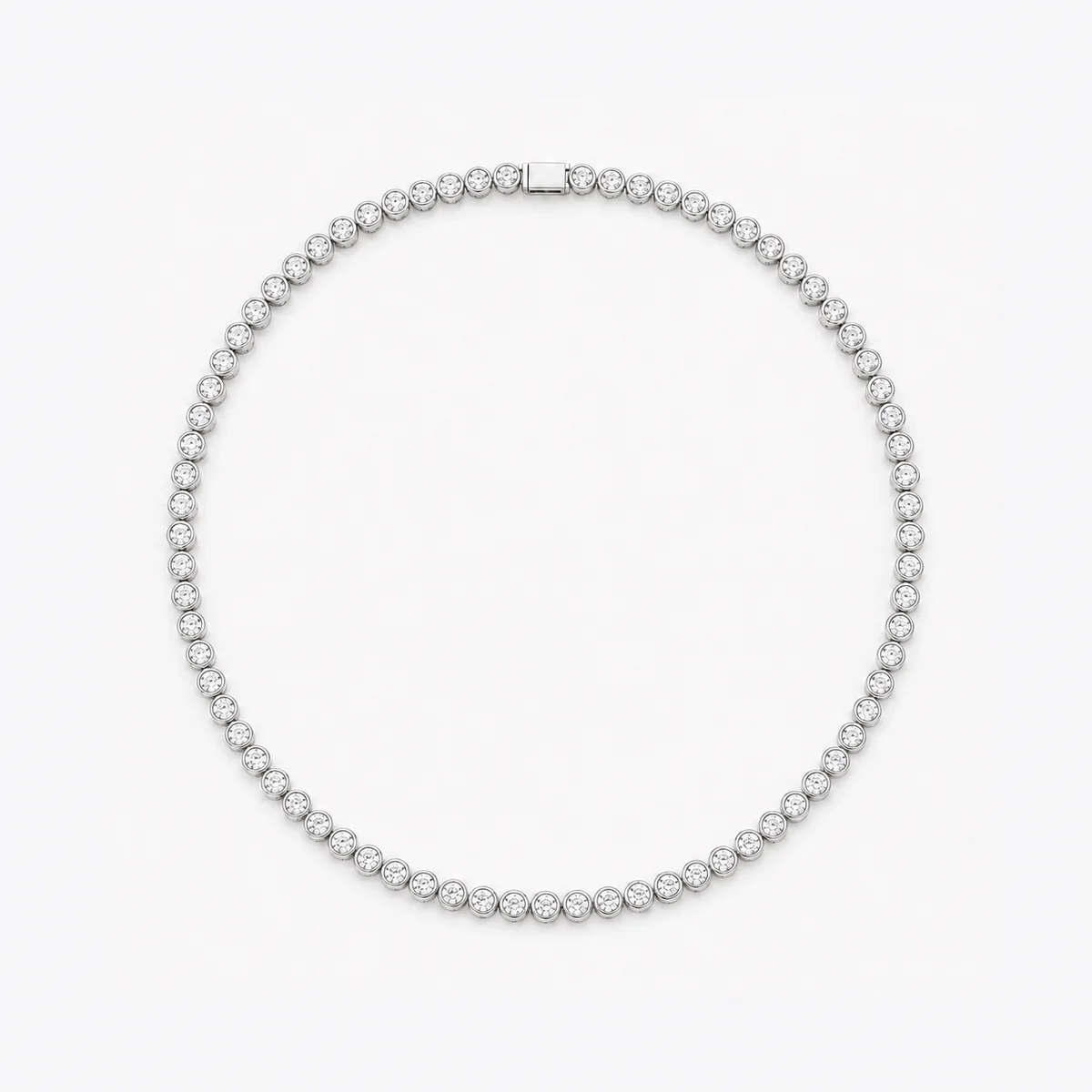
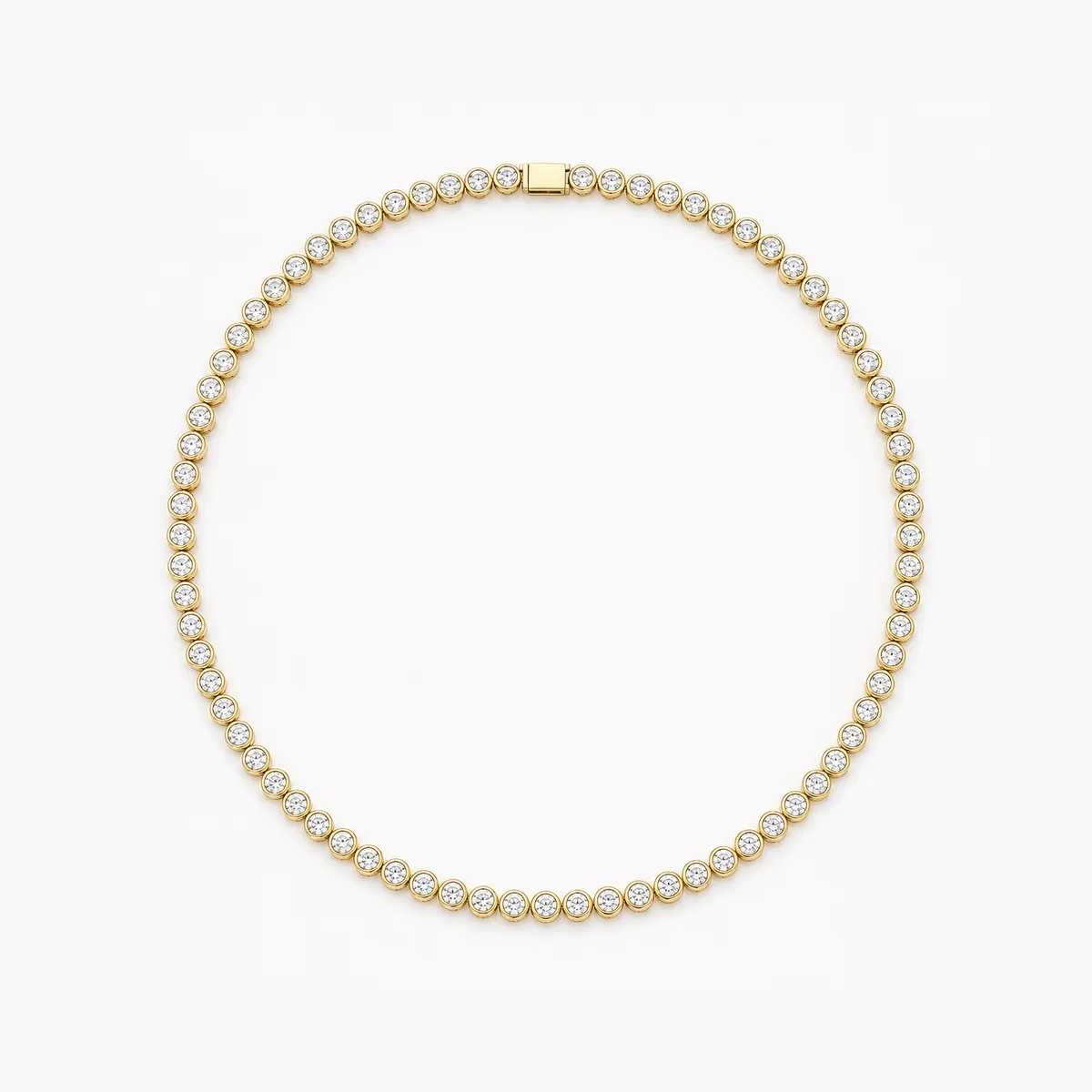
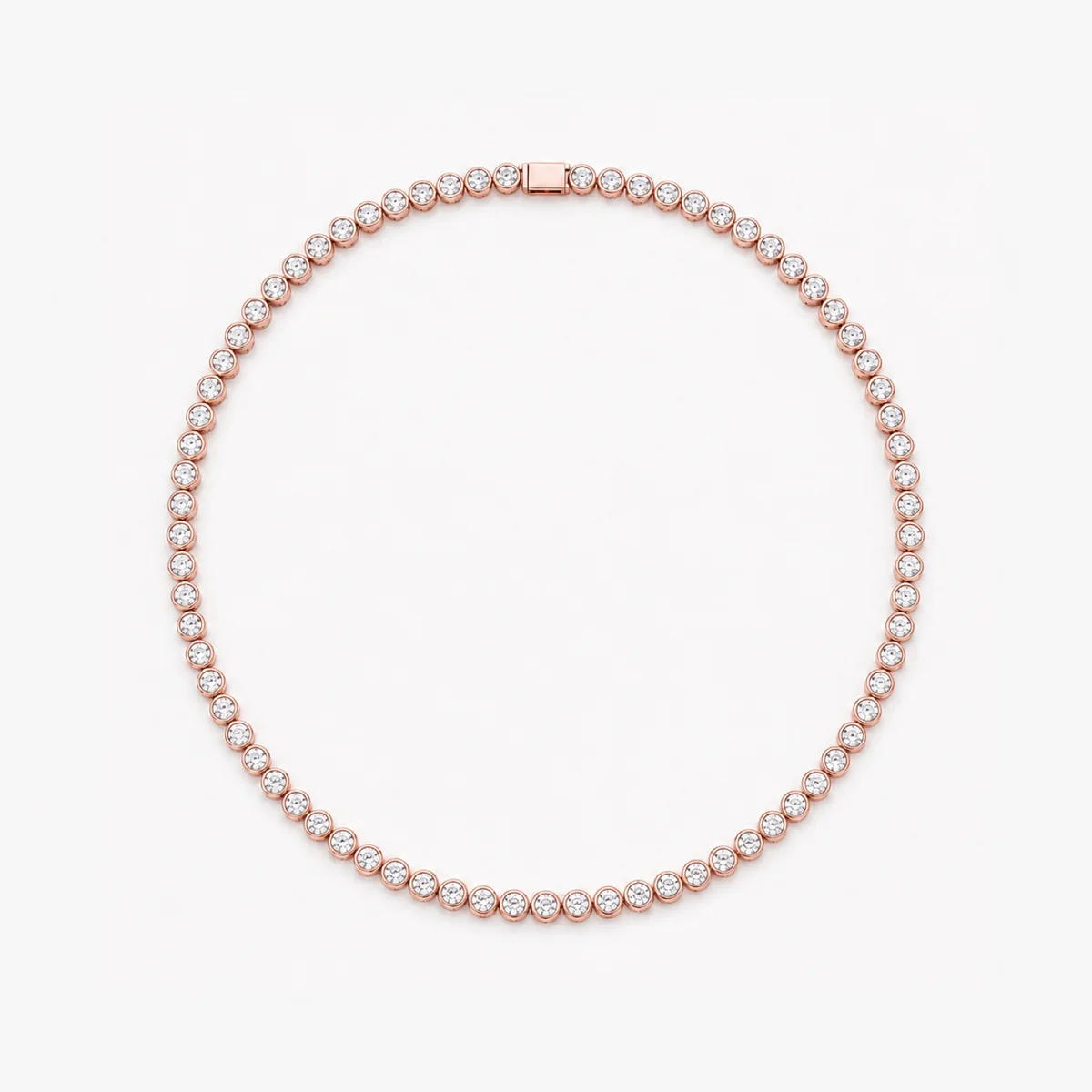 Bezel tennis necklaceEach stone in its own rim.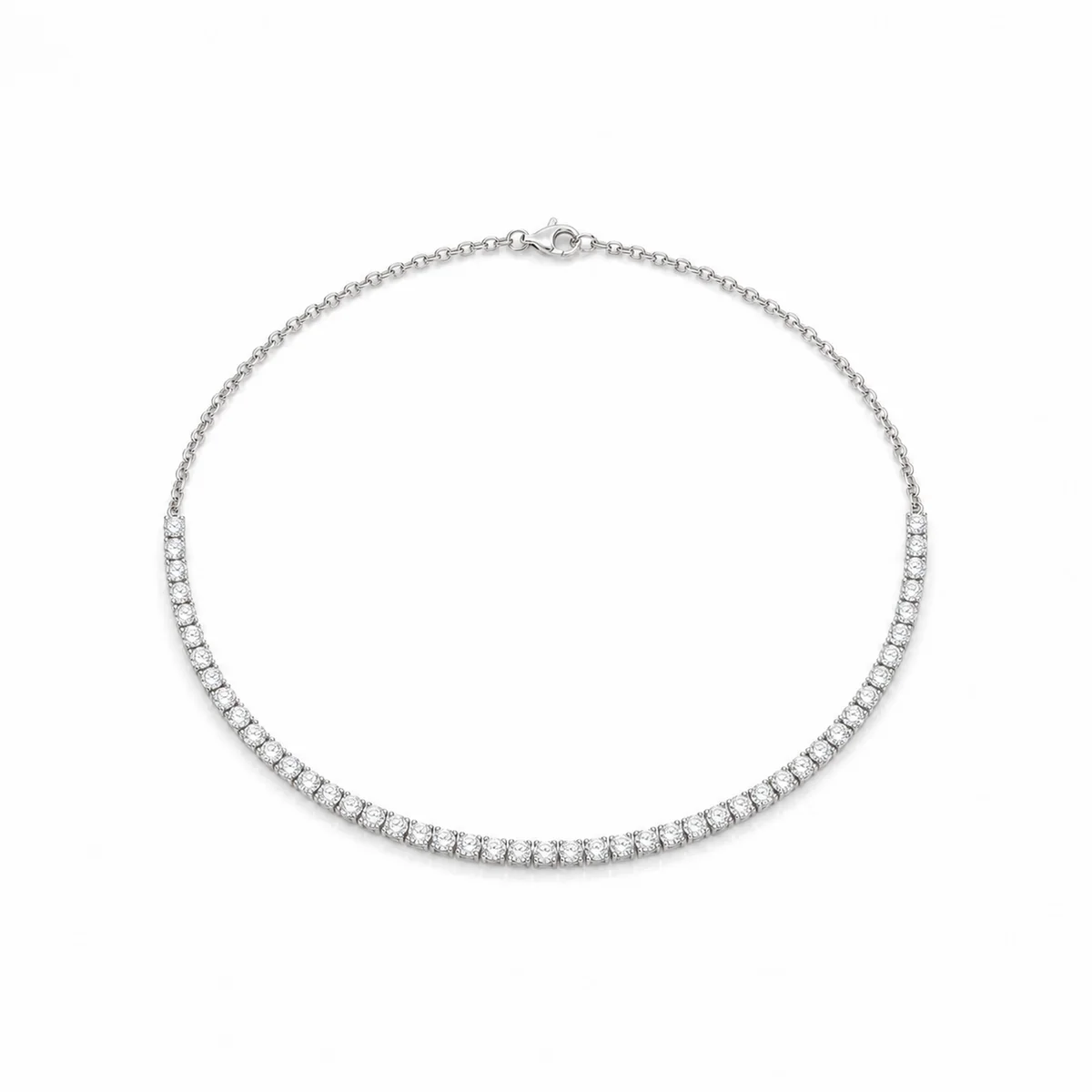
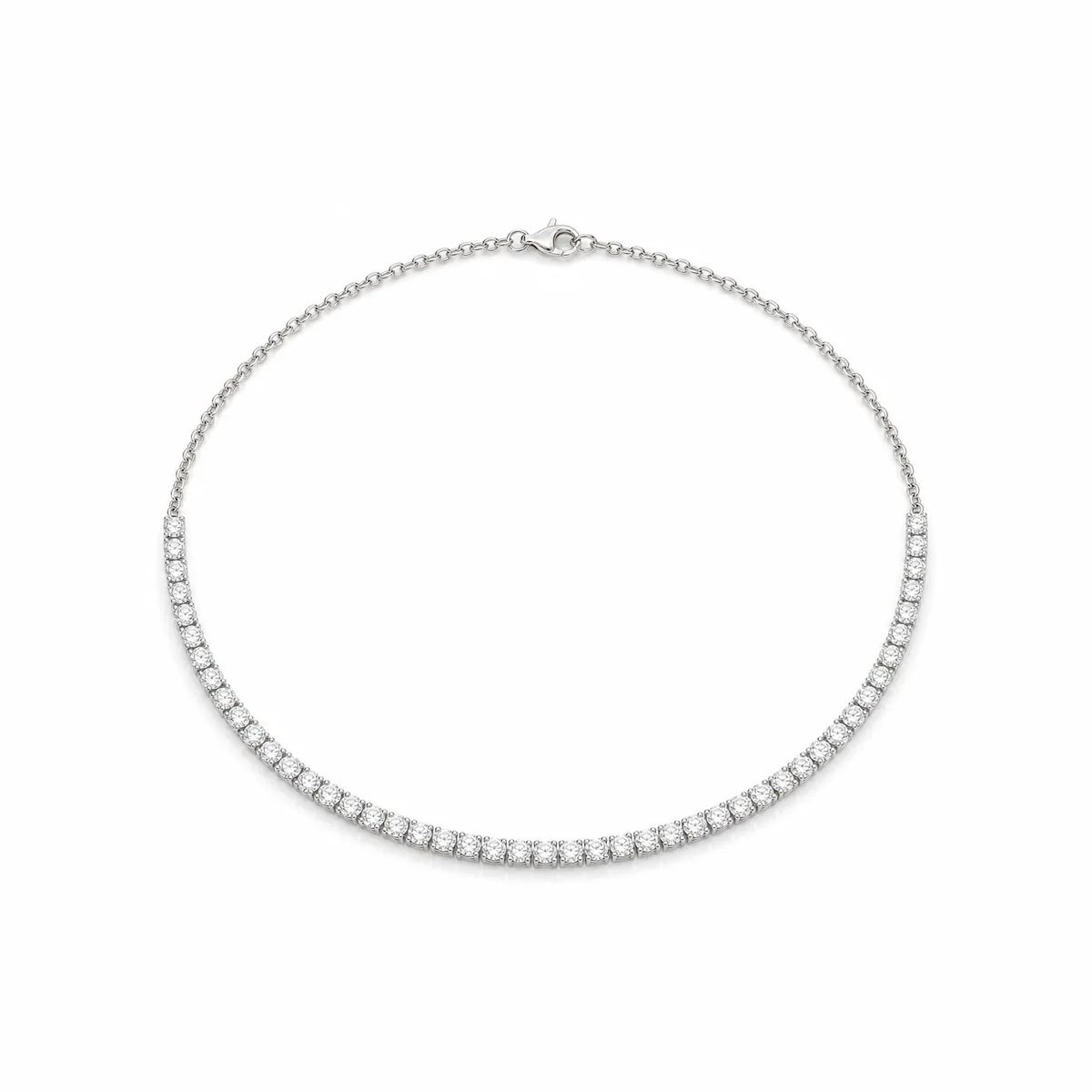
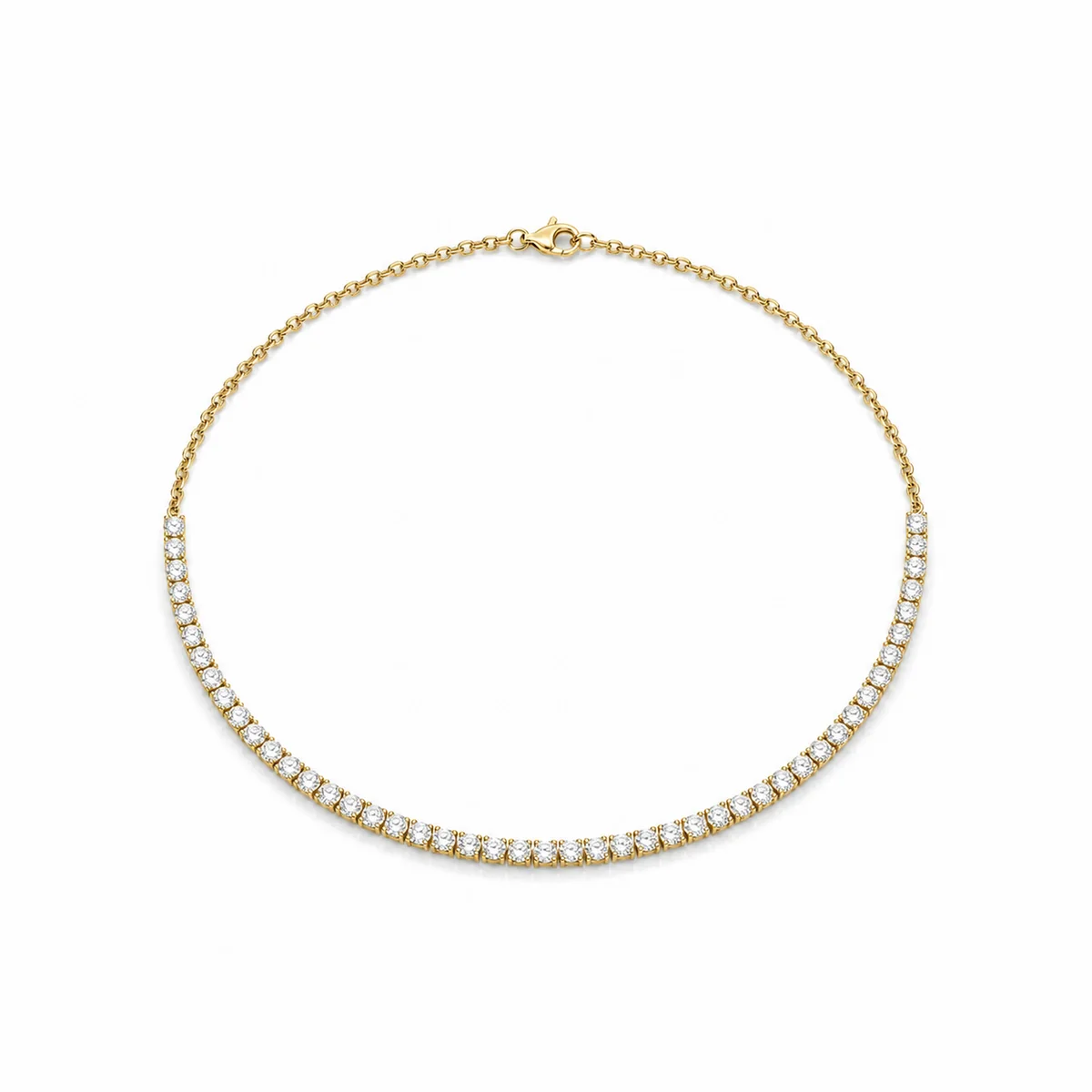
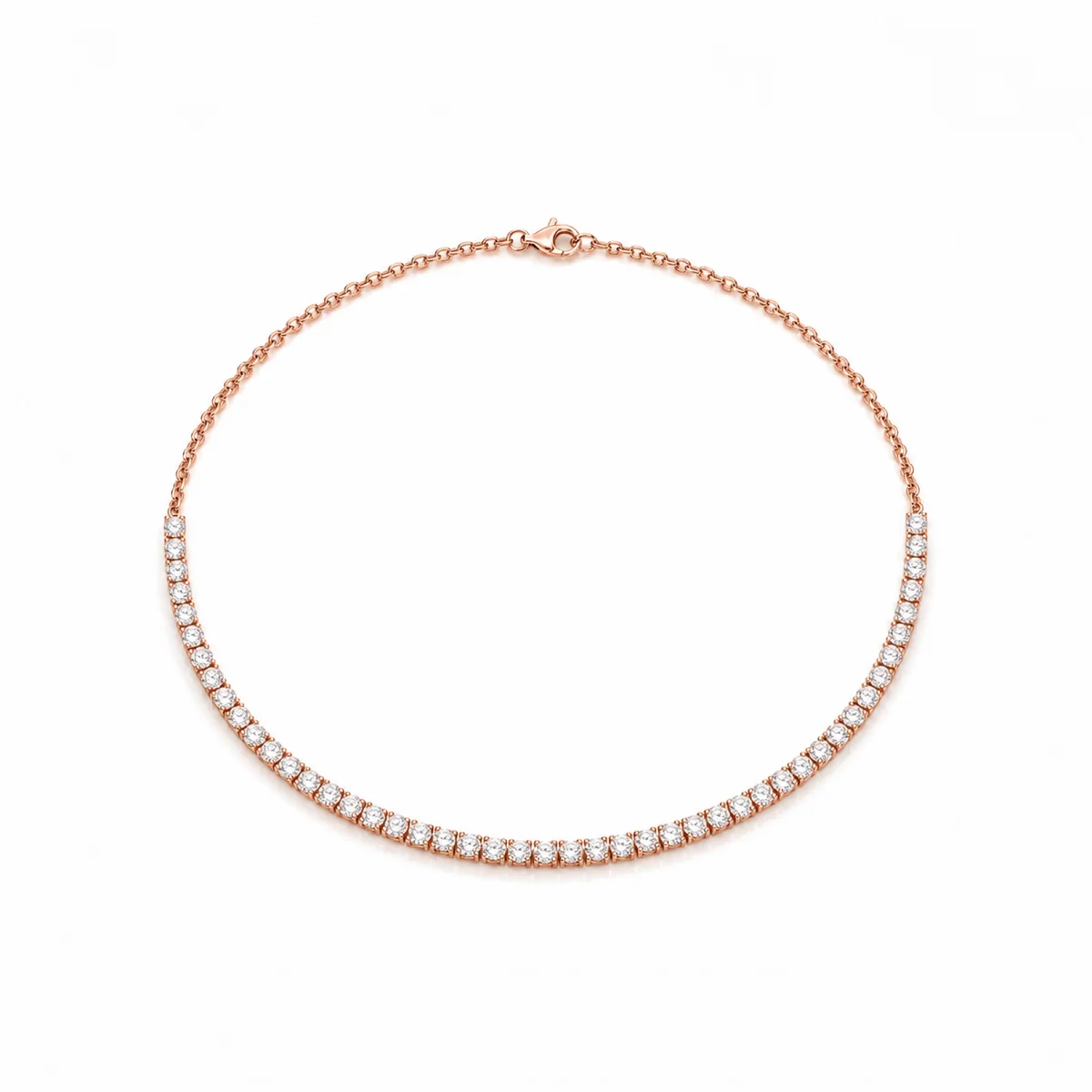 Half-tennis necklaceDiamonds across the front, chain behind.
These are examples, not a catalogue
We are a working bench, so we can make essentially anything: a design off this page, one of these changed, a piece you have seen elsewhere, a drawing, a photograph, or an heirloom reset into something new. Bring the idea in whatever form you have it and we will tell you what it takes and what it costs, before any work starts.
Message Prodiam on WhatsAppor send it through the contact page
Renders are illustrations of a design, not photographs of a piece in stock. The stones in the pictures are stand-ins; yours is the one you choose, certified, with its own report.
How a diamond necklace is made to order
- 01
Brief
Pendant or line, the stone or the total carat weight, colour and clarity grade, the metal, the length, your budget and your date. We reply within a working day.
- 02
Choose or match the stones
A pendant starts from one certified stone you approve from its report and a video viewing; a line is matched within one colour and one clarity grade and calibrated to one diameter, checked under loupe.
- 03
Make and set
Cast in 18k white, yellow or rose gold, or platinum; every stone set at the bench; the chain and clasp fitted to your length; hand-polished and checked under the microscope.
- 04
Hand over
Collect in Bedfordview by appointment, or insured overnight courier anywhere in South Africa, with the certificates and an insurance valuation.
Single-stone pieces are on the diamond pendants page, with real stones priced; the line at wrist length is the diamond tennis bracelet.
Diamond necklaces: common questions
What are the main types of diamond necklace?
There are five styles most buyers choose between. A diamond pendant necklace hangs a single feature, a solitaire stone or a halo cluster, from a fine chain, and is the everyday classic. A diamond tennis or line necklace sets a continuous run of matched diamonds all the way around, the statement piece. A station, or by-the-yard, necklace spaces individual diamonds at intervals along the chain for a lighter, modern look.
A riviere is the dressier cousin of the tennis necklace, a graduated line of larger stones rising to the centre. Which one suits you comes down to occasion, neckline and budget, and a pendant built around one excellent stone and a line necklace of many smaller ones are priced in completely different ways, which is why it helps to decide the style first.
How is a diamond necklace priced?
It depends entirely on the style, because the two families are built differently. A pendant necklace is priced like a single diamond: the centre stone’s four grades, cut, colour, clarity and carat, set most of the figure, plus the setting metal and the chain.
A tennis or line necklace is priced on the total carat weight of all its stones and, just as importantly, on how well those stones are matched to one another for colour, clarity and cut, plus the labour of setting every one and the metal of the mounting. Chain metal, 9ct or 18ct gold or platinum, and length add to both.
There is no single “diamond necklace price”, and we never quote one blind. We quote firm in ZAR, including VAT, referenced to the Rapaport list for the diamonds, once we know the style and specification you want.
What is the difference between a diamond pendant and a diamond tennis necklace?
A pendant necklace makes its impact with one focal point, a single diamond or a halo cluster, suspended from an otherwise plain chain; the eye goes to the stone. It is the more versatile and the more affordable entry point, because you are buying one diamond.
A tennis or line necklace, by contrast, is a continuous band of diamonds encircling the neck, so you are buying many matched stones and far more total carat weight, which makes it the statement piece and the larger investment. A pendant suits everyday wear and layering; a line necklace is for occasions and formal necklines. Many clients own both.
For the detail on each, see our diamond pendants page and our tennis necklaces page.
What chain length should a diamond necklace be?
Chain length sets where the necklace falls and which necklines it suits, so it is worth getting right rather than defaulting. For a pendant, the most-worn lengths in South Africa are around 40 to 45 cm (16 to 18 inches): 40 cm sits at the base of the neck, 45 cm rests just below the collarbone and flatters most necklines and most outfits.
Longer chains of 50 cm and up drop onto the chest for a layered or statement look. A tennis necklace is usually worn shorter, close to the throat, so it reads as a continuous line.
We will guide the length to your neckline, your height and how you intend to wear the piece, and because we build bespoke, the chain is made to the length you choose rather than off a peg.
Can you make a custom diamond necklace around a specific diamond?
Yes. We can start from a single GIA-certified diamond you have chosen, your own stone, an inherited one, or one selected from the certified stones on our bench, some cut in our own cutting house and others sourced to order from the certified trade, and design the pendant or necklace around it.
For a line necklace we source and match the run of stones to a consistent colour, clarity and cut so the piece looks uniform along its length. You see and approve the design before anything is made, verify the centre stone’s GIA report number yourself, and receive the finished necklace with certification and a written insurance valuation on request.
Tell us the stone or the style and we quote firm in writing.
Last reviewed: June 2026.
The Prodiam promise
The quote is free. So is walking away.
Ask us to quote any stone or ring and you get a firm figure in writing within 24 hours, VAT inclusive, with the trade-offs explained in plain English. It costs nothing and commits you to nothing: no deposit, no account, no follow-up campaign. Worst case, you learned the honest number and bought elsewhere better informed.
We actually want you to compare. Buying well means weighing options; it is how we buy rough at the viewings, and it is how you should buy a diamond. Bring any written quote and we will price it like-for-like, and if we cannot beat it, we will tell you so bluntly. Either way you leave knowing where you stand.
One more thing worth knowing: this site shows a selection of our stock, never the full range. Far more passes across the bench than we ever list, so if the exact stone or design you want is not here, ask us for it. It is usually one message away.
Get my written quoteWhatsApp Prodiam instead →
Prefer to talk it through first? That works too. Tell us how you like to be reached, and that is how we will reach you.