
3 Carat & Larger · Statement Diamonds · Landed Rand Price
3 carat diamond rings in South Africa: what a large statement diamond involves
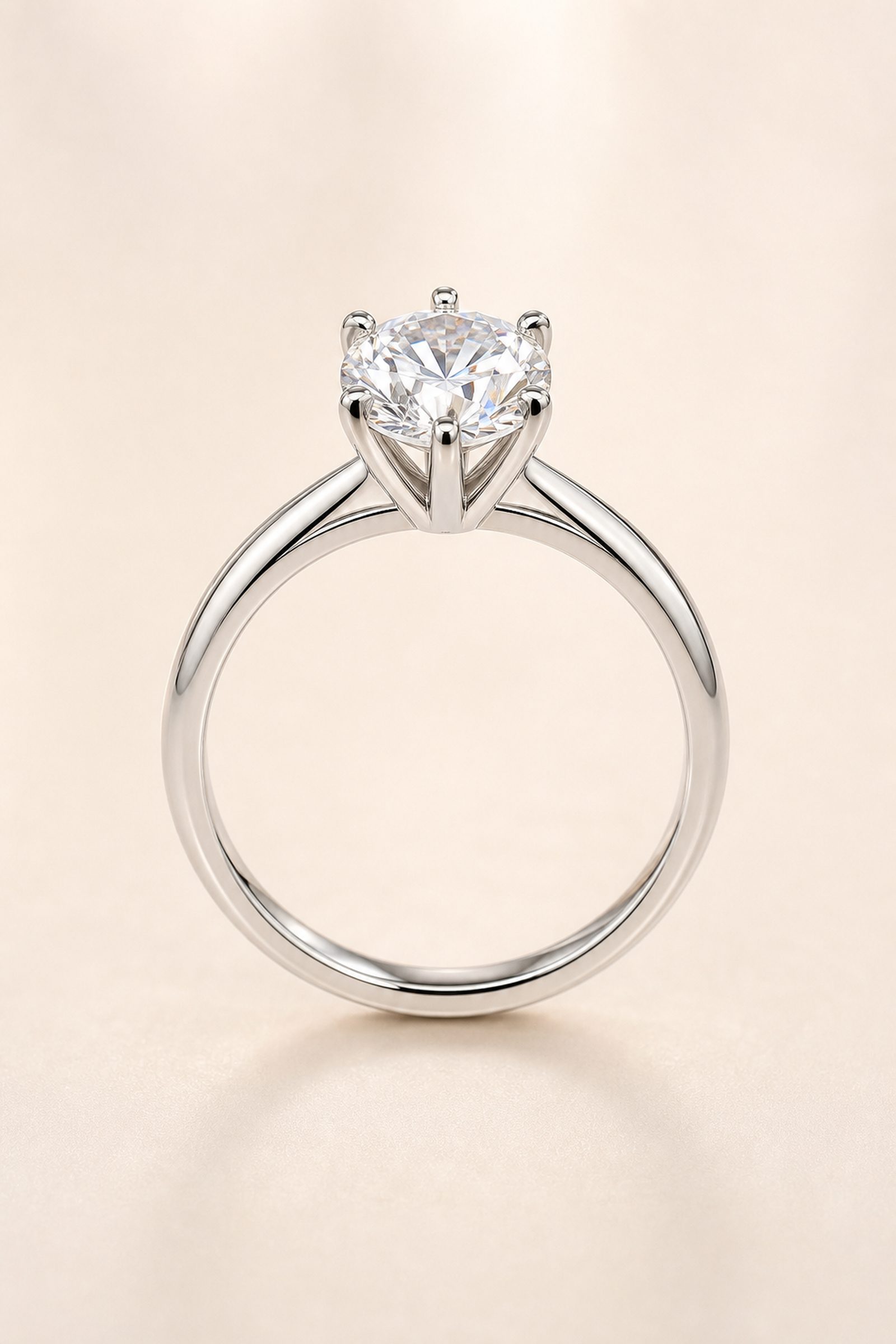
Commission a 3 carat diamond ring in South Africa with Prodiam in Bedfordview. Choose your natural centre diamond, compare designs and metal, and request the complete VAT-inclusive ring quote. The diamond-only guide below helps you plan; the setting and making are additional.
This is squarely a bench’s ground, sourcing or cutting a large stone to an exact spec, with no retail markup layered on top. Natural diamonds only.
Get a fully-landed ZAR price to your spec Get a firm large-stone quote → Email Darren directly →
-
Natural diamonds only
We sell natural diamonds and diamond-set jewellery. Ask us about the grading report and available origin documentation for your chosen stone. Why we don’t sell lab-grown →
-
Independent grading reports
The grading laboratory is shown per stone. Review its report and the individual diamond before choosing; sourced examples can include GIA, EGL and IGI.
-
Insured delivery, SA & worldwide
Overnight across South Africa via Brink’s, G4S or our nominated jewellery courier. Insured worldwide dispatch via Ferrari Group and FedEx Custom Critical.
-
14-day in-person exchange
In-person sales at the viewing room come with a 14-day exchange courtesy on stock pieces. Distance-sale CPA cooling-off applies.
Diamond price guidance, captured 8 September 2026. These figures describe samples of sourced listings, with VAT and delivery for the stones included. They are not current stock guarantees. Settings and making are additional where jewellery is discussed; confirm the complete written quote.
What an engagement ring costs, by centre stone
An engagement ring's total is the centre diamond plus the setting, metal and making. In our captured H-colour sample, a one-carat stone was about R61 300, a 1.5ct about R148 700 and a two carat about R300 500. These are diamond-only guide prices at VS1–VS2 clarity, with an Excellent cut filter and no fluorescence. We quote your complete ring before work begins.
| Centre stone | H-colour guide | J-colour guide | At capture | |
|---|---|---|---|---|
| half carat | R12 400 | R10 500 | 34 053 | See these → |
| 1 carat | R61 300 | R41 700 | 25 599 | See these → |
| 1.5 carat | R148 700 | R100 400 | 11 390 | See these → |
| 2 carat | R300 500 | R198 300 | 5 877 | See these → |
| 3 carat | R880 300 | R574 500 | 2 060 | See these → |
Both columns show sampled guide prices, not an entry price or a complete ring. The count includes all grades in each weight band at capture. Set a budget for the whole ring, then choose the diamond and setting together.
No two diamonds are the same
A table describes a market, not a stone. Two diamonds identical on paper can differ by a third in price and both figures be right: how well the stone is actually cut and how much light it returns, where the inclusions sit and whether the eye finds them, how strongly it fluoresces, and how keenly that one happens to be priced against the international trade benchmark on the day. We check every stone against that benchmark before we show it to anybody, and the number that matters is the one quoted in writing on the stone you actually choose.
Ask us what your budget buysSearch the live inventory →
Captured 8 September 2026; guide figures rounded up to the next R100. Colour and clarity tables use sampled medians and percentile bands; rows without a measured range may use a limited lower-priced sample. Prices and availability can change. Your written quote identifies the actual stone and all inclusions.
What genuinely changes at 3 carats and above
The instinct is to assume a three-carat diamond costs three times a one-carat. It does not. It costs many multiples more, and the reason is that the per-carat price is not flat, it accelerates with size.
Rough large enough to yield a clean, well-proportioned three-carat polished stone is genuinely scarce, far scarcer than the rough that yields a one-carat or even a two-carat, so the price per carat is itself much higher at three carats before you account for the extra weight. You then pay that elevated per-carat figure across three carats rather than one.
The two effects compound, which is why a three-carat diamond of a given colour and clarity typically lands at several multiples of a one-carat at the same grades, and well above a simple step up from a two-carat.
The step is sharpest right at the round weights. A stone at 2.00 ct carries a premium over one at 1.90 ct, and a 3.00 ct carries a steeper one still, because these are sought-after thresholds, the “magic numbers”, and the market pays for the figure on the paper.
A 2.90 ct and a 3.00 ct round look all but identical face-up, so a stone a touch under the round weight can be quietly and substantially cheaper.
Because the per-carat price at this size is so high, that small step down saves more in real rands than the equivalent shy weight does on any smaller stone, one of the first places a cutting house will point you if you want the most stone for the budget.
Why cut and clarity matter most on a large stone
Every diamond is graded on the same four characteristics, but the lesson of the large-stone tier is one of exposure. A big stone shows everything, and every grade is multiplied by a very high per-carat price, so the same mistake that hides in a one-carat is both visible and expensive at three carats. Cut and clarity discipline, getting those grades right, matters most here, not least:
- Cut, how well the stone is proportioned and finished, which governs its brightness, fire and face-up size. This is the grade to protect first and absolutely at three carats: a deep, badly cut stone hides weight underneath, looks no larger than a shallow 2.5 ct, and goes dull across a big, visible table. We polish round brilliants to GIA Excellent cut grade on our own bench, because cut is the one C a working cutting house directly controls.
- Clarity, the presence of tiny natural inclusions, graded from Flawless down. On a large stone the facets act as windows and there is simply more diamond to look through, so an inclusion that would vanish in a one-carat can be plainly eye-visible at three carats. The value zone is still “eye-clean”, but at this size that means checking the actual stone, not just the grade on the certificate.
- Colour, graded D (colourless) down the alphabet as faint warmth appears. A larger stone can carry a touch more colour than a small one and still face up well, but body colour is also easier to perceive in a big diamond, so the near-colourless band is read carefully against the chosen metal rather than bought on the label alone.
- Carat, the weight, and the multiplier the per-carat price applies to. At three carats it is a very large multiplier, which is exactly why getting the other three grades right is worth far more here than anywhere else on the scale.
Protect cut absolutely, insist on an eye-clean clarity verified on the real stone, and buy colour only to the point where the eye cannot see warmth, and you have the best-value large diamond. Our guides to diamond cut and the full 4Cs of diamond grading set out each grade in detail so the spec you set for a stone this size is the right one.
The per-carat curve, the Rapaport list, and a rand price
The diamond trade prices polished stones against the Rapaport price list, the international wholesale benchmark, published weekly, that quotes a per-carat dollar figure for each colour-and-clarity combination at every size, including the three-carat and five-carat bands. The actual price of a given stone is then expressed as a discount or premium to that list according to its exact make, fluorescence and finish.
That dollar figure is converted into rands at the exchange rate on the day, and 15% VAT is added, to reach the fully-landed price.
The thing to understand at this size is the shape of the curve: the per-carat figure does not rise in a straight line, it steepens as stones get larger, so each carat added near the top of the scale costs disproportionately more than a carat added at the bottom.
Because the figure is so high here, a swing in the rand-dollar rate is felt in large rand amounts on the identical diamond.
A retail diamond, by contrast, usually reaches the buyer through an importer, then a wholesaler, then a retail counter, and each link adds its margin and its overhead. As a diamond dealer and cutting house, we buy rough ourselves and cut it on our Bedfordview bench; other stones we source to order from the certified trade, so the importer and wholesaler markup simply is not in your price.
On a six-figure stone, where every margin is taken on a very large base, the rand saving from this shorter route is at its absolute biggest, and that is the whole reason the direct-from-the-cutter route matters most at the top end. Cutter-direct is not a sale or a discount; it is the removal of the links between the rough and you.
What a 3 carat and 5 carat diamond look like
Face-up size on a large stone is governed by the cut, not the weight alone, but for a well-proportioned round brilliant the approximate diameters are useful to picture before you choose. Weight grows with volume rather than width, so a stone is never as much wider as it is heavier.
| Weight (round brilliant) | Approximate face-up diameter |
|---|---|
| 1.00 ct | About 6.5 mm across, the most-requested size, reads clearly but not large. |
| 2.00 ct | About 8.0 to 8.2 mm, substantial on the hand and reads large across a room. |
| 3.00 ct | About 9.3 to 9.5 mm, an unmistakable statement stone that dominates the ring. |
| 4.00 ct | About 10.2 to 10.4 mm, a commanding centre that carries the whole design. |
| 5.00 ct | About 11 mm, a rare, head-turning stone, the next major tier above three carats. |
These are guides for a well-cut round. A deep or shallow make changes the face-up size for the same weight, which is exactly why a three-carat that is cut for sparkle rather than to save weight is worth far more than its carat alone suggests.
Fancy shapes such as oval, emerald and cushion read differently again at this size, often looking larger than a round of the same weight because they spread their surface area, and we will weigh the trade-offs of shape with you against sparkle and finger flattery.
The setting on a statement stone: the stone carries the ring
On a three-carat and larger centre the diamond carries the ring, so the most enduring designs hold and frame the stone rather than compete with it.
A classic solitaire on a substantial band lets the cut do all the work; a slim hidden-halo or a fine pavé halo can lift the centre and add perceived size without crowding it; a thin, tapered pavé shoulder draws the eye up to the stone.
The head and the shank are engineered for the weight, because a large stone is heavy and the basket, claws and band must keep it seated and protected through daily wear, which is why platinum is the usual choice at the top end for its density and its naturally white colour against a near-colourless diamond, with 18k white gold the other common option.
Because we make each ring to order on our own bench, the mount is built around your exact stone rather than dropped into a stock setting, and matched side stones are cut on our own bench or sourced to order to one colour and one clarity so nothing beside the centre lets it down.
What moves the price of a large diamond
These are the factors that set the figure on a three-carat-and-up stone, and the direction each one pushes it. There are no rand values here on purpose: the only honest number is the one quoted for your exact stone.
| Factor | How it moves the price |
|---|---|
| Cut grade | The largest swing for the money, and the most exposed on a big stone. A GIA Excellent cut earns its premium in brightness, fire and face-up size; a deep, dull make wastes a great deal of weight and is poor value at any price. |
| Clarity grade | More diamond to see through means an inclusion shows more readily; an eye-clean stone, verified on the actual diamond, is the value zone, and the premium for the top of the scale is steep at this weight. |
| Colour grade | Body colour is easier to perceive in a large stone; each step toward colourless lifts the price, multiplied by a very high per-carat figure, so the near-colourless band is read carefully against the metal. |
| The 2.00 & 3.00 ct thresholds | The per-carat price steps up sharply at the round “magic numbers”; a shy 2.90 ct or 1.90 ct looks the same face-up and can be substantially cheaper. |
| Scarcity of large rough | Rough that yields a clean three-carat or five-carat polished stone is rare, which lifts the per-carat figure steeply as size climbs, independent of the other grades. |
| Rapaport list movement | The weekly wholesale benchmark shifts the per-carat base for every colour-and-clarity combination in the large-stone bands. |
| Rand-dollar exchange rate & VAT | Diamonds trade in US dollars; the ZAR price moves with the exchange rate on the day, then 15% VAT is added, and the swing is felt in large rand amounts at this size. |
| Supply route | Each link removed, importer, wholesaler, retail counter, is margin removed on a very large base. Cutter-direct is the shortest route from rough to your hand, and it matters most on a six-figure piece. |
How to get your exact large-stone figure
- 01
See live prices
Open the diamond search to see fully-landed ZAR prices and filter to three carats and up at your exact colour, clarity and GIA Excellent cut. Include slightly shy weights, around 2.90 ct, in your filter, the value is often there.
- 02
Tell us the spec
Send your target grades and budget, or just say “a near-colourless, eye-clean three-carat round, Excellent cut” and let us interpret it. As a cutting house we can source rough or polished to a precise brief. We respond within 24 hours, by email, video or WhatsApp.
- 03
Firm quote in writing
We quote your chosen stone firm, in ZAR, including VAT, referenced to the Rapaport list and after the dollar conversion, a real number for a real stone, not a range. Compare it against any retail quote for the same four grades.
- 04
Verify the certificate
Check the GIA report number yourself against the GIA report-check service. At three carats this step matters more than ever: the grades on the paper are the grades you are paying a large premium for, and GIA South Africa keeps an office in our Bedfordview building.
- 05
Buy loose or as a ring
Take the stone as a loose diamond or have it set into a bespoke statement ring built around the centre on our own bench. Delivered insured and overnight nationwide via Brink’s or G4S, with a written insurance valuation.
We are a director-led South African diamond dealer and cutting house, not a shopfront marking up someone else’s stones, and a large-stone purchase is exactly where that structure pays you back most, because no retail margin is layered onto a six-figure piece.
If you want the honest answer on what your three-carat diamond should cost, the fastest route is to see the live prices and then ask Darren for a firm quote; he will come back within 24 hours.
For the size below this one, our guide to two-carat diamond prices walks the same ground a step down, the one-carat price page is a useful benchmark for the jump, and how diamonds are priced in South Africa covers the mechanism across every weight.
3 carat diamond rings: common questions
How much is a 3 carat diamond ring in South Africa?
There is no single figure, because “3 carat” is only the weight, one of four characteristics that set the price, and at this size the per-carat price is very high and the other three grades swing the rand figure dramatically.
The trade prices every polished stone against the Rapaport list, an international wholesale benchmark quoted weekly in US dollars per carat for each colour-and-clarity combination at each size; a three-carat stone then trades at a discount or premium to that list for its exact make, and the rand-dollar rate of the day converts it before 15% VAT.
Two diamonds that both weigh three carats can sit a long way apart in value depending on their cut, colour and clarity. A three-carat ring is typically a six-figure piece, so the honest answer is a firm number for your exact specification, and you can see fully-landed ZAR prices for real large stones on our diamond search.
Is a 3 carat diamond three times the price of a 1 carat?
No, it is far more than three times, and the gap widens the larger you go. The per-carat price itself rises steeply with size, because rough large enough to yield a clean, well-proportioned three-carat polished stone is genuinely scarce, far scarcer than rough for a one-carat or even a two-carat. You then pay that much higher per-carat figure across three carats rather than one.
The two effects compound, so a three-carat diamond of a given colour and clarity commonly costs many multiples of a one-carat at the same grades, not three times. The same curve is why a five-carat stone is priced well above a simple step up from three carats.
It also means the saving from buying direct from a cutting house, with the importer and wholesaler markup removed, is at its largest in absolute rands on a stone this size.
What does a 3 carat diamond look like on the hand, and how big is a 5 carat?
A three-carat round brilliant reads unmistakably as a large statement stone and covers a noticeable span of the finger. A well-cut one-carat round measures roughly 6.5 mm across the top; weight grows with volume rather than diameter, so a well-proportioned three-carat round sits at roughly 9.3 to 9.5 mm across, and a five-carat round at roughly 11 mm.
The face-up size is governed by the cut, not the weight alone: a deep, poorly proportioned three-carat hides weight underneath and can look no larger than a shallow 2.5 ct, which is one more reason cut is the grade to protect first at this size. On a hand, a three-carat centre dominates the ring, and the setting exists to hold and frame the stone rather than compete with it.
Why do cut and clarity matter most on a large diamond?
Because a large stone shows everything, and every grade is multiplied by a very high per-carat price, so a mistake costs vastly more in absolute rands here than on a small stone.
A poor cut on a three-carat wastes a great deal of weight under the stone, dulls the light return across a big, visible table, and can make the diamond look smaller and lifeless despite the carat on the certificate.
An inclusion that would hide in a one-carat can be plainly visible to the naked eye in a three-carat, because the facets act as windows and there is simply more stone to look through. This is why disciplined buyers at this size protect cut absolutely and insist on an eye-clean clarity, then buy colour only to the point the eye cannot see warmth.
We polish round brilliants to GIA Excellent cut grade on our own bench precisely because cut is the one C a working cutting house directly controls.
What setting suits a 3 carat or larger statement diamond?
On a stone this size the diamond carries the ring, so the most enduring settings are the ones that hold and protect it without crowding it: a classic solitaire on a substantial band, a slim hidden-halo or a thin pavé shoulder that lifts the centre without competing, or a secure four or six-claw head built in platinum for strength.
The metal and the head are engineered for the weight: a three-carat stone is heavy, so the basket, claws and shank are made robust enough for daily wear and to keep the stone seated. Platinum is the usual choice at the top end for its density and its naturally white colour against a near-colourless diamond, though 18k white gold is also used.
Because we make each ring to order on our own bench, the setting is built around your exact stone rather than dropped into a stock mount.
Can you source or cut a large diamond to an exact specification if I am not in Johannesburg?
Yes, large-stone clients buy across South Africa, as well as from South Africans abroad, without first visiting the bench. As a cutting house we can source rough or polished to a precise brief, your exact carat, colour, clarity and an Excellent cut, and where a stone is cut on our own bench or sourced to order we can shape it toward the spec you set.
You see fully-landed ZAR prices on our diamond search, the grade conversation and the viewing happen by high-resolution video and WhatsApp, and we verify the GIA report number before you commit. A large stone, or the finished ring, is delivered insured and overnight nationwide via Brink’s or G4S, with a written insurance valuation on request.
On a six-figure piece the cutter-direct route matters most, because no retail markup is layered on top of the stone.
Last reviewed: June 2026.