
Diamond Cut · The Make · From the Bench
Diamond cut grades, and why we never compromise on them
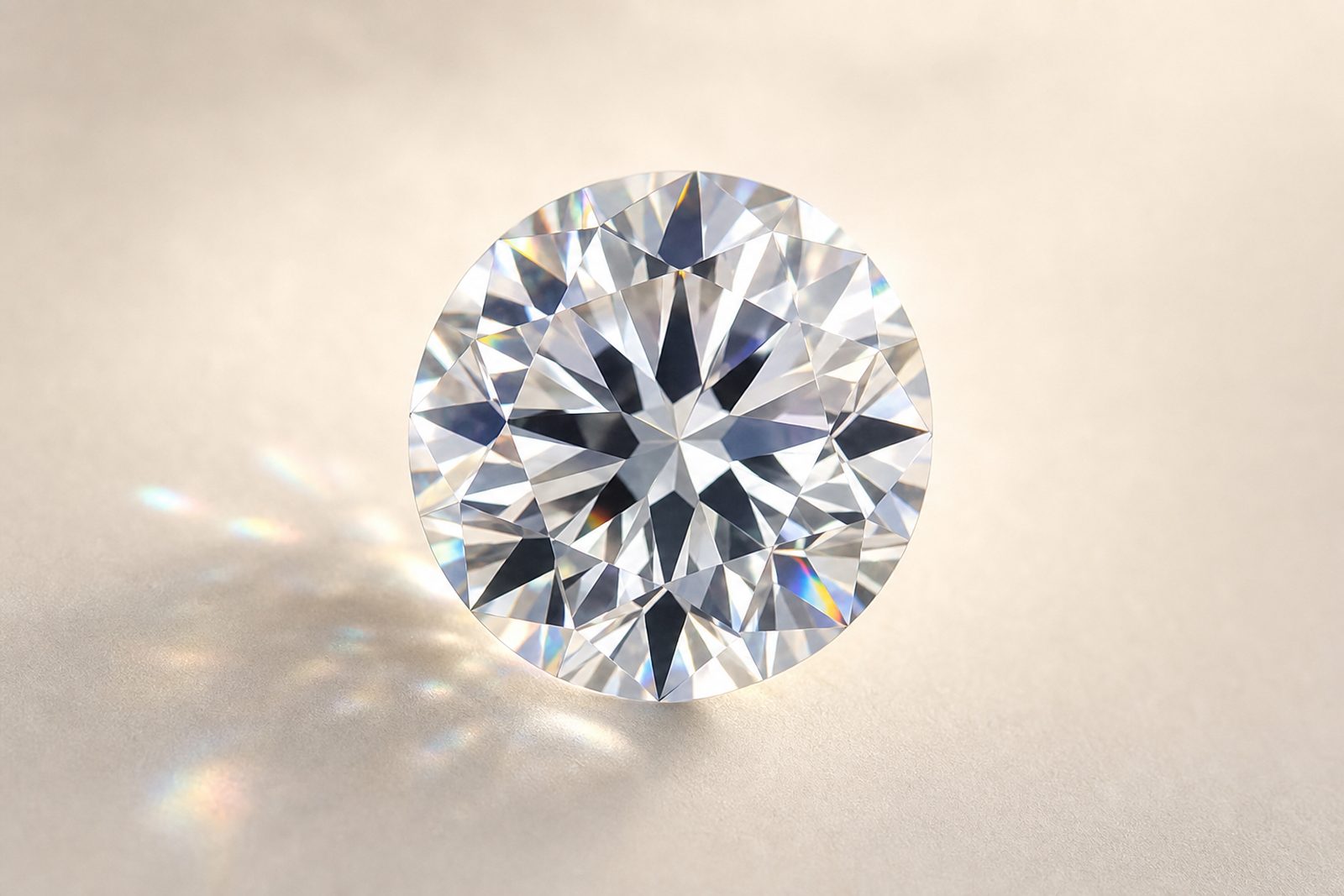
Cut is not the shape. Cut is the make, the proportions, symmetry and polish the cutter executes, and it is the one of the 4Cs that decides whether a diamond looks alive or dead. It governs brightness, fire and scintillation, so a poorly cut stone looks dull at any colour, clarity or weight.
It is also the only C made by hand rather than found in the rough, and the one we control on our own bench. This guide explains what cut actually is, the GIA cut grade scale, and how to use cut to buy well. Natural diamonds only.
See GIA Excellent stones, fully-landed ZAR prices Get a firm quote → Email Darren directly →
-
Natural diamonds only
We sell natural diamonds and diamond-set jewellery. Ask us about the grading report and available origin documentation for your chosen stone. Why we don’t sell lab-grown →
-
Independent grading reports
The grading laboratory is shown per stone. Review its report and the individual diamond before choosing; sourced examples can include GIA, EGL and IGI.
-
Insured delivery, SA & worldwide
Overnight across South Africa via Brink’s, G4S or our nominated jewellery courier. Insured worldwide dispatch via Ferrari Group and FedEx Custom Critical.
-
14-day in-person exchange
In-person sales at the viewing room come with a 14-day exchange courtesy on stock pieces. Distance-sale CPA cooling-off applies.
Diamond price guidance, captured 8 September 2026. These figures describe samples of sourced listings, with VAT and delivery for the stones included. They are not current stock guarantees. Settings and making are additional where jewellery is discussed; confirm the complete written quote.
What insisting on an Excellent cut costs you
In the captured 1 carat, H-colour, SI1-or-better selection, 91% of the listings passing the Good cut filter also passed the Excellent filter: 3 964 of 4 341. This describes the selection, not a guarantee that an Excellent-cut diamond costs the same as a lower-cut-grade stone.
Which is why we do not treat Excellent as an upgrade. On rounds it is the floor we buy at, because a stone that is cut badly cannot be fixed later and no other grade compensates for it. Carat, colour and clarity are the levers worth pulling on price. Cut is the one to leave alone.
Search Excellent-cut 1 carat diamonds →
No two diamonds are the same
A table describes a market, not a stone. Two diamonds identical on paper can differ by a third in price and both figures be right: how well the stone is actually cut and how much light it returns, where the inclusions sit and whether the eye finds them, how strongly it fluoresces, and how keenly that one happens to be priced against the international trade benchmark on the day. We check every stone against that benchmark before we show it to anybody, and the number that matters is the one quoted in writing on the stone you actually choose.
Ask us what your budget buysSearch the live inventory →
Captured 8 September 2026; guide figures rounded up to the next R100. Colour and clarity tables use sampled medians and percentile bands; rows without a measured range may use a limited lower-priced sample. Prices and availability can change. Your written quote identifies the actual stone and all inclusions.
The short answer: cut is the make, not the shape
The single most common confusion in diamond buying is treating “cut” and “shape” as the same thing. They are not. Shape is the outline, round, oval, pear, princess, emerald. Cut is the make: the proportions, the symmetry of the facets, and the polish on every surface, all executed by the cutter within a chosen shape.
Two round brilliants can share the identical shape, weight, colour and clarity grade and still look nothing alike, because one is cut to ideal proportions and the other leaks light. Of the four Cs, colour, clarity and carat are properties the rough already had when it left the ground; cut is the only one a person makes.
That is why it carries a craftsperson’s name, and why a cutting house treats it as the C that earns or loses the whole stone.
Why cut is the most important of the 4Cs
Look at a diamond and three things happen at once. Brightness is the white light it returns to your eye. Fire is the way it splits that light into flashes of spectral colour. Scintillation is the sparkle, the play of light and dark, as the stone or your head moves. Every one of those is decided by the cut, not by the colour or clarity grade on the report.
A stone cut to ideal proportions acts like a system of tiny mirrors: light enters through the top, bounces off the back facets, and comes straight back at you. Cut the angles wrong and that same light passes through the bottom and is lost, so the centre of the stone looks dark, glassy or “watery”.
This is why a poorly cut diamond looks dull at any colour, clarity or weight: you can own a flawless, colourless two-carat stone and, if the make is bad, it will still look lifeless next to a smaller, lower-graded stone that is beautifully cut.
Colour and clarity you can recover with the eye; a bad cut you cannot, because the geometry is locked in the moment the stone is polished. Protect cut first.
The GIA cut grade scale, and what each grade looks like
For the round brilliant, GIA grades cut on a five-step scale. The grade is a composite: it combines the proportions (how light returns), with the polish and symmetry (the finish). Here is what each grade actually delivers to your eye, not just on paper:
| GIA cut grade | What it delivers visually |
|---|---|
| Excellent | Maximum, even light return with strong fire and scintillation. No dark centre, no washed-out zones. Looks alive from across a room. The grade we cut to. |
| Very Good | Returns nearly as much light as Excellent and is often indistinguishable to the unaided eye. Excellent value when the proportions are honest. |
| Good | Acceptable brightness but visibly less lively. Some light is leaking; the stone reads flatter beside a well-cut one. |
| Fair | Noticeable light loss. The stone looks dull or uneven face-up, often with a dark or glassy centre. |
| Poor | Significant light leaks out the bottom or sides. Looks lifeless and dark whatever the colour and clarity grades say. |
A short, honest caveat on shape: this five-step scale is only assigned to round brilliants. Fancy shapes, oval, pear, marquise, princess, emerald, cushion and the rest, do not currently receive a GIA cut grade at all; their reports carry polish and symmetry grades only, and their light performance is a bench judgement made in person. More on that below.
What ideal proportions actually control
“Good proportions” is not a slogan, it is a small set of measurements that decide where the light goes. The figures below are the standard, well-known working ranges for a round brilliant, not invented numbers. The one that matters most is the pavilion angle: it sets whether light striking the crown reflects off the back facets and returns to your eye, or escapes through the base of the stone.
A touch too shallow and the centre “fish-eyes” and goes pale; a touch too deep and it darkens and goes glassy. Crown angle, table size and total depth work with it to balance brightness against fire.
| Proportion (round brilliant) | Working range & what it controls |
|---|---|
| Table % | 54–58%. The flat top facet. Too large and fire suffers; too small and brightness drops. |
| Total depth % | 59–62.5%. Top-to-bottom height vs width. Outside this, light leaks rather than returns. |
| Crown angle | 34–35°. The slope of the top. Drives fire, the dispersion of light into colour. |
| Pavilion angle | 40.6–41°. The critical one. Decides whether light returns to the eye or leaks out the bottom. |
| Polish & symmetry | Excellent or Very Good. The finishing grades, covered next. |
Inside these ranges, with clean polish and symmetry, a stone cut by a careful house returns light evenly and earns its Excellent cut grade. Outside them, no amount of colour or clarity rescues the look. To see the exact numbers on an actual stone, our guide to how to read a GIA report shows you where the proportions are printed and how to check them yourself.
Polish and symmetry: the finishing grades
Proportions decide the path of the light; polish and symmetry decide how cleanly it travels. Polish grades the smoothness of each facet surface, microscopic polishing lines or burns scatter light and dull the sparkle. Symmetry grades how precisely the facets line up: whether the table is centred, the facets meet at clean points, and the two halves mirror each other. Both are graded on the same Excellent-to-Poor scale.
They are genuinely part of the cut, not an afterthought, and on a round brilliant they feed into the overall GIA cut grade. Excellent or Very Good polish and symmetry is what separates a stone that merely has the right angles from one that is properly finished. This is the level of detail a cutting house lives at, because we are the ones holding the stone to the wheel.
Why a cutting house has unique authority on cut
Cut is the one C that is not bought, it is made, and Prodiam makes it. As a SADPMR-licensed dealer and working bench, we buy rough and polish round brilliants to GIA Excellent cut grade on our own bench at Procut DCW in Bedfordview, Johannesburg.
A retailer who only buys finished stones can quote you a cut grade; we can explain how that grade was achieved, because we sit at the wheel and choose the angles. On top of GIA Excellent we apply our own Procut Signature standard, a tightened make that holds the proportions where light return and fire are at their strongest, not merely inside the Excellent band.
Colour, clarity and carat we source against the Rapaport list; cut is the grade we directly control, which is exactly why it is the topic a cutting house can speak on with more authority than anyone reselling someone else’s polishing. You can read more about Procut and the bench behind every stone.
How to use cut to buy a diamond well
The whole point of understanding cut is to spend a fixed budget for the liveliest possible stone. The order a serious bench uses is simple:
- 01
Lock in the cut first
On a round brilliant, fix a GIA Excellent (or strong Very Good) cut grade before anything else. It is the grade your eye notices first and the one you can never change later.
- 02
Drop colour to where the eye stops noticing
A near-colourless G–I colour stone faces up white in a ring. Paying up to D–F is mostly emotional, not visual, once the stone is set.
- 03
Drop clarity to eye-clean
An eye-clean VS–SI1 clarity stone looks identical to a flawless one face-up. Read the GIA plot, then judge it at arm’s length.
- 04
Never trade cut back for size or grades
A smaller, brilliantly cut stone out-sparkles a larger dull one. Cut is the variable that cannot be recovered after polishing, so it is the one you defend.
Worked through on a real stone against a real budget, that order consistently buys the liveliest diamond for the money. The deeper trade-offs across all four grades are set out in our guide to the 4Cs, and every stone we cut to Excellent is verified on a GIA certificate you check yourself before you pay.
How cut interacts with shape
Cut and shape are linked but judged differently. The round brilliant is the only shape with a defined GIA cut grade, because its 57-or-58-facet geometry has been optimised and standardised for light return, which is why it is the brightest, most forgiving shape and the one we cut to Excellent.
Fancy shapes, oval, pear, marquise, princess, emerald, cushion, do not get a GIA cut grade; their reports show polish and symmetry only. That does not make their make unimportant, the opposite is true: with no single cut grade to lean on, a fancy must be judged on the bench for even light return, the absence of a dark “bow-tie” across the centre, and good outline and symmetry.
So on a round you can largely trust the cut grade; on a fancy you trust a trained eye. Either way, see live, fully-landed prices on the diamond search, then have us judge the make with you. Buying as a loose diamond or from anywhere in South Africa changes nothing about the standard we cut to.
Diamond cut: common questions
What is diamond cut, and is it the same as the diamond’s shape?
No, and confusing the two is the most common mistake buyers make. Shape is the outline, round, oval, pear, princess, emerald. Cut is the make: the proportions, symmetry and polish the cutter executes within that shape. Two round brilliants can be the identical shape, weight, colour and clarity and yet look completely different because one is cut to ideal proportions and the other is not.
Cut is the work of the cutter’s hands, the geometry that decides how much light the finished stone returns to your eye. It is the only one of the 4Cs that is made rather than found, and at Prodiam it is the C we control on our own bench.
Why is cut the most important of the 4Cs?
Because cut governs how the diamond behaves in light, and light is what you actually see. A diamond’s beauty is brightness (white light returned), fire (the flashes of spectral colour) and scintillation (the sparkle as it moves), and all three are set by the cut, not by the colour or clarity grade.
A poorly cut stone leaks light out of the bottom and sides and looks dull, glassy or dark in the centre no matter how high its other grades are. A superbly cut stone looks alive.
You can recover a slightly lower colour or clarity grade with the eye, but you cannot fix a bad cut after the stone is polished, which is why a cutting house tells you to protect cut first.
What are the GIA diamond cut grades?
For the round brilliant, GIA grades cut on a five-step scale: Excellent, Very Good, Good, Fair and Poor. Excellent returns the most light evenly, with strong fire and scintillation and no dark or washed-out zones. Very Good returns nearly as much and is often indistinguishable to the unaided eye. Good is acceptable but visibly less lively. Fair and Poor leak meaningful light and look dull or dark face-up.
The grade is a composite of the proportions, polish and symmetry. Prodiam cuts and polishes its round brilliants to GIA Excellent. Note that fancy shapes do not receive a GIA cut grade, they are reported on polish and symmetry only and judged on the bench.
What proportions make a diamond well cut?
For a round brilliant the workable ranges are roughly: total depth 59–62.5%, table 54–58%, crown angle 34–35°, pavilion angle 40.6–41°. Those numbers are not arbitrary. The pavilion angle in particular decides whether light striking the crown reflects off the back facets and returns to your eye, or escapes through the bottom of the stone. Too shallow or too deep and the centre goes dark or glassy.
Inside those ranges, with Excellent or Very Good polish and symmetry, a stone cut by a careful house returns light well and earns a GIA Excellent cut grade. Outside them, light leaks and the stone looks lifeless however good the other grades.
How should I use cut to buy a diamond well?
Protect cut first, then spend on the other grades only to the point where your eye stops noticing. Lock in a GIA Excellent (or strong Very Good) cut on a round brilliant before anything else, because it is the grade you see first and cannot change later.
Then drop colour to near-colourless (G–I faces up white in a ring) and clarity to eye-clean (a VS–SI1 stone looks identical to a flawless one once set). That order buys you the liveliest stone for the money. Get a fully-landed ZAR price to your spec on our diamond search, filter to GIA Excellent cut, and ask Darren for a firm quote on a real, GIA-certified stone.
Last reviewed: June 2026.