
The 4Cs Ranked · A Cutting House Answers · Cut First
What is the most important of the 4Cs?
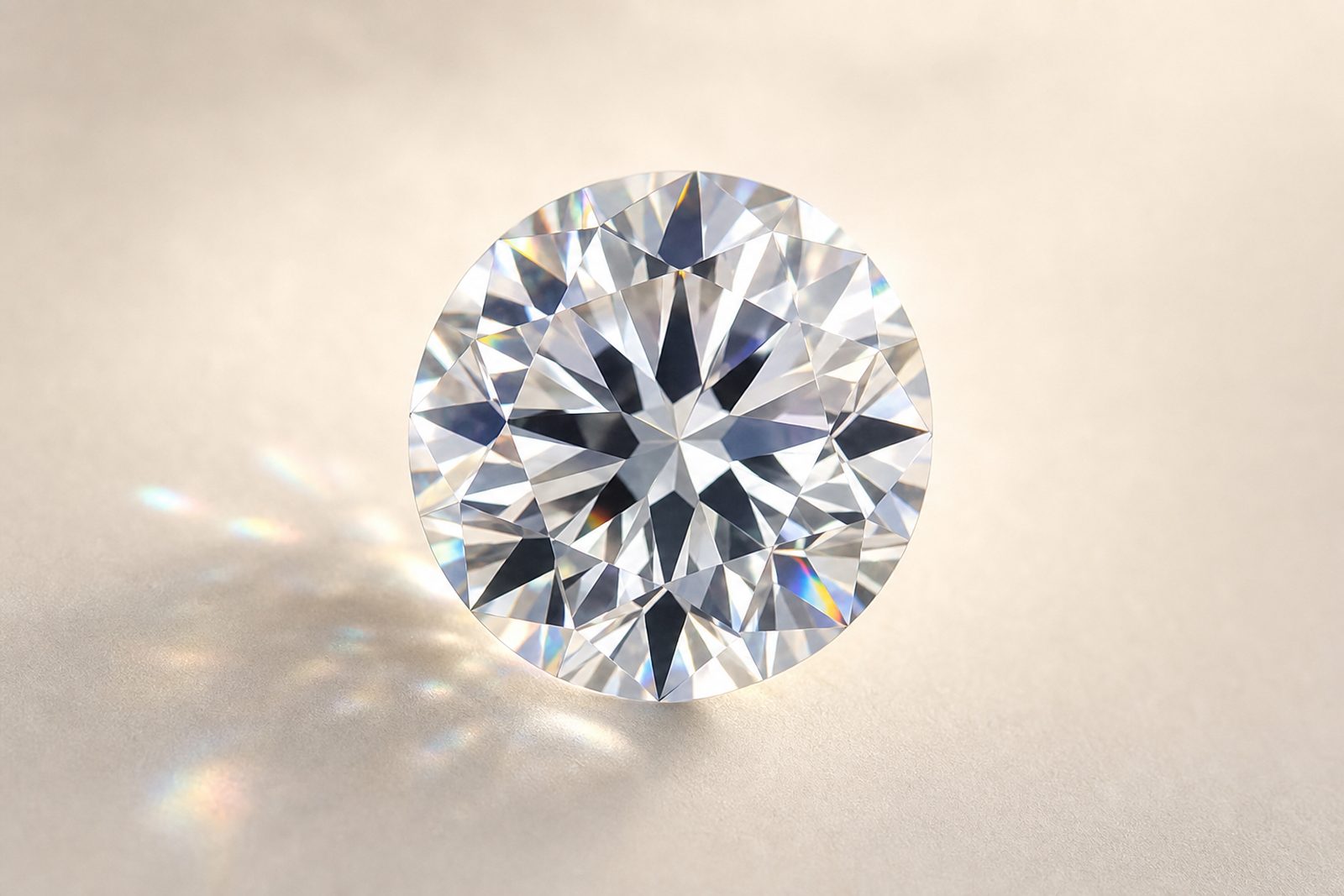
Cut, by a distance. It is the only one of the four characteristics made by human hands, and it governs how light returns to your eye as brightness, fire and sparkle. A top colour and clarity grade on a poorly cut stone still looks dull; an excellent cut, a grade or two lower elsewhere, looks alive.
Colour, clarity and carat describe the rough nature gave you. Cut is what a craftsman does with it. As a cutting house that polishes its own stones, this is the one we will always tell you to protect first, then spend the rest of the budget around.
Find an Excellent-cut diamond Read the full cut guide →
The short answer: cut, by a distance
Ask a salesperson which C matters most and you will often hear carat, because it is the easiest number to sell. Ask a cutter, and the answer is always cut. Three of the 4Cs, colour, clarity and carat, are fixed the moment the rough comes out of the ground: they describe what nature made. Cut is the only one decided by a person at a bench, and it is the one that determines whether all that natural quality is actually visible.
A diamond works by taking in light, bouncing it around inside, and sending it back to your eye. A well-cut stone does this efficiently and looks bright and full of fire. A badly cut one lets light leak out of the bottom and sides, and looks dark and lifeless no matter how good its colour and clarity grades read on paper. That is why cut is first, and why it is not close.
Why cut outranks colour, clarity and carat
Three reasons put cut at the top, and they compound:
- It is the only C you can see across a room. Colour and clarity differences of a grade or two are invisible to the naked eye once a stone is set; cut quality is obvious instantly, in how the diamond sparkles.
- It cannot be fixed later. A stone is polished once. A weak cut grade is permanent, while colour and clarity you simply chose not to pay for can be upgraded by buying a different stone. Get cut wrong and the diamond underperforms forever.
- It governs face-up size. A deep, badly proportioned stone hides weight underneath where it does nothing, so a poorly cut diamond can look smaller than a lighter, well-cut one. Cut even affects the carat you think you are seeing.
We polish our round brilliants to GIA Excellent cut grade on our own bench precisely because it is the grade that decides everything else about how the stone presents.
The order after cut: colour, clarity, then carat
Once cut is protected, the other three fall into a sensible order for most buyers. The principle is simple: buy each grade only up to the point where the eye can no longer tell the difference, then stop.
- 01
Cut, protected absolutely
Set this to Excellent first and do not trade it away for anything. It is the foundation every other decision sits on.
- 02
Carat, to the size you genuinely want
Choose the presence you want on the hand, then look just below the round “magic” weights, where a shy stone looks identical for less. Size matters, but only on a well-cut stone.
- 03
Colour, to near-colourless
The G-H-I band faces up white in almost any setting. Paying up to D-F is usually money spent on a difference invisible once the stone is set, more so in yellow or rose gold.
- 04
Clarity, to eye-clean
A VS2 or verified SI1 shows nothing to the naked eye and looks identical to a flawless stone in a ring. There is no visible reward for paying past the eye-clean point.
When the order shifts
Cut is always first, but the ranking of the other three moves with two things, and it is worth knowing which case you are in:
- Shape. Brilliant cuts, the round, oval, cushion and pear, scatter light and hide small inclusions, so you can buy clarity more freely. Step cuts, the emerald and Asscher, have long open facets that show everything, so clarity and colour both climb the priority list and need to be bought a grade or two higher to look clean.
- Setting metal. In white gold or platinum, body colour shows more, so colour earns a higher place. In yellow or rose gold, the warm metal masks colour, so you can drop several grades and put the saving into cut or carat.
None of this changes the headline. Whatever the shape or the metal, cut is the grade to protect first; the shift is only in how you rank colour and clarity behind it. Our guides to colour, clarity and diamond shapes set the detail out, and the 4Cs grading explainer covers how each is graded.
Where to spend, and where to save
Put together, the cutter’s rule of thumb is short: spend on cut, save on the top of colour and clarity, be disciplined on carat. A flawless, D-colour stone with a mediocre cut is the worst value in the diamond world; an excellent cut with a near-colourless, eye-clean stone, bought just shy of a round weight, is close to the best. The money you save by not paying for invisible colour and clarity grades is best redirected into the one grade that is visible in every light, the cut.
This is also why a cutting house answers the question differently from a shopfront. A retailer buys polished stones in and is paid to move them; leading with carat and the certificate’s headline grades sells. We cut our own rough, so cut is the grade we stake our name on, and it happens to be the one that serves you best. If you tell us your budget and the size you want, we will set the four grades in the order above and find the stone that looks the best for the money, not the one that reads best on paper.
Most important of the 4Cs: common questions
What is the most important of the 4Cs?
Cut, by a clear distance, and it is not especially close. Cut is the only one of the four characteristics made by human hands rather than by the earth, and it governs how light enters a diamond and returns to your eye as brightness, fire and sparkle.
A stone with a top colour and clarity grade but a poor cut looks dull and lifeless, while a well-cut stone a grade or two lower in colour and clarity looks brilliant and alive. Colour, clarity and carat describe the rough nature gave you; cut is what a craftsman does with it, and it is the grade that decides whether a diamond actually performs.
Spend here first and protect it absolutely.
Is cut or clarity more important in a diamond?
Cut, in almost every case. Clarity describes tiny natural inclusions inside the stone, and beyond the eye-clean point, roughly VS2 to SI1 in most stones, the difference is invisible without a loupe and adds cost you cannot see. Cut, by contrast, is visible the moment you look at the diamond: it is the difference between a stone that throws light back at you and one that sits flat.
A flawless stone that is poorly cut will be outshone by an eye-clean SI1 with an excellent cut every time. Buy clarity only to the point where the stone is clean to the naked eye, then put the money you saved into the cut.
Is carat the least important of the 4Cs?
It is the most over-prioritised, which is not quite the same thing. Carat is simply the weight, and it is the number buyers fixate on because it is the easiest to compare and the one a retail counter leads with. But weight without cut is wasted: a heavy, deep, badly proportioned stone buries its carats underneath where they do nothing and faces up smaller than a lighter, well-cut diamond.
Carat matters, of course, people want presence on the hand, but it should be the last grade you set, after cut is protected and colour and clarity are bought to the eye-clean, near-colourless point. Chasing a round weight at the expense of cut is the most common and most expensive mistake we see.
Does the most important C change with the diamond shape?
Cut stays first for every shape, but the order of the others can shift, and shape is the main reason. Brilliant cuts, the round, oval, cushion, pear and similar, scatter light in a way that hides small inclusions, so you can buy clarity a little more freely on them.
Step cuts, the emerald and Asscher, have long open facets like a hall of mirrors that show everything, so clarity and colour both matter more and need to be bought a grade or two higher to look clean. So while cut is always the grade to protect first, an emerald-cut buyer should weight clarity more heavily than a round-brilliant buyer would.
We will tell you exactly where to set each grade for the shape you have chosen.
Which of the 4Cs should I spend the most money on?
Cut, without hesitation. It is the grade that determines how brilliant and alive the diamond looks, it cannot be improved after the stone is polished, and it is the one a cutting house directly controls. Set cut to GIA Excellent first and build the rest of the budget around it.
After cut, spend on carat to the size you genuinely want, then buy colour and clarity only up to the point where the eye can no longer tell the difference. Spending top money on a flawless, D-colour stone with a mediocre cut is the worst value in the diamond world; spending it on an excellent cut with sensible colour and clarity is the best.
Which C can I save on without anyone noticing?
Colour and clarity, both up to a clear threshold. On colour, the near-colourless G-H-I band faces up white in almost every setting, and in yellow or rose gold you can drop further still, so paying for a top D-F grade is usually money spent on a difference no one will see once the stone is set.
On clarity, an eye-clean VS2 or SI1 shows nothing to the naked eye and looks identical to a flawless stone in a ring. Those two savings, taken together, can be substantial, and the disciplined move is to redirect them into the cut, where every rand is visible. The one place you should never save is cut: a cheaper cut grade is a cheaper-looking diamond, full stop.
Written and last reviewed by Darren Etkind, director, Prodiam Trading, on 26 June 2026.
-
Natural diamonds only
We sell natural diamonds and diamond-set jewellery. Ask us about the grading report and available origin documentation for your chosen stone. Why we don’t sell lab-grown →
-
Independent grading reports
The grading laboratory is shown per stone. Review its report and the individual diamond before choosing; sourced examples can include GIA, EGL and IGI.
-
Insured delivery, SA & worldwide
Overnight across South Africa via Brink’s, G4S or our nominated jewellery courier. Insured worldwide dispatch via Ferrari Group and FedEx Custom Critical.
-
14-day in-person exchange
In-person sales at the viewing room come with a 14-day exchange courtesy on stock pieces. Distance-sale CPA cooling-off applies.