
Aftercare service · Resizing, repair, lost-stone replacement
Ring resizing, repair and lost-stone replacement, done safely at the bench.
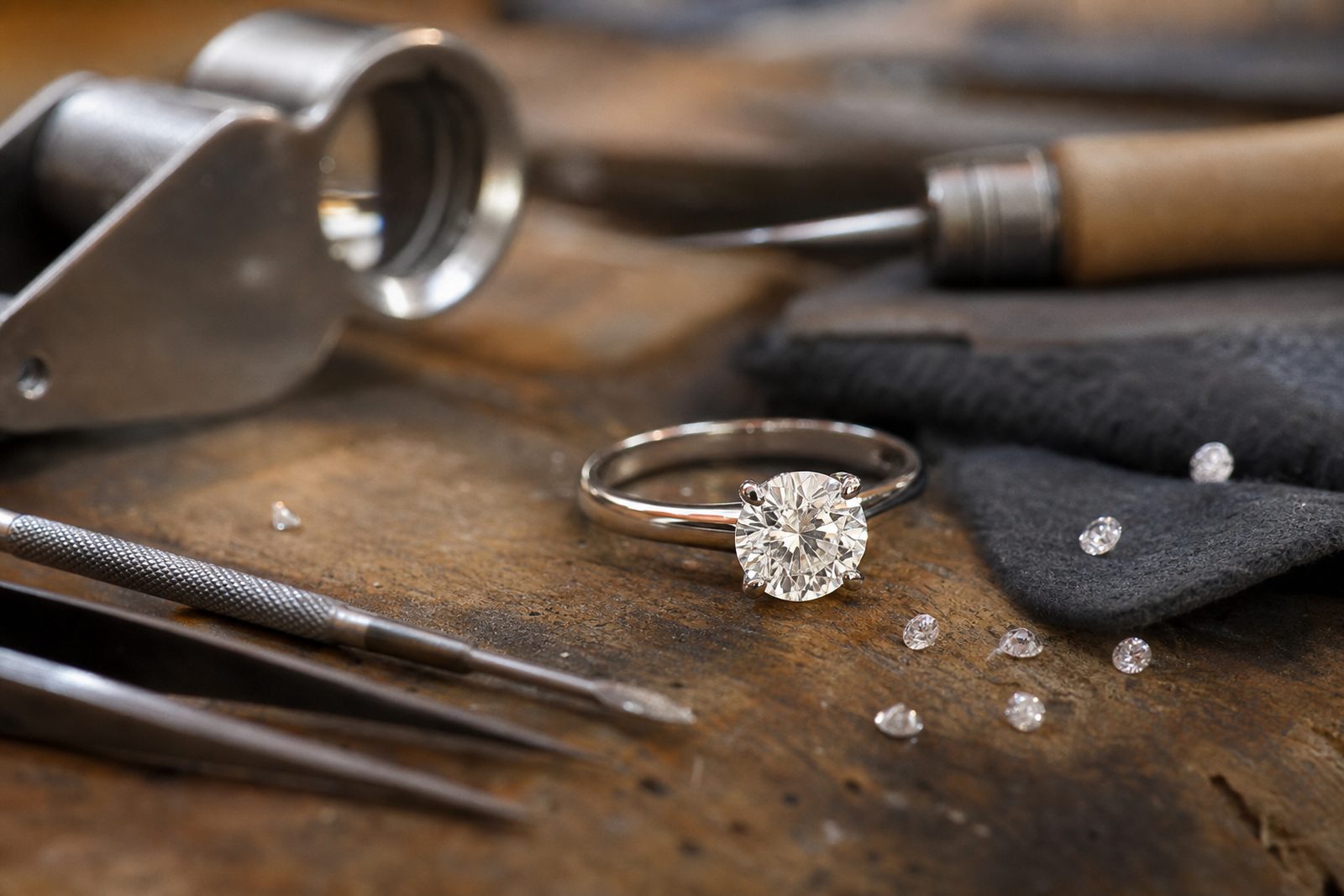
Yes, we resize, re-shank and repair diamond rings, and replace lost stones, at our Bedfordview bench in Johannesburg. The point is where the work is done: the same cutting house that cuts and sets natural diamonds every day handles your ring, so heat is managed and the stone is lifted out where the job calls for it.
We size up and down, re-shank a worn band, rebuild tired claws before a diamond drops, and match or cut a replacement to spec. By appointment, or nationwide by insured courier.
-
Natural diamonds only
We sell natural diamonds and diamond-set jewellery. Ask us about the grading report and available origin documentation for your chosen stone. Why we don’t sell lab-grown →
-
Independent grading reports
The grading laboratory is shown per stone. Review its report and the individual diamond before choosing; sourced examples can include GIA, EGL and IGI.
-
Insured delivery, SA & worldwide
Overnight across South Africa via Brink’s, G4S or our nominated jewellery courier. Insured worldwide dispatch via Ferrari Group and FedEx Custom Critical.
-
14-day in-person exchange
In-person sales at the viewing room come with a 14-day exchange courtesy on stock pieces. Distance-sale CPA cooling-off applies.
Why have ring work done at a cutting house, not just any jeweller
Most ring repair fails the stone, not the metal. A diamond that cracks during a resize, or drops out months later, was almost always let down by how the job was done around it: heat too close to an inclusion, a claw stretched rather than rebuilt, a thin shank forced wider until it split. Prodiam is a working cutting house.
We buy rough, and we polish and set natural diamonds on our own bench at Procut DCW in Bedfordview, Johannesburg, so the people doing your repair are the people who understand how a stone behaves under the torch and in a setting. That is the difference between getting a ring back smaller and getting it back safer.
It also gives us an advantage no reseller has: stones. When a centre or side diamond is lost, we can match a natural replacement, or cut one to spec, rather than telling you the original is irreplaceable. The same honesty we bring to grading a stone you already own applies here, we look first, tell you what is really going on, and only then quote the work.
Resizing up and down, and when a re-shank is the safer route
Resizing a plain or shoulder-set band is routine: to size down we cut out a section and rejoin the shank; to size up we either insert new metal or, within a size or so, gently stretch it. The judgement is knowing the limit.
A band that has been sized several times, worn thin on the underside from years on the hand, or gone out of round, has fatigued metal, and stretching tired metal is how shanks crack. In those cases the honest answer is a re-shank: replacing the lower half of the band with fresh platinum or gold.
It costs more than a stretch, but it leaves the ring stronger than it has been in years rather than one knock from failing. We tell you which your ring needs once it is in hand, and quote in writing before we cut anything.
Protecting the diamond: heat management and removing the stone
The real risk in any ring work is heat. A diamond is carbon, and near an open flame, especially a stone with a reaching inclusion, heat can fracture it or loosen it in its setting. A bench that sets diamonds daily manages this as a matter of routine. For work away from the head we direct and shield the torch so heat never reaches the stone.
Where the diamond sits close to the join, or where it is heavily included, tension-set, or otherwise vulnerable, we lift the stone out of the setting first, do the metalwork cold of the stone, then reset and re-tighten it under magnification. At hand-over you check the girdle inscription against the report number under loupe, the same verification step you would get on a stone we sold you.
Rebuilding worn claws and settings, before a stone is lost
Most lost diamonds are preventable. Claws are the small metal fingers holding a stone, and they wear, thin and bend with every knock over the years; a worn claw eventually lets the stone wobble, then drop. Catching it early is inexpensive insurance. We read every claw under magnification and tell you the truth, which are sound, which need attention now, and which can wait, rather than rebuilding metal that does not need it.
| Setting work | When it is needed |
|---|---|
| Retipping claws | Claws worn low or thinned at the tip. New metal is added to the tip so it grips the stone properly again. |
| Rebuilding a claw | A claw bent, snapped or broken off in a knock. The claw is rebuilt in matching metal and re-finished. |
| Replacing the head | The whole setting is worn past retipping, or the design is changing. A new head is fitted and the stone reset. |
| Tightening & checking | A stone that rattles or spins. The claws are re-tightened and every stone in the piece is checked while it is on the bench. |
Replacing a lost centre or side stone
If a diamond is already gone, this is where a cutting house earns its place. We do not just reach for the nearest loose stone; we match the replacement to the original on shape, weight, colour and clarity so the ring reads as one piece, drawing on our own stock and the Rapaport-referenced list we buy against.
For a centre stone where an exact match matters, we can cut one to spec on our own bench to the proportions the design needs. Smaller side or pavé stones are matched and reset, and the surrounding claws rebuilt so the new stone is held properly. To browse natural stones for a replacement yourself, see our loose diamonds with live, fully-landed ZAR prices.
Rhodium re-plating: making white gold white again
White gold is not actually white. It is a yellow-gold alloy mixed paler and then finished with a thin rhodium plating to give it that bright, cool-white look. Rhodium wears off the high-touch areas, the underside of the shank first, over a year or two, leaving a warm, slightly yellow cast. Re-plating strips and re-applies a fresh rhodium layer so the ring reads bright white again.
Because the ring is already off the hand, we usually re-polish it and check the claws in the same visit, so it comes back looking new rather than only freshly plated. Platinum never needs this: it is naturally white the whole way through, which is one reason we often steer a much-worn ring toward a platinum re-shank.
How a repair runs
- 01
Honest assessment
We see the ring, in Bedfordview or by insured courier, and read it under magnification: shank condition, every claw, stone security, plating. You get a straight account of what needs doing now and what can wait.
- 02
Written quote, before any cutting
We quote the work in writing and explain the route, simple resize versus re-shank, retip versus new head, before we touch the ring. Nothing is cut or heated until you have agreed it.
- 03
Stone out where needed, then the metalwork
If the diamond is at risk from heat, it comes out first. The resize, re-shank or claw work is done cold of the stone, and any replacement diamond is matched or cut to spec.
- 04
Reset, finish and verify at hand-over
The stone is reset and tightened, the ring polished and re-plated if it is white gold, and at hand-over you match the girdle inscription to the GIA report under loupe.
What ring work costs, and how it is priced
Ring repair is priced on the work, not from a list, because no two rings arrive in the same condition. The cost of a resize depends on whether it is a stretch, a section in or out, or a full re-shank, and on the metal: platinum is denser and harder to work than gold, so it carries more than an equivalent gold job.
Claw work is priced by how much metal is rebuilt, from a single retip to a new head. A replacement stone is quoted on the diamond itself, against the Rapaport-referenced list, plus 15% VAT, exactly as a loose stone is priced; we never invent a figure. You get a written quote after we have the ring in hand and before any work starts.
For live, fully-landed ZAR pricing on a replacement diamond, our loose-diamond search shows real stones you can choose from.
Honest limits: rings that cannot simply be resized
- Full eternity rings are set with stones all the way round, leaving no plain metal to cut and rejoin. The honest options are sizing beads, a hinged shank, or remaking the ring at the new size, not a conventional resize.
- Tension settings hold the stone by the spring of the metal itself. Altering the band changes that grip, so resizing is risky or impossible; we assess each one individually.
- Channel and pavé bands can usually be sized only within a size or two before the small stones are disturbed and need resetting. We tell you the safe range for yours.
- Severely worn or previously over-sized shanks are past stretching. The safe route is a re-shank, not another stretch that risks cracking the band.
Ring repair from anywhere in South Africa
You do not need to be in Johannesburg. Rings come to the Bedfordview bench from across the country by insured overnight courier, via Brink’s, G4S or our nominated jewellery carrier, we assess and quote with photographs and a video call, do the work, and dispatch the ring back insured.
It is the same remote pathway we use for selling and commissioning, and the national service page sets out exactly how a remote job runs, from first photographs to insured return. If your ring is more tired than it is repairable, or you would rather rebuild than patch, the heirloom redesign service remakes the piece around the stone you keep.
Ring resizing and repair: common questions
Where can I get a ring resized in Johannesburg?
At Prodiam’s bench in Bedfordview, Johannesburg, by appointment. We are a working cutting house, so a diamond ring is resized by the same hands that cut and set stones every day. We size up and size down, judge whether your ring can be sized at all or needs a full re-shank, and where the work asks for it we lift the centre stone out first so no heat reaches it.
If you cannot come in, the same work runs nationally by insured courier; see the national service for how a remote job is handled end to end.
Can you resize an engagement ring without damaging the diamond?
Yes, and protecting the stone is the whole point of doing it at a bench that handles diamonds daily. The risk in resizing is heat: a diamond near a flame can fracture along an inclusion or shift in its setting. For most plain or shoulder-set bands we control the torch and keep heat away from the head.
Where the stone sits close to the work, or where the diamond is included or under tension, we remove it first, do the metalwork cold of the stone, then reset and re-tighten it. You match the girdle inscription to the GIA report under loupe at hand-over.
My diamond fell out of my ring. Can you replace it?
Yes. First, if the stone is lost we rebuild the setting and source a replacement; if it is loose but still in the claws, bring it in before it is gone.
A cutting house has the real advantage on a replacement: we can match a natural diamond to the original on shape, weight, colour and clarity from stock or, for a centre stone, cut one to spec on our own bench at Procut DCW.
We also tell you honestly why it came out, usually a worn or bent claw, and rebuild the setting so the new stone is held properly, not just dropped into the same tired mount.
What is re-shanking a ring, and when do I need it instead of resizing?
Re-shanking means replacing the lower half of the band, the shank, with new metal, rather than cutting and stretching the existing one. You need it when the shank has worn thin from years on the hand, has gone out of round, or has been sized so many times the metal is fatigued.
Trying to stretch a thin, tired shank can crack it, so a full or half re-shank in fresh platinum or gold is the safer route and leaves the ring stronger than a repeated stretch. We tell you which your ring needs after we have it in hand, and quote in writing before any cutting.
Can a ring with worn claws be repaired before a stone falls out?
Yes, and this is the repair that saves you the cost and grief of a lost diamond. Claws wear down, thin out and bend over years of knocks, and a thin claw eventually lets a stone wobble and drop. We retip worn claws with new metal, rebuild a claw that has broken off, or replace a whole worn head where the setting is past retipping.
The honest read comes first: we look at every claw under magnification and tell you which are sound, which need retipping now, and which can wait, rather than rebuilding metal that does not need it.
Can you re-plate the white gold and make my ring white again?
Yes. White gold is an off-white alloy finished with a thin rhodium plating, and that plating wears off the high-touch areas over a year or two, leaving a warm, yellowish cast, most visible on the shank. Re-plating strips and re-applies a fresh rhodium layer so the ring reads bright white again.
We usually re-polish and check the claws in the same visit, since the ring is already off the hand, so the stone is secure and the whole piece looks new rather than just freshly plated. Platinum does not need this; it is naturally white throughout.
Are there rings you cannot resize?
Yes, and we will tell you upfront rather than attempt something that risks the ring. A full eternity ring, set with diamonds all the way round, has no plain metal to cut and rejoin, so it usually cannot be sized conventionally; the honest options are sizing beads, a hinged shank, or remaking the ring to the new size.
Tension-set rings rely on the metal’s spring to grip the stone, so altering the band can change that grip and is risky or impossible. Some channel and pavé settings can be sized only within a size or two before the stones are disturbed. We assess yours in hand and give you the real options.
Last reviewed: June 2026.