
Loose Emerald Cut Diamonds · Step Cut · Bedfordview
Loose emerald cut diamonds, bought with open eyes.
Emerald-cut loose diamonds for sale through Prodiam offer a rectangular step-cut outline. Compare the listed stones by carat, dimensions, clarity and grading report, then confirm a Bedfordview viewing or ask us to source a diamond to your brief.
Our own register carries a small emerald-cut selection at any moment, we cut mostly rounds in-house, and we source certified emerald cuts to exact spec through the trade network. Both routes are below.
-
Natural diamonds only
We sell natural diamonds and diamond-set jewellery. Ask us about the grading report and available origin documentation for your chosen stone. Why we don’t sell lab-grown →
-
Independent grading reports
The grading laboratory is shown per stone. Review its report and the individual diamond before choosing; sourced examples can include GIA, EGL and IGI.
-
Insured delivery, SA & worldwide
Overnight across South Africa via Brink’s, G4S or our nominated jewellery courier. Insured worldwide dispatch via Ferrari Group and FedEx Custom Critical.
-
14-day in-person exchange
In-person sales at the viewing room come with a 14-day exchange courtesy on stock pieces. Distance-sale CPA cooling-off applies.
Emerald cuts on the bench today
5 emerald cuts sit on the basket as this page was last built, each natural and independently GIA or EGL certified. This shape’s register is deliberately small and moves quickly, so treat it as a sample of what passes across the desk rather than the catalogue.
We put a sample on the website; stock moves quickly. Message us for whatever you need, listed here or not, and we will confirm the same day. Check availability WhatsApp Prodiam
-
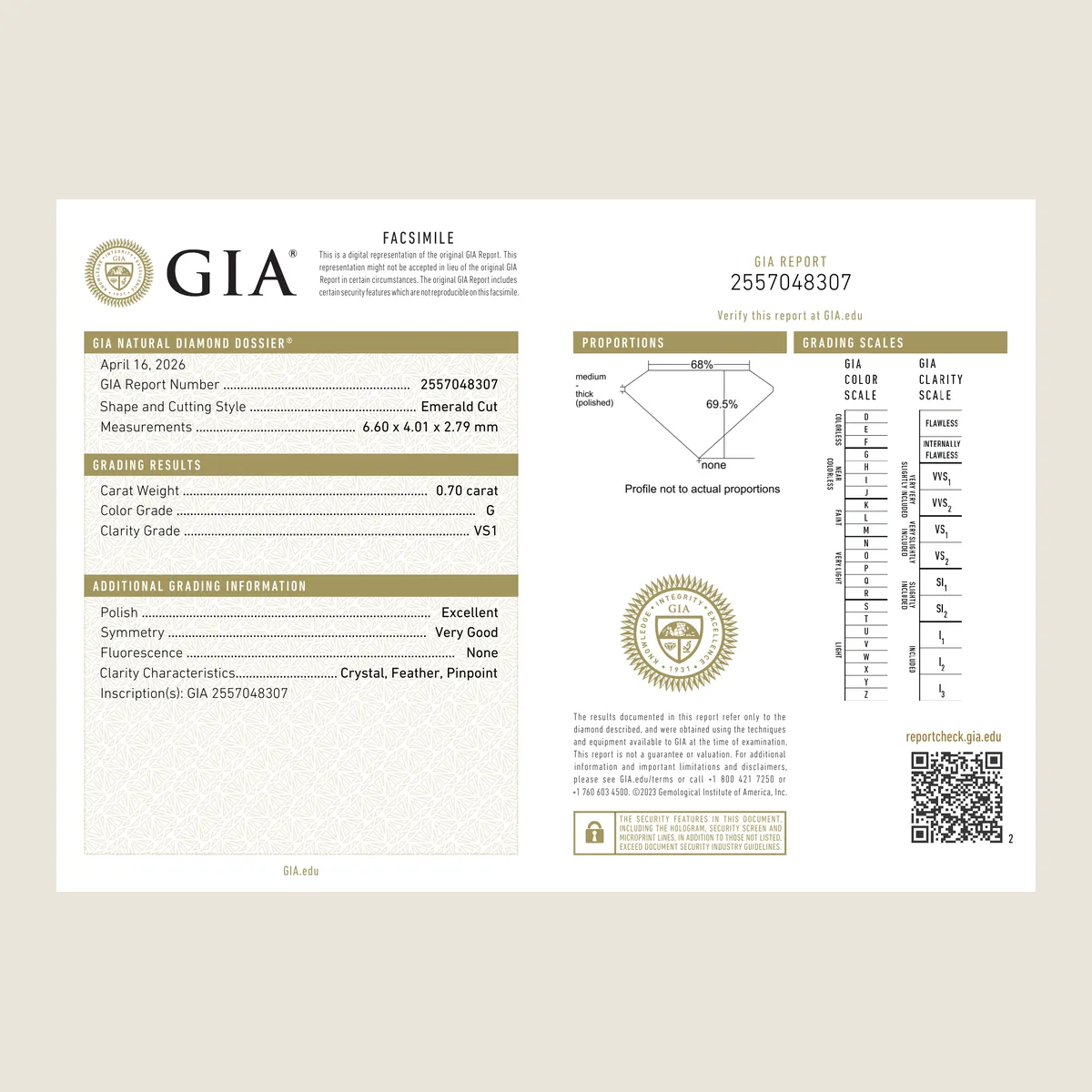
0.70 Ct
Emerald
- Colour
- G
- Clarity
- VS1
- Cert
- GIA
- Carat
- 0.70
R 30 654,00 incl. VAT
-
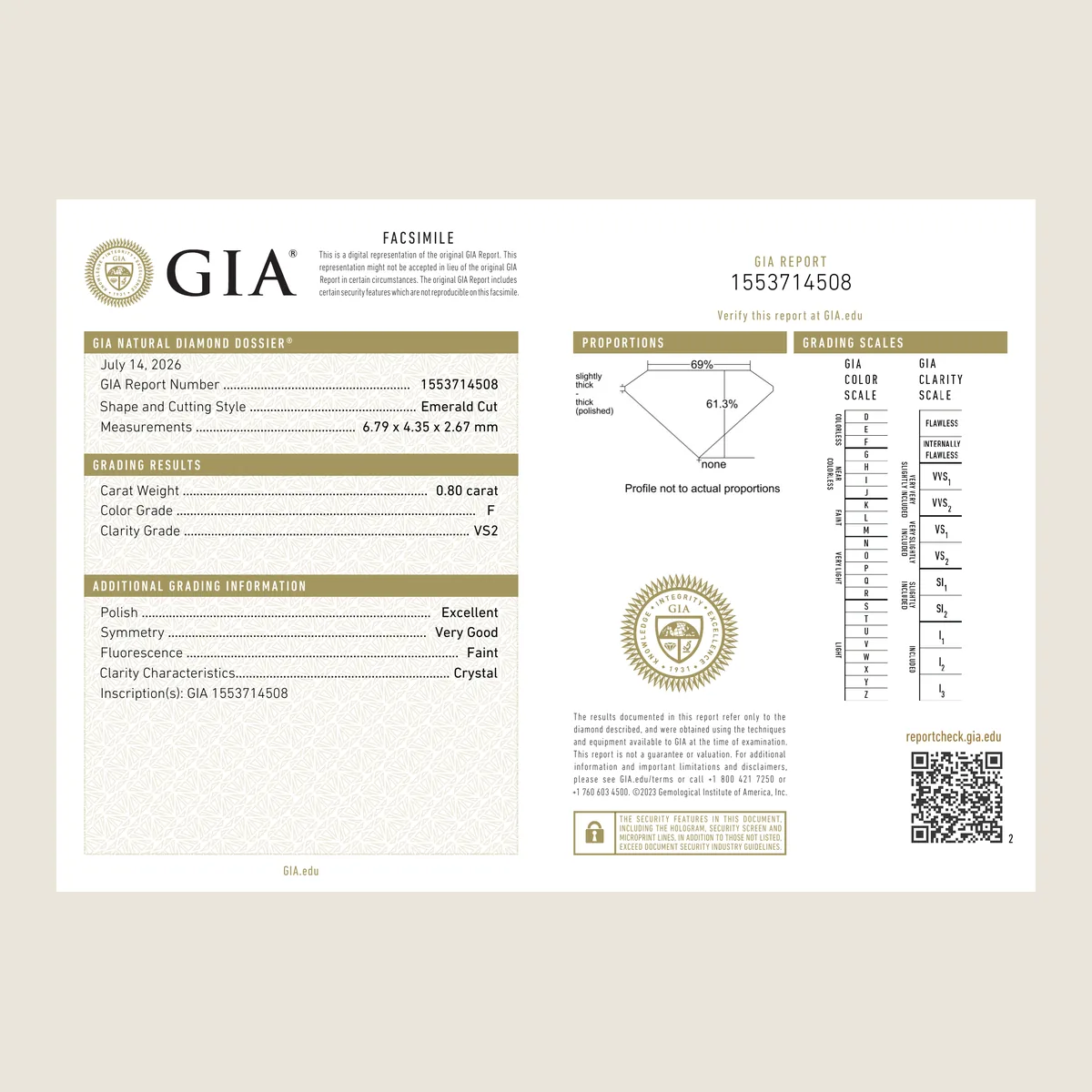
0.80 Ct
Emerald
- Colour
- F
- Clarity
- VS2
- Cert
- GIA
- Carat
- 0.80
R 33 782,00 incl. VAT
-
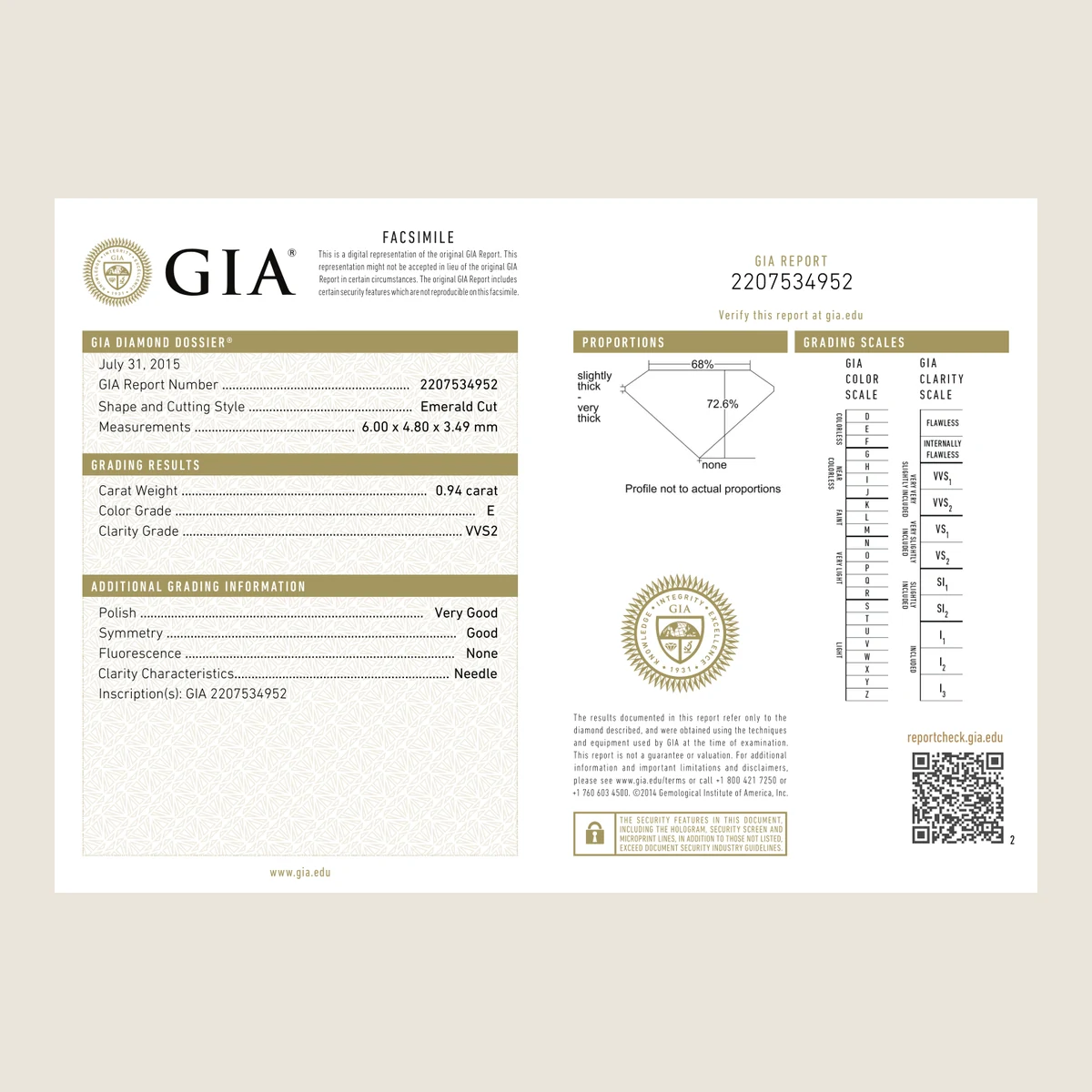
0.94 Ct
Emerald
- Colour
- E
- Clarity
- VVS2
- Cert
- GIA
- Carat
- 0.94
R 70 567,00 incl. VAT
-
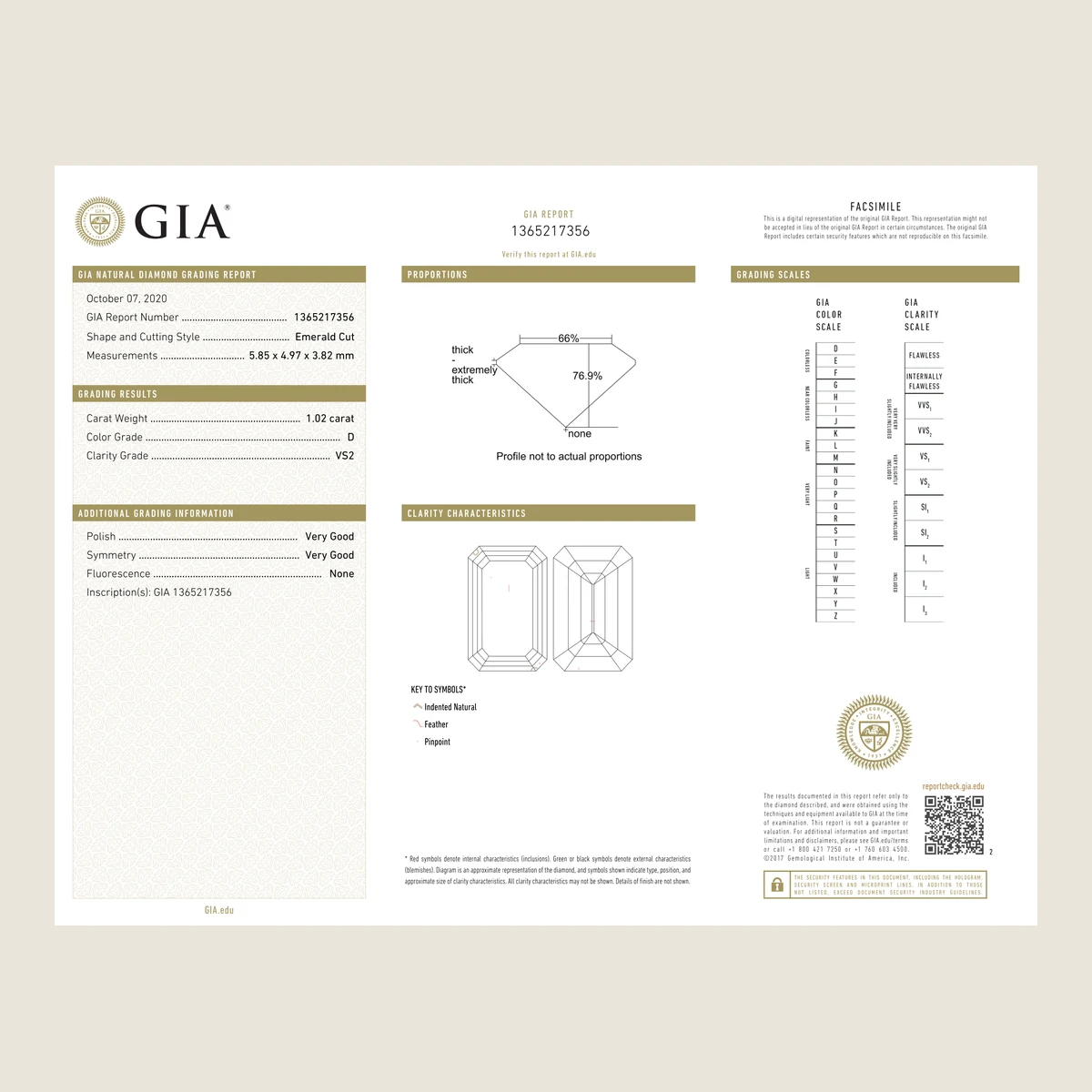
1.02 Ct
Emerald
- Colour
- D
- Clarity
- VS2
- Cert
- GIA
- Carat
- 1.02
R 90 931,00 incl. VAT
-
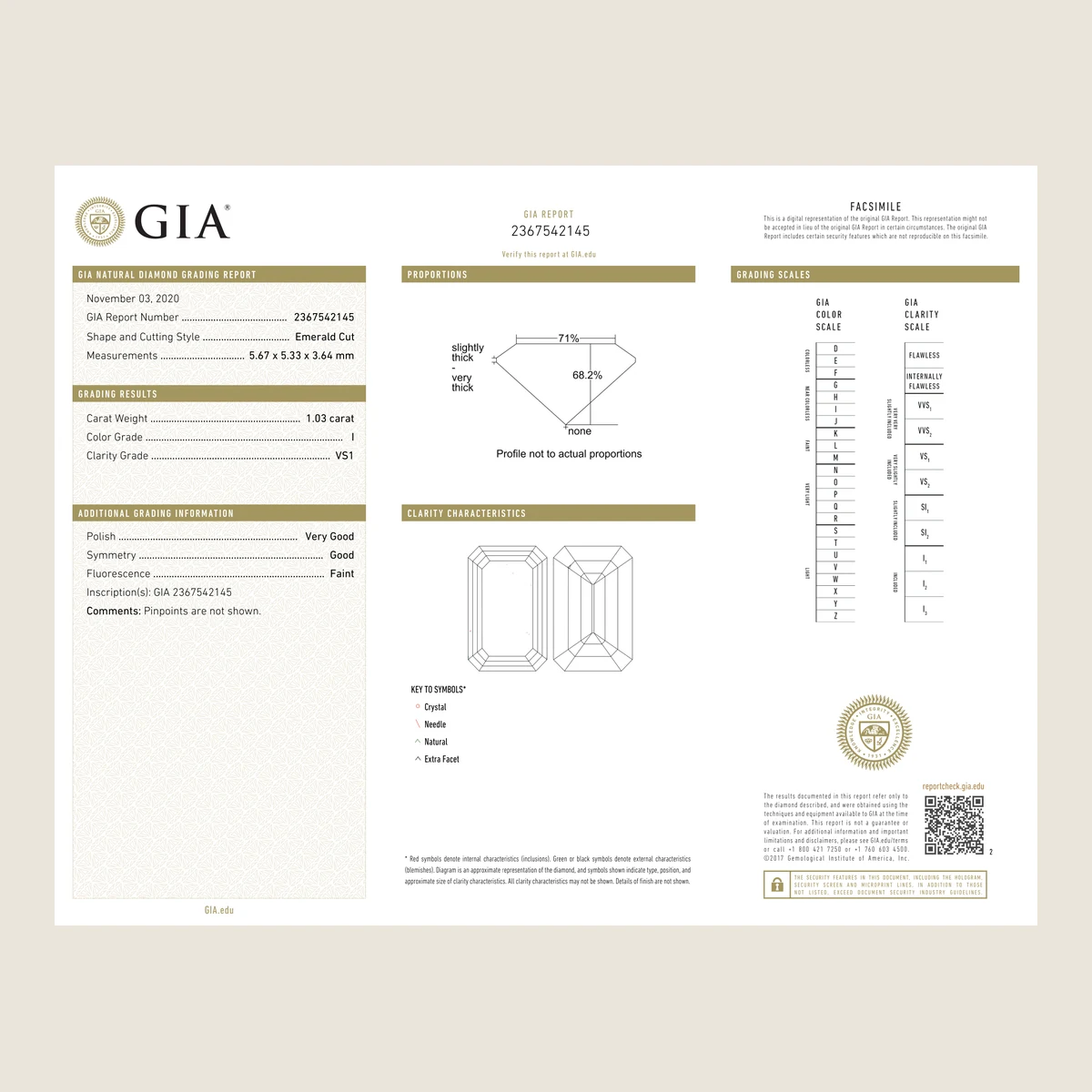
1.03 Ct
Emerald
- Colour
- I
- Clarity
- VS1
- Cert
- GIA
- Carat
- 1.03
R 62 826,00 incl. VAT
How to buy a step cut honestly
Three rules keep an emerald-cut purchase safe. First, clarity floor: the open facets show everything, so treat VS2 as the sensible minimum and let us tell you when a cheaper stone happens to be eye-clean. Second, see the stone: GIA does not cut-grade fancy shapes, so the certificate cannot tell you whether the windows are lively; the daylight tray or a live video viewing can. Third, choose the ratio by hand, not by rule: around 1.4 reads classic, longer reads elegant, near-square points you at the asscher instead.
Colour is the one place the step cut is forgiving in price terms: because the shape shows warmth slightly more than a round, the near-colourless band is the value zone, and the saving against a D-F grade is real. The mechanics are in the 4Cs guide, and the ring this shape usually becomes is on the emerald-cut engagement ring page.
Emerald cut diamonds: common questions
Why are emerald cut diamonds cheaper per carat than rounds?
Mostly yield, partly demand. An emerald cut follows the shape of the rough octahedron closely, so far less raw weight is lost at the wheel than when cutting a round, and each polished carat costs less rough. Demand also sits below the round brilliant, which the market prices in.
The practical effect is that the same carat, colour and clarity grades usually cost less in an emerald cut, and the stone faces up larger for its weight because the shape spreads across the finger. You trade sparkle for size and composure.
What clarity grade do I need for an emerald cut?
Higher than you would need on a round, and this is the one honest warning about the shape. The emerald cut is a step cut: long, open facets that act like mirrors rather than a brilliant’s crushed light. There is nowhere for an inclusion to hide, so a mark that vanishes in a round’s sparkle can sit in plain view in an emerald cut.
We advise VS2 or better as the sensible floor, and we will tell you honestly whether a specific SI stone is clean to the eye, because occasionally one is, and it is excellent value when so.
What length-to-width ratio should an emerald cut be?
The classic emerald-cut proportion sits around 1.3 to 1.5 times longer than wide, with 1.4 the ratio most eyes read as "right". Shorter ratios toward 1.2 look nearly square (at which point consider the asscher, the square step cut); longer than 1.5 reads elongated and elegant on longer fingers.
There is no wrong answer, only what suits the hand, and ratio costs nothing: it is a taste decision, not a price one, so choose it by eye on the actual stone.
Does GIA give emerald cuts a cut grade?
No. GIA assigns a formal cut grade to round brilliants only; on an emerald cut the certificate grades polish and symmetry but not cut. That makes the step cut a shape you should see before you buy, because the certificate alone cannot tell you whether the windows are lively or glassy.
We put every emerald cut on the daylight tray, in person or on a live video call, and you judge the stone itself, with the certificate confirming what nature supplied.
Can you source an emerald cut diamond to my specification?
Yes, and for this shape sourcing is the usual route. Our own bench register carries a small emerald-cut selection at any moment because we cut mostly rounds in-house; what we do constantly is source certified emerald cuts through the trade network against an exact brief, carat, colour, clarity, ratio and budget.
You get real options with GIA certificates and one fully-landed price in rands, usually within 24 hours, and you view the actual stone before committing.