
Upgrade · Trade-in · 6 min read
From a mall-chain ring to a GIA Excellent-cut stone, on the same budget.
He came in carrying his wife’s ring in his pocket and a question she had asked over breakfast: this is sort of dull, isn’t it, was it always like this? She was right. It was always like that. Most chain-store diamonds are.
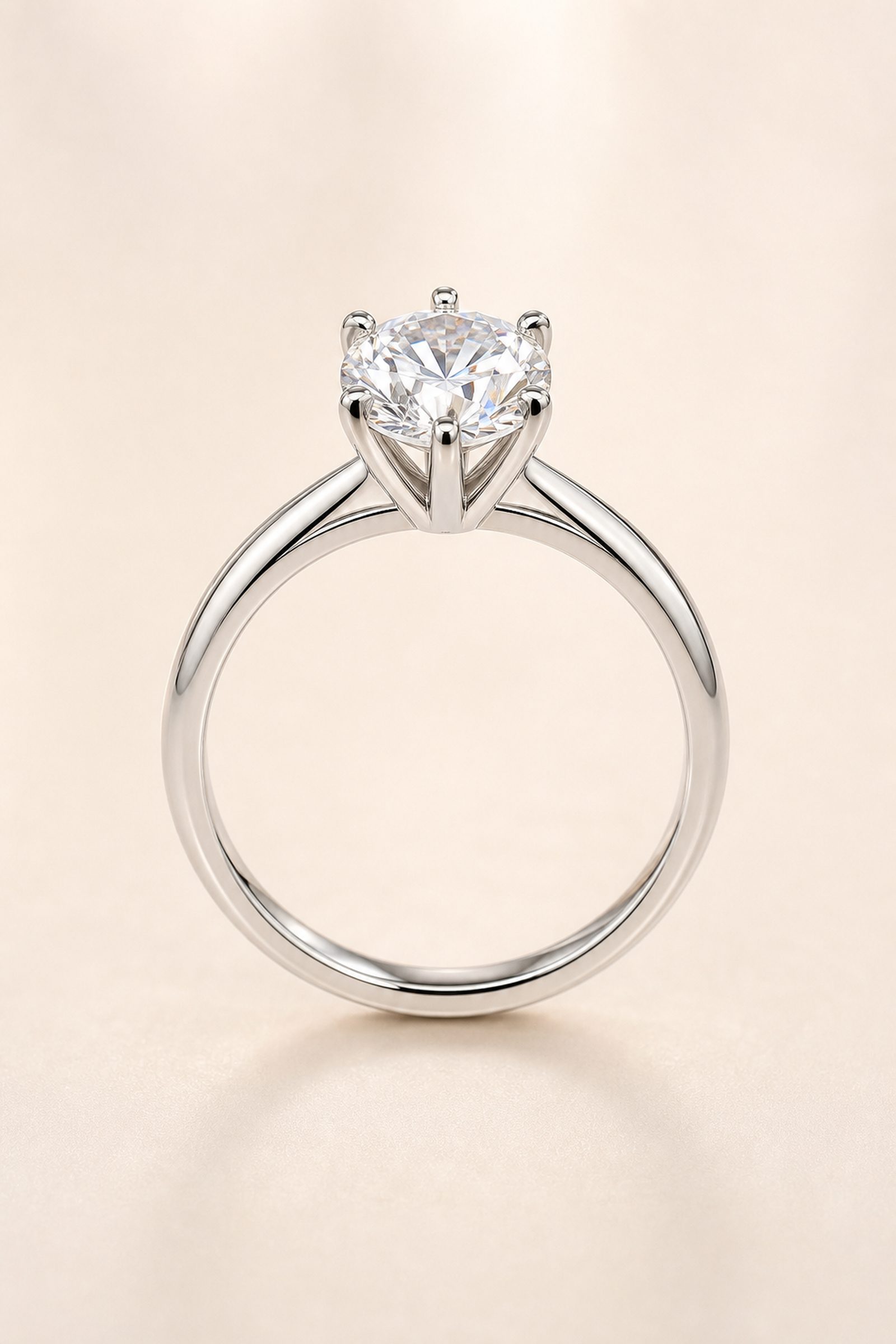
The starting point
The ring was bought from a major SA chain in the early 2020s as an engagement piece. The stone in it: a 0.91 ct round brilliant, H colour, SI1 clarity, GIA Good cut, Polish Very Good, Symmetry Good. The setting was a modern half-bezel in 18 kt white gold, perfectly fine. The centre stone was the problem.
Under loupe at the viewing-room daylight tray, the stone showed exactly the symptom they had described at home: light leaked from the pavilion in noticeable patches, the table looked thicker than it should, and the face-up size for the carat weight was visibly smaller than a well-cut stone of the same weight. None of these were defects.
They were the consequences of a stone cut for weight retention from the original rough rather than for light return on the polished result.
That is what GIA Good cut, in a deep total depth, with a slightly off-target pavilion angle, looks like in practice. Cut grades below Excellent are common across high-volume retail; they are not faulty stones, but they are visibly different on the daylight tray.
The brief
He had two constraints. First, the budget: the same amount as the original ring, plus a small contingency. Second, the band: his grandfather’s platinum band, which had been sitting in a safety-deposit box since 1989, had the right diameter and was structurally sound. The new centre stone had to fit into the existing band, not the other way round.
On the upside the original SI1 stone, even at GIA Good cut, was still a real GIA-graded natural diamond and had a real second-hand value. We confirmed that value against the Rapaport list on the day, in the buyer’s presence, and offered a buy-back number that was materially higher than the trade-in offer he had been previously quoted from a chain-retail channel.
The replacement stone
The plan: trade the original stone back for cash credit; select a centre stone from current Procut DCW polished inventory of similar diameter that would set into the existing band; use the entire credit plus the small contingency to fund the new stone.
On the bench were three candidates that fit the brief:
| Stone | Carat | Colour | Clarity | Cut | Polish · Symmetry | Notes |
|---|---|---|---|---|---|---|
| A | 1.01 | H | VS2 | Excellent | Excellent · Very Good | Just over the magic 1 ct number; full retail premium |
| B | 0.96 | G | VS1 | Excellent | Excellent · Excellent | Shy of 1 ct by a hair; visible diameter the same as A |
| C | 0.92 | F | VVS2 | Excellent | Excellent · Excellent | Higher colour and clarity, smaller spread; trades grade against size |
Stone B was the answer. A 0.96 ct GIA-Excellent G-VS1 round brilliant, polished at our Bedfordview bench in February, 6.36 mm diameter (within 0.05 mm of the original) and graded GIA Excellent for cut, polish and symmetry.
The face-up colour was visually identical to stone A’s H to her eye on the daylight tray; the cut was meaningfully better than the original on every metric; the spread was the same as a full 1.00 ct shy by a hair.
The cut-first principle and the shy-weight principle compounded in the same purchase: a stone that looked materially brighter, looked the same size, came with a higher colour and a higher clarity grade, on the original budget, because the chain between rough and till was shorter and because the carat number sat just below the magic-number step.
The setting
Setting the new stone into a 1989 platinum band is not a technical challenge so much as a careful one. The bench opened a slightly larger seat in the existing four-claw mount, sized the band one half-size up to her wife’s current finger, polished the platinum, and set. Total bench time: ten working days.
The hand-over
She came in with him to collect. We had the new GIA report on the desk; we matched the inscription on the girdle to the report number under the loupe with her watching; we signed the cert across with the date.
They had brought the original chain-store ring with them out of habit; we returned it to them in a small envelope, the original stone separated and bagged for resale, the 18 kt mount available for them to keep or to trade in for its metal value. They kept it.
Three months later he sent us a one-line WhatsApp: still catches her eye every morning.
What this story is and is not
This is not a critique of any particular SA retailer. Mall-chain stones are graded honestly under GIA protocols; the certificate that came with the original ring was correct and the SI1 grade was a fair description of the stone.
The point is that cut grade is the variable that most affects how a stone looks face-up, that GIA Good is a long way from GIA Excellent on light return, and that retail pricing on engagement-grade rounds bakes in markups large enough that the same budget can almost always buy a meaningfully better stone through a working cutting house.
The wholesale-vs-retail pricing guide sets out the arithmetic. The Upgrade Promise page sets out the process for trading back an existing piece. Most upgrade commissions complete in 2-4 weeks.
If this sounds familiar
Bring the existing ring to a private viewing or send us a photograph and the GIA report (if there is one) by email. We can usually tell you within an hour what the upgrade arithmetic looks like for your specific stone and your specific budget.